


※Originally published on note, Jan 25, 2025.
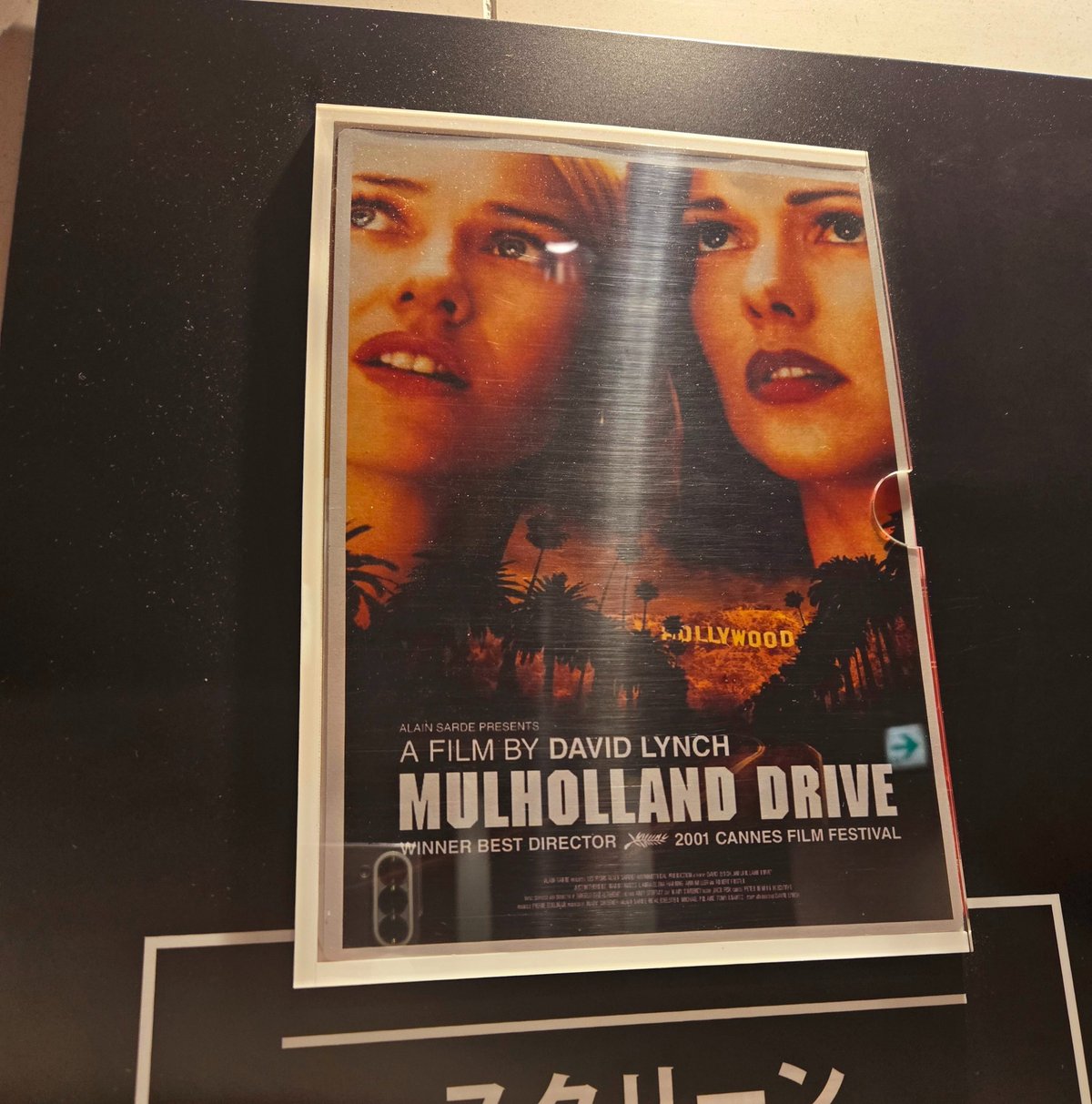
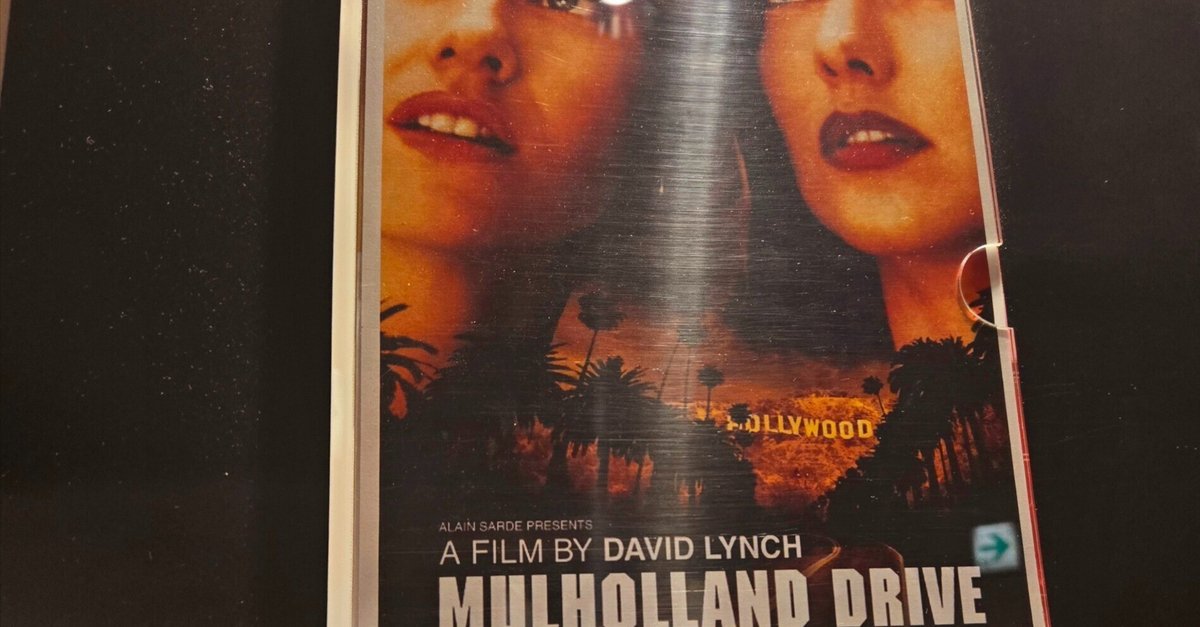
Mulholland Drive, directed by David Lynch.
The 4K restoration was screened as a special memorial,
and a handful of odd souls like me went to honor Lynch’s passing.
For those of us who admired him, losing a creator means returning to the work
to sink into it, to keep it alive, to keep speaking its language.
A few of us sat there on a weekday afternoon,
peering into Lynch’s inner landscape.
After the screening, I felt a strange sense of solidarity with the others.
After all, we had just survived the same nightmare together.
Mulholland Drive stands out as one of Lynch’s most highly regarded films, and though he’s known as the “King of Cult,” it went on to win many awards.
Personally, though, if someone’s new to Lynch, I’d tell them to start with Blue Velvet.
Often, what people regard as a “masterpiece” among distinctive directors tends to be one of their more accessible works.
In Lynch’s case, that would be Blue Velvet; for Godard, Pierrot le Fou.
Perhaps it’s simply because those films, by their standards, feel a little more straightforward.

But Mulholland Drive holds nothing back.
Despite its near-impenetrable plot,
it somehow maintains the balance that makes it a masterpiece.
That balance, the coexistence of chaos and control,
is exactly where Lynch reached his pinnacle.
In short, I love this film deeply.
Lynch turns his nightmares into cinema.
We’re merely allowed to peek into his private, subjective world.
No one has ever translated the sensory realm into film like he has.
What we see isn’t just his vision—it is his mind itself.
Which means there is an answer hidden there.
And that’s what makes it so maddening.
Take Tsuge Yoshiharu’s Nejishiki, for example.
It’s a brilliant short manga, buoyed by a floating, dreamlike rhythm—
but because it’s literally a dream made into comics, it has no “answer.”
Tsuge himself never intended one.
That’s what makes it impossible for anyone else to replicate its flavor.
Lynch, on the other hand, hides meaning within sensation.
There’s logic buried in his madness but even after countless rewatches, we can only grasp fragments of it.
His films are too purely subjective,
built entirely from his own private logic and truth.
I sense a similar quality in Do You Love Me?, the poetry collection I once quoted in my own game and later contributed an afterword to when it was reissued.

Those poems, written by psychiatrist R.D. Laing,
are transcriptions of words spoken by psychiatric patients, poeticized, but untouched in essence.
A pure sensory world that needs no understanding from others.
They’re just speaking truths that, to them, are self-evident.
I’ve dipped into hallucination myself a few times
moments when my thoughts began connecting on their own,
forming “truths” inside my head.
If, in that state, I were to shout,
“Aliens are already among us!”,
inside my brain it wouldn’t feel insane at all.
It would feel perfectly coherent.
But no one else could ever truly understand that.
That’s what makes Lynch a genius...
no one could translate a bad trip into film like he could.
If you could walk straight into someone else’s nightmare,
wouldn’t you?
For those of us drawn to the gothic, that’s irresistible.
We keep chasing his films like addicts for bad dreams.
In Mulholland Drive, Lynch turns his gaze toward Hollywood itself...
its glitter and its rot,
especially the rot.
For me, what makes this film so brilliant
is his refusal to play fair with character consistency.
If a feeling demands it, he’ll shuffle the cast mid-scene without hesitation.
This is just my interpretation,
but I think he represents the “darkness” of the story
through multiple interchangeable characters.
It sounds abstract, but those abrupt, baffling moments
the strangers who appear once and vanish forever
they’re all fragments of the same psyche.
Perhaps even aspects of the protagonist herself.
In dreams, that’s how it works.
No fixed viewpoint, no consistent identity.
That inconsistency is what gives nightmares their realism.
It’s a structure no ordinary filmmaker could ever replicate.
As a bad dream, as a bad trip, it’s perfect.
And that’s exactly why it feels so good.
Among all those nightmares,
Mulholland Drive is one you can faintly trace if you hang on hard enough.
Lynch even left “Ten Clues to Unlocking Mulholland Drive” on his official site.
I like to think I managed to catch a glimpse of it
his frustration, his guilt,
the pressures of the film industry that haunted him.
Dream or hallucination, he portrayed it sincerely, unfiltered.
If anyone could perfectly depict what they truly feel,
it wouldn’t look like reality.
Realism is a kind of lowest common denominator...
something that communicates easily to everyone.
Lynch wrote the world exactly as he sees it.
A one-of-a-kind talent.
Now, his era has come to a close.
The King of Cult has gone to sleep.
At the next midnight screening,
who will ascend the throne?
Which gothic soul will carry the torch of his nightmares?
Comments (0)
Leave a comment
No comments yet. Be the first to comment!