


Back when I was around twenty, I loved the dark world of rape-revenge eroge. Down there, there was nothing but pitch-black lust—no pretty lies, no ethics—only the human core laid bare beyond morality. And somehow, in that hellscape, I found a place to belong. Stories where clean, beautiful men and women simply flirted and made love didn’t stir me in the slightest.
The savage, mad novels that the Marquis de Sade wrote to the bitter end felt moonlike in their pull to someone like me—someone who “didn’t have.”
I loved Kachikujin Yapoo, too. Situations where human beings weren’t treated as human somehow felt more “normal,” and with every page I turned, I felt relieved—as if something correct was happening, as if the world finally made sense. Even when I talk about eroge now, I tend to bring up the ones with obvious “literary” value. But what I truly fell into were titles like Kusozaku, Gakuen Sodom, Saimin Gakuen—the ones with not a single sparkle to them, the ones that reeked of semen.
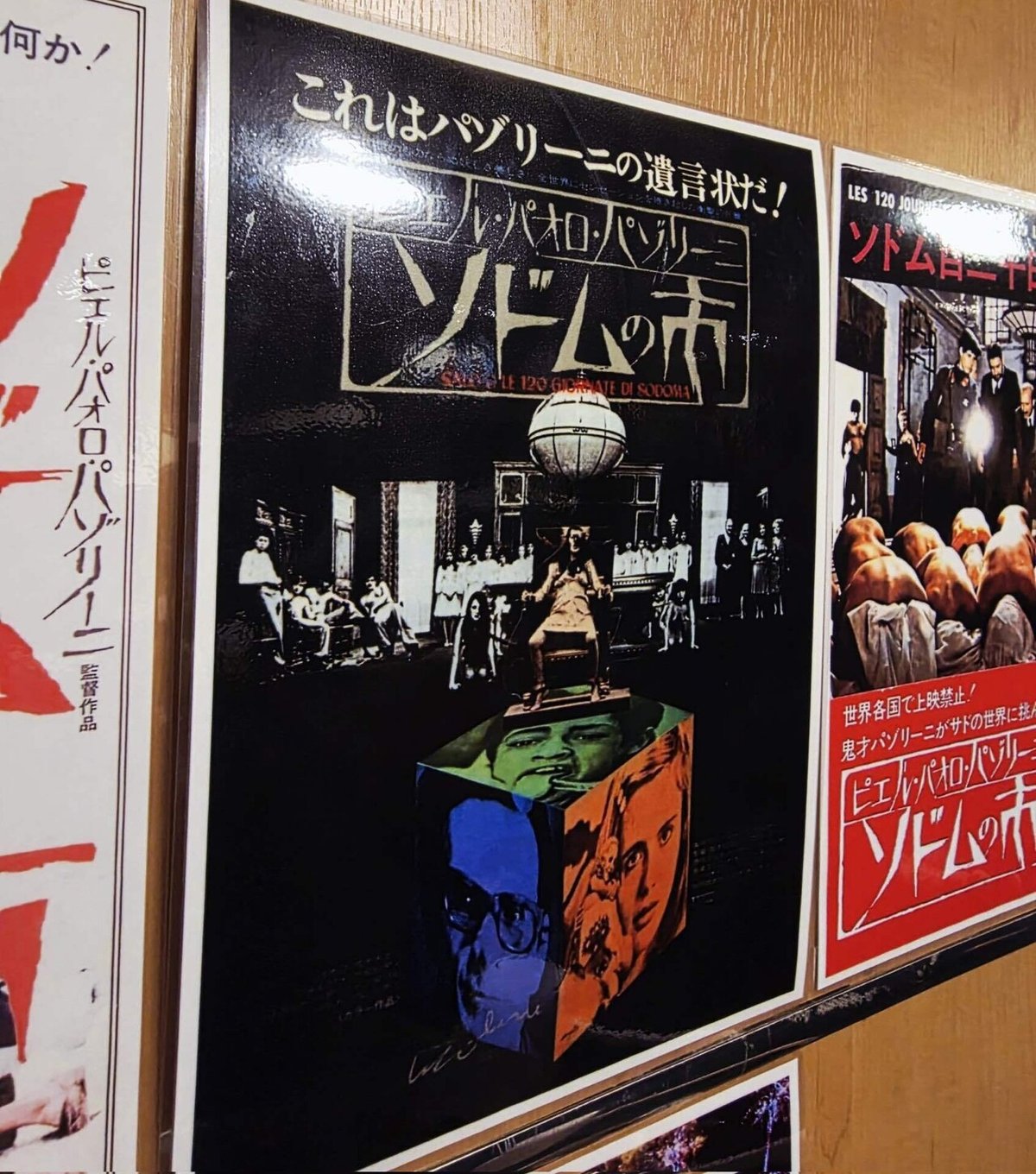
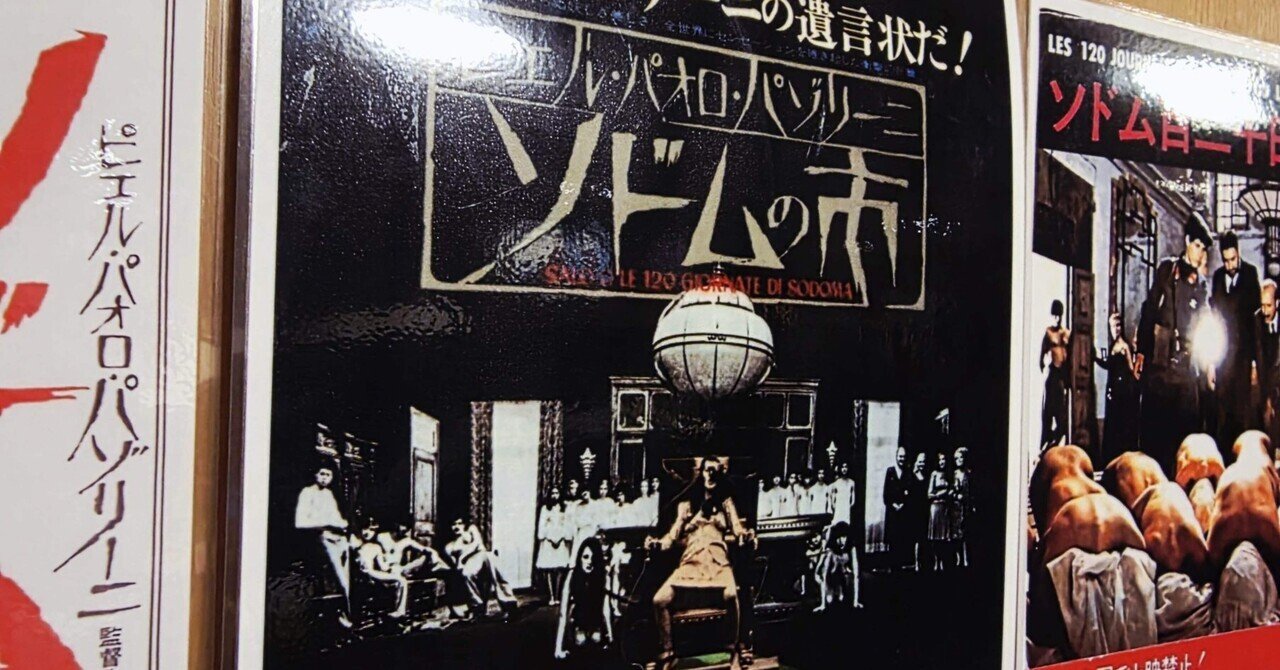
And then there’s Salò, or the 120 Days of Sodom.
A monstrous work: Pasolini took de Sade’s source material and, quite literally staking his life on it, drove a political message into it. After completing the film, Pasolini died under mysterious circumstances. The cost of making a great work of art.
In this film, Pasolini repeats “ugliness” and “grotesque” with absolute commitment. He offers the young men and women kept as slaves by the powerful not a single ounce of salvation. Each time they pray to God, they are answered with a fitting hell. He obsessively denies the existence of God in this world—denies the comfort of pretty words—through punishments you can see with your own eyes.
The powerful inflict violence on human beings beyond what you’d do to livestock, and gorge themselves on pleasure to an abnormal degree: coprophagia, torture, brainwashing. A succession of images that make you want to turn away—yet Pasolini never loosens his grip. Two hours of cruelty and deliberate ugliness, like Yu Yu Hakusho’s “Chapter Black” made real—and the fact that he never inserts rescue into it is precisely the message and irony he carved into the work. It was “art,” with entertainment cut away.
And yet, it’s also true that money and power drive human beings mad. The slave trade itself is an undeniable historical fact. And not even in some distant past.
It’s also true that I—someone who “didn’t have”—cursed the world, and found safety only in places like this, underground.
Those truths unfold right in front of you, and I want to applaud the bold choice to refuse “easy” morality tales and neatly packaged arcs.
People always want an escape hatch. Even Salò could have been constructed to sprinkle in elements that tell the viewer, plainly: “This brutality has a deep reason, and a deep punishment is coming.” But Pasolini doesn’t do anything that would cheapen it. He runs “evil” to the finish line, trusting that those who understand will understand. The result was bans and condemnation across countries—but we also know that somewhere inside that outcome lies an answer to what “art” is.

Another notorious film, Caligula, has remained lodged in my heart the same way.
Every work has people who can only be saved there.
There are curses and wills that can’t be measured by the cheerful meanings and values the general audience demands—and sometimes, resentment itself can save someone else.
We’re the kind of people who can only be saved by fiction.
So we love fiction, we build fiction, and we go on living—kept alive by fiction.
Comments (1)
Leave a comment