


※This is a repost of an article originally published on Oct 2, 2022.
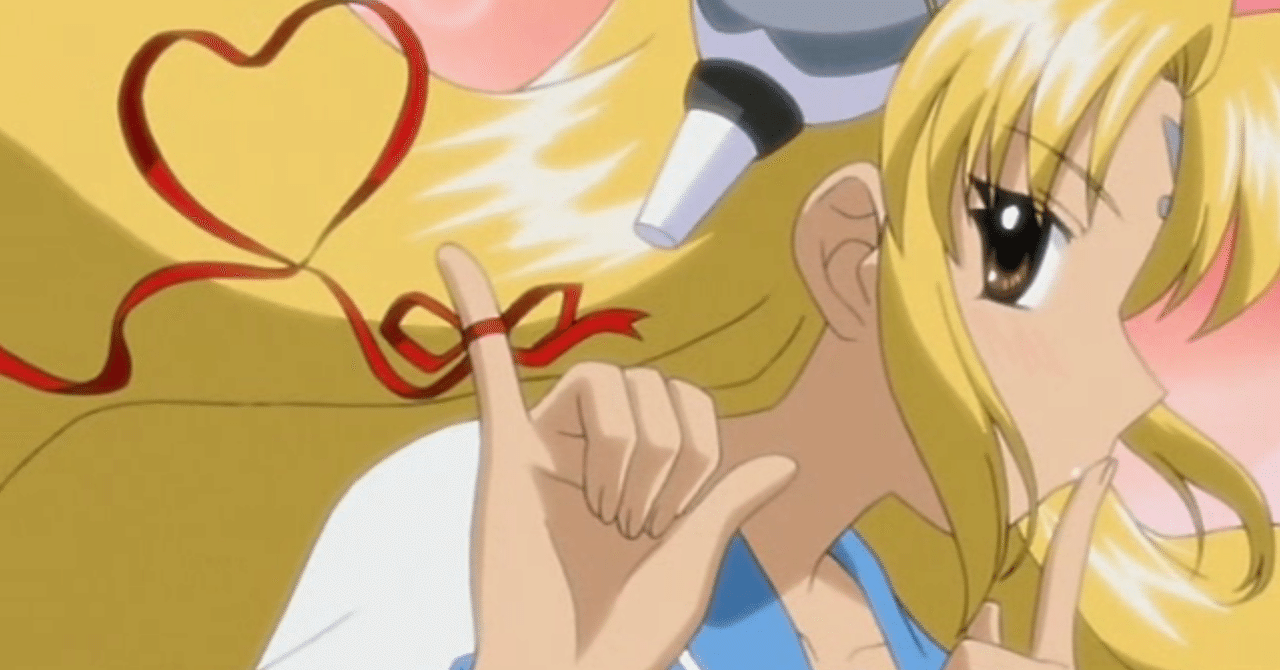
One of my all-time favorite anime—easily in my top five—is Galaxy Angel, and since it recently arrived on d Anime Store, I've been rewatching it nonstop, shedding tears of nostalgia along the way. I'm honestly surprised by how much of it I still remember.
Galaxy Angel is something of a miracle born from a complicated set of circumstances, so let me give a brief explanation.
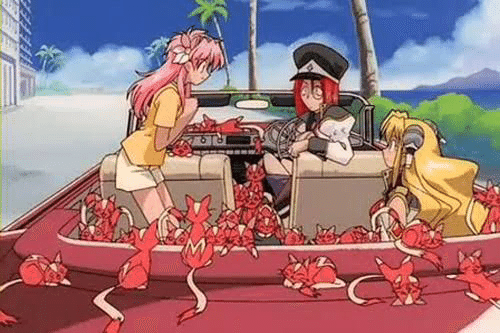
First, there's the original anime series. It was promoted as "a bishoujo anime brought to you by the staff of Cardcaptor Sakura" and aired on Animax. Since it wasn't broadcast on terrestrial television, it remained relatively obscure, and the show's trademark chaotic energy hadn't fully reached maximum velocity yet. Even so, you can enjoy the unique nostalgia of cel animation and witness just how quickly newcomers like Yukari Tamura and Miyuki Sawashiro developed as performers.
Originally, the plan was to follow the story of the game version, which was a very traditional gal game. However, due to production circumstances, the anime staff never received the game's setting materials in time. Instead, they decided to ignore the source material entirely and run wild. Thus began the legend of the Galaxy Angel anime. Anyone who started with the anime and then moved on to the game probably developed a fever from the sheer whiplash. Toshiki Inoue's decision to tell the staff, "Just do whatever you want!" remains one of anime history's great mysteries. I love how that same spirit eventually carried over into Donbrothers. Whenever Donbrothers suddenly pulls the kind of nonsense that feels straight out of Galaxy Angel, I end up tearing up despite it being a comedy scene.
Then came the second season, Galaxy Angel Z, which somehow ended up airing on Sunday mornings. The production switched to digital animation. The characters showed less skin, the jokes became more child-friendly, and yet somehow the show evolved into an even more chaotic force of nature where every week ended in complete mayhem.
Then came the second season, Galaxy Angel Z, which somehow ended up airing on Sunday mornings. The production switched to digital animation.
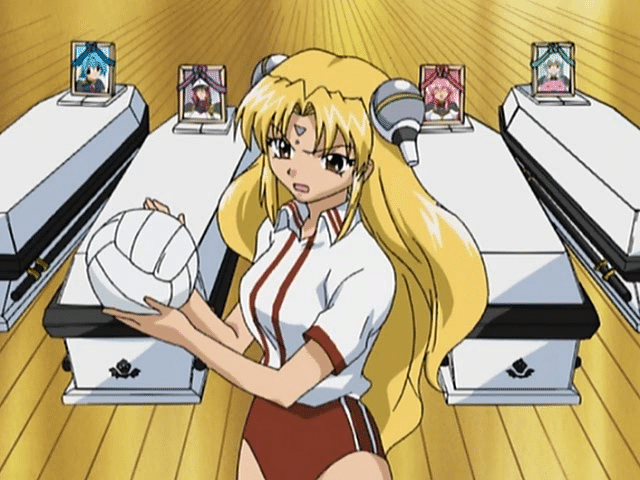
The characters showed less skin, the jokes became more child-friendly, and yet somehow the show evolved into an even more chaotic force of nature where every week ended in complete mayhem. The pacing of the comedy became razor-sharp, the parody work more aggressive, and Episode 4's second half, "Wedding Cake Combo Special," perfectly demonstrates the kind of insanity only a Sunday-morning anime could achieve. Three of the five main characters eventually developed personalities so morally bankrupt they'd probably kill their teammates for money. Of the remaining two, one is a naturally evil protagonist and the other becomes a strange girl caught up in a cult. Personally, though, my favorite is actually the first half of Episode 4—a quieter choice, perhaps, but one I love.
 画像
画像
Then came the longest-running era: Galaxy Angel A and AA. This is where the series is firing on all cylinders. No matter which episode you pick, you'll find scripts and direction spiraling beautifully out of control. Episodes like "The Sign Is Bouillon" and "Stringing Beads, Handmade Soba, No Strings" deliver a level of comedic force that only works because more than half the cast are complete disasters as human beings.
For me, Episode 14—"Pyulikc Magical Steak / The Curious Baumkuchen"—completely captured my heart and became something I'll never forget. If you're unsure where to start, honestly, just pick a random episode from Season 3. You'll quickly understand why Galaxy Angel is so beloved.
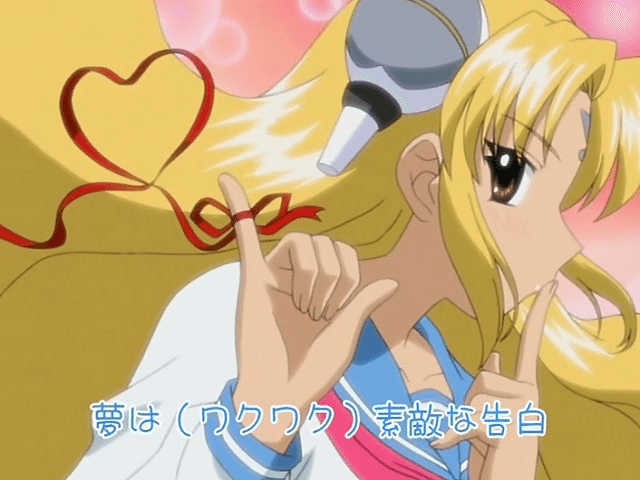
Finally, there's Season 4, Galaxy Angel X. As the last installment of the franchise and the first to return to a late-night slot, it's also the most chaotic. Freed from daytime restrictions, it packs in endless adult-oriented parodies and references. (The image above, for example, is from a Tokimeki Memorial parody episode.) This is actually the season I revisit the most, but starting here may cause immediate indigestion from the sheer density of its comedy. It feels like a reward for the fans who stuck around through the first three seasons. The newly added heroine, Chitose Karasuma, is wonderful as well. She's hilariously unfortunate without ever becoming so pitiful that you stop laughing. The balance is perfect.
Episodes like "Sorrow, Hatred, Frozen Tofu," "Adult Agarikusudake," and "Love Rice" are packed with unforgettable moments. Despite all the absurdity, the show never forgets how to be genuinely cute when it wants to be. If possible, I would have watched the Moon Angel Troupe forever. If Reiwa can have a new Di Gi Charat, then surely it can give us a new Galaxy Angel too. Toshiki Inoue is still in top form, after all. And so I continue to pray for it every night.
Comments (0)
Leave a comment
No comments yet. Be the first to comment!