


※Originally published on note, January 24, 2022.
I’d like to talk about another book I love.
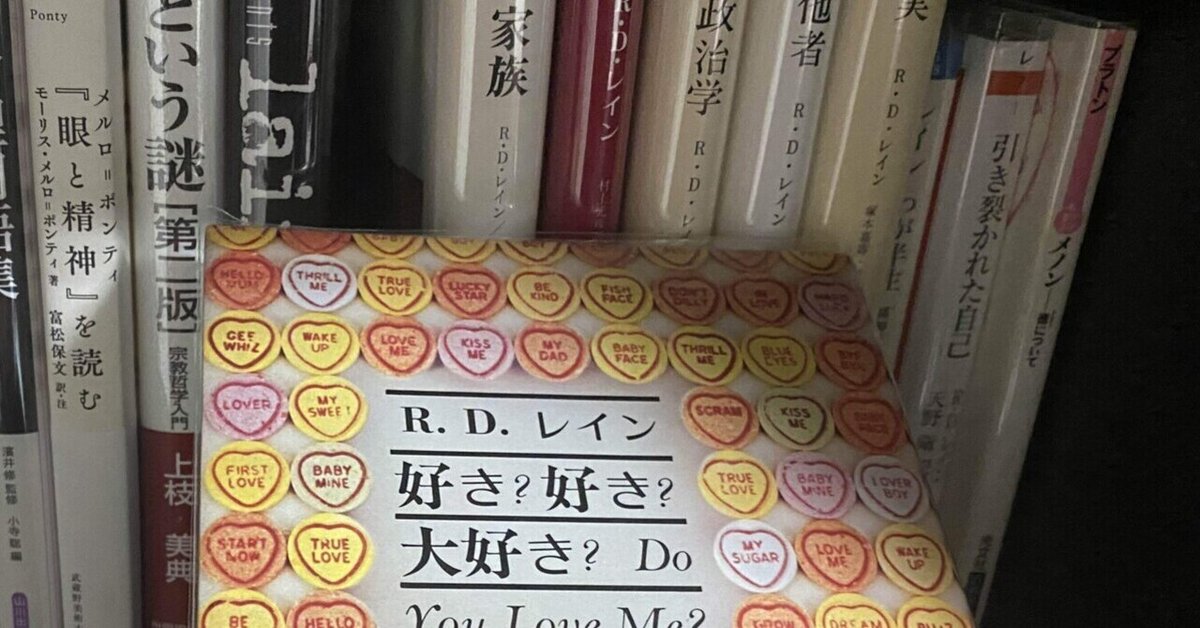
This time it’s Do You Love Me?, a collection of poems by the psychiatrist R.D. Laing, who spent much of his career interacting with and studying patients with schizophrenia.
This book holds special significance for me—it’s actually quoted in an important scene in the game I’ve been developing. So if you happen to play it, I’d be happy if you notice that reference.
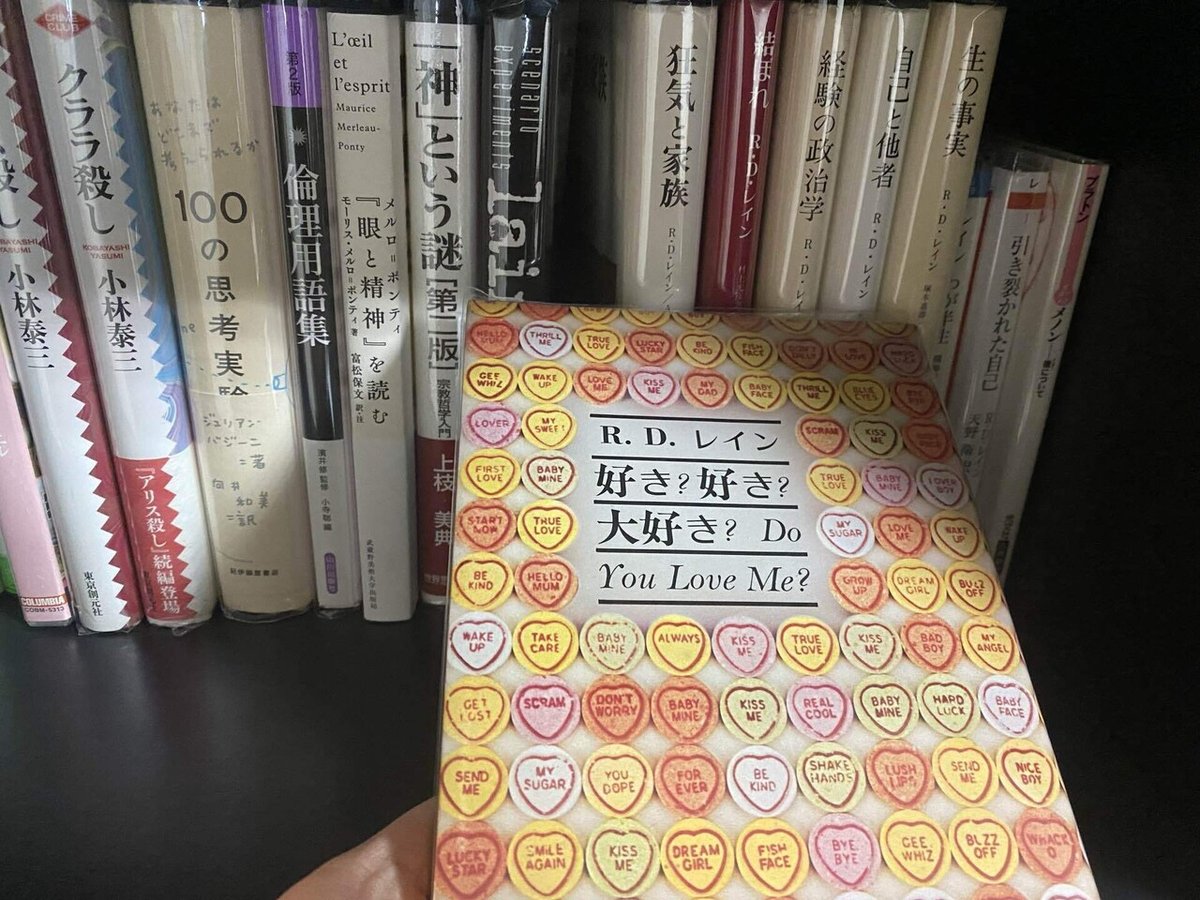
The influence of R.D. Laing’s poetry is immense. It even inspired the name of Lain Iwakura from Serial Experiments Lain.
His title poem, Do You Love Me?, was also used by Jun Togawa for one of her best-known songs, and even by certain well-known visual novels. I adore all of these works—but that’s because, at their root, Laing’s poetry itself is so powerful.
Laing’s poems were born from his experiences in therapy sessions with psychiatric patients, and this collection reflects that: each poem is based on real words spoken by those patients.
Among them, the titular Do You Love Me? is so moving that I’ve read it aloud hundreds of times.
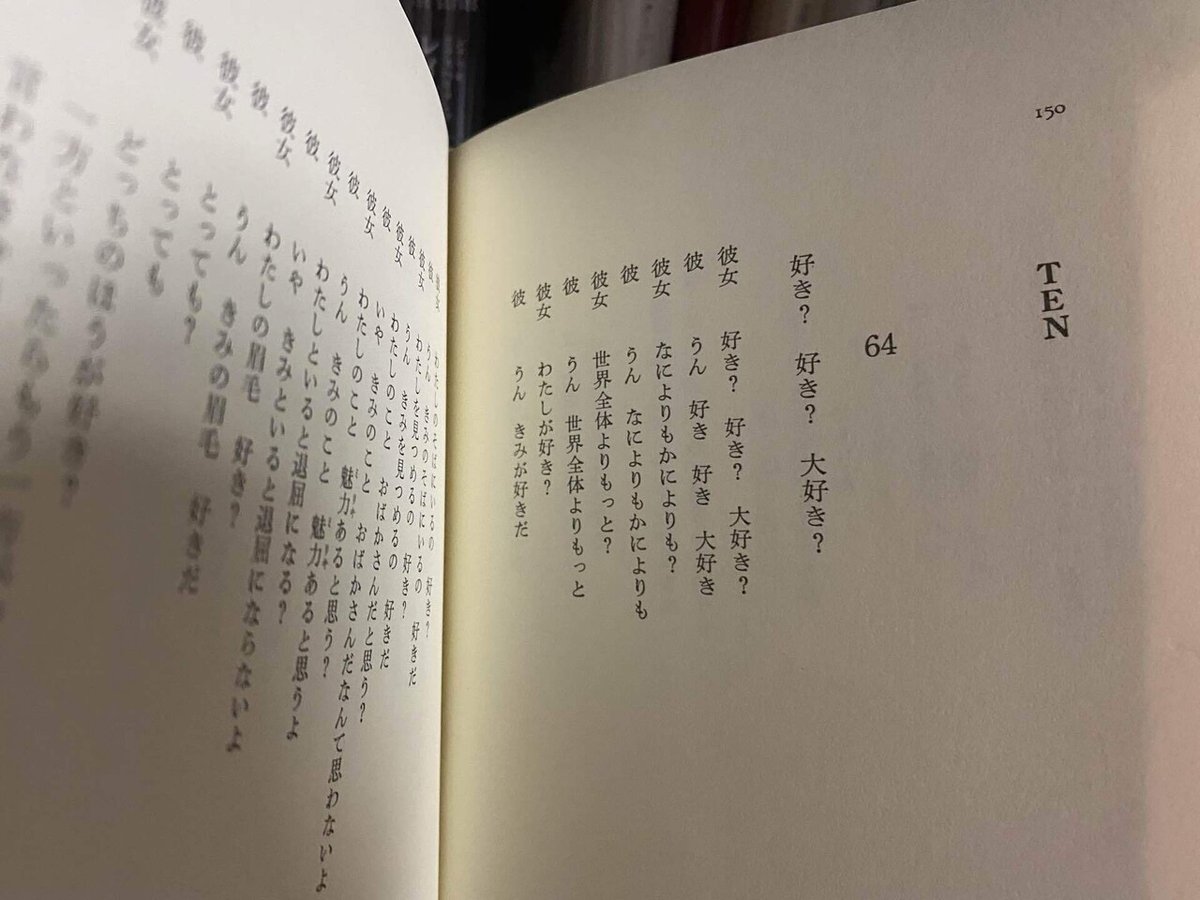
*Excerpt from the main text

SHE  do you love me?
HE  yes I love you
SHE  best of all?
HE  yes best of all
SHE  more than the whole world?
HE  yes more than the whole world
SHE  do you like me?
HE  yes I like you
SHE  do you like being near me?
HE  yes I like being near you
SHE  do you like to look at me?
HE  yes I like to look at you
SHE  do you think I'm stupid?
HE  no I don't think you're stupid
SHE  do you think I'm attractive?
HE  yes I think you're attractive
SHE  do I bore you?
HE  no you don't bore me
SHE  do you like my eyebrows?
HE  yes I like your eyebrows
SHE  very much?
HE  very much
SHE  which one do you like the most?
HE  if I say one the other will be jealous
.......
In the poem, a girl keeps asking her lover: “Do you love me? Do you like me? Do you like being near me?”
Each time, he echoes her—“Yes I love you, Yes I like you, Yes I like being near you”—and she presses on:
“more than the whole world?”
“Do you like to look at me?”
“Do you really love me? Love me? Love me?”
It’s a deeply twisted relationship.
The girl seems to be trying to overwrite the man’s entire consciousness with love for herself—to merge, to erase the boundary between them. She keeps confirming his love, like a broken radio looping the same frequency, seeking to achieve perfect unity with the one she loves most in the world.
In her fractured mind, the only thing that remains is a single, pure concept:
the ultimate love of complete identification with her beloved.

Comments (2)
Leave a comment