


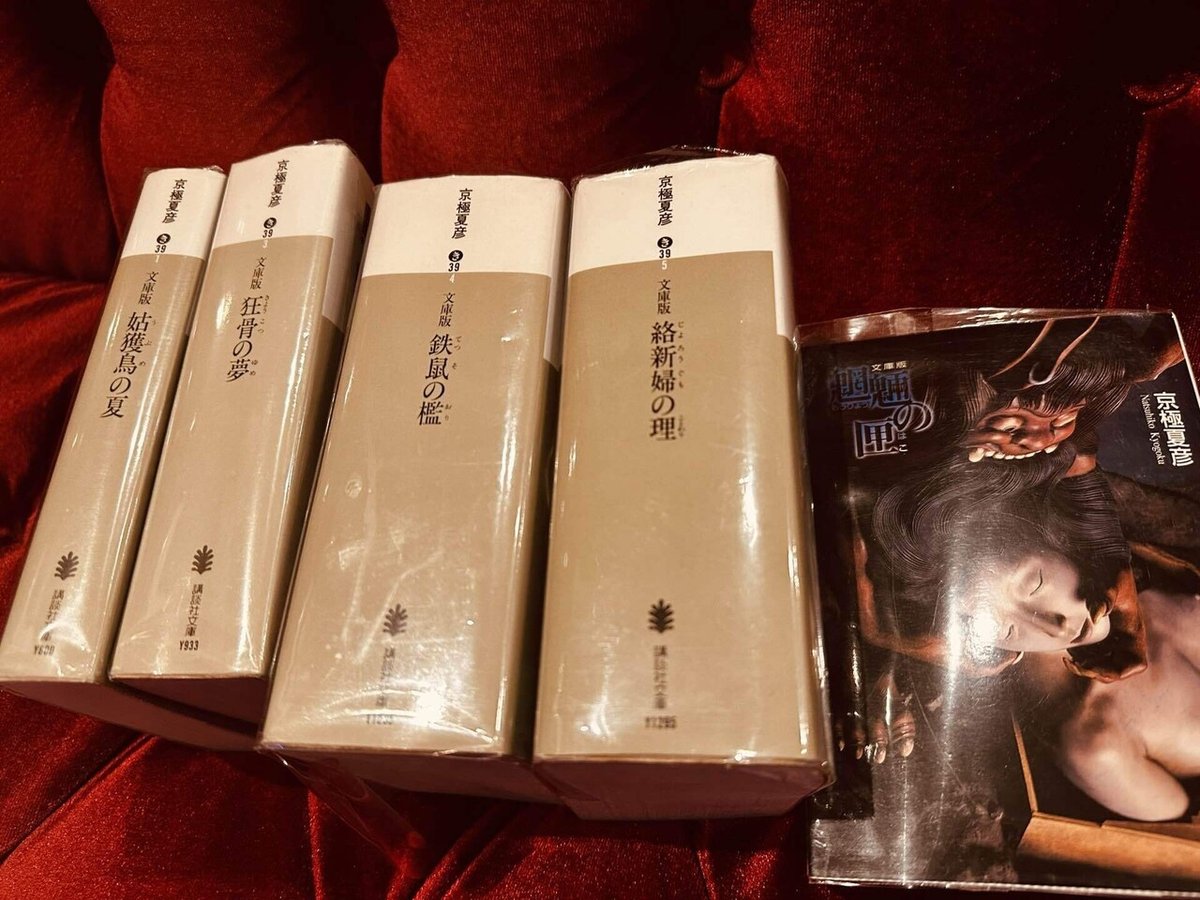
A friend of mine recently got into Natsuhiko Kyogoku, so I ended up rereading The Summer of the Ubume and Mouryou no Hako myself.
Trying to explain just how deeply the younger me was influenced by Kyogoku—especially Mouryou no Hako—would take far more than the roughly three thousand characters I have here, so regretfully I’ll have to skip over most of it this time. Back in middle and high school, young Nyalra’s constant reading companions were H. P. Lovecraft, Natsuhiko Kyogoku, and Yasumi Kobayashi.
After reading Mouryou no Hako and playing ATLACH=NACHA, I completely lost my mind to gothic horror centered around aesthetic schoolgirls. My brain has never recovered since.
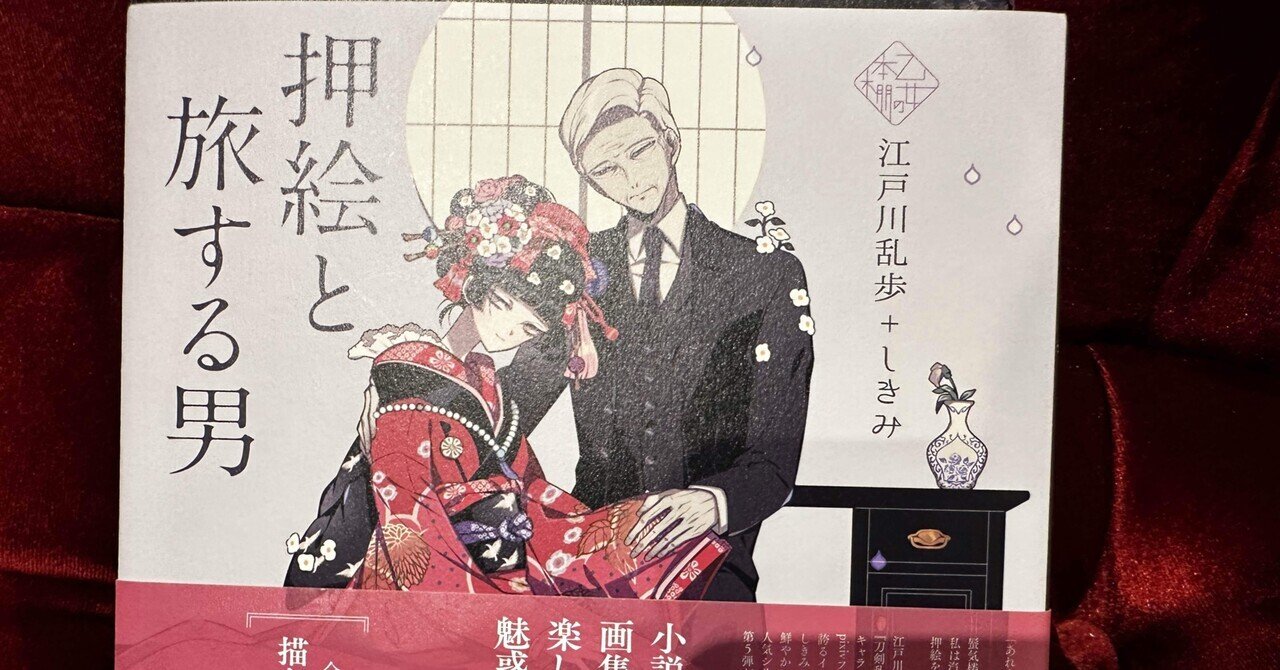
But today, I want to talk about Edogawa Ranpo’s The Man Traveling with the Brocade Portrait and A Brute's Love—stories that likely had a major influence on Kyogoku himself.
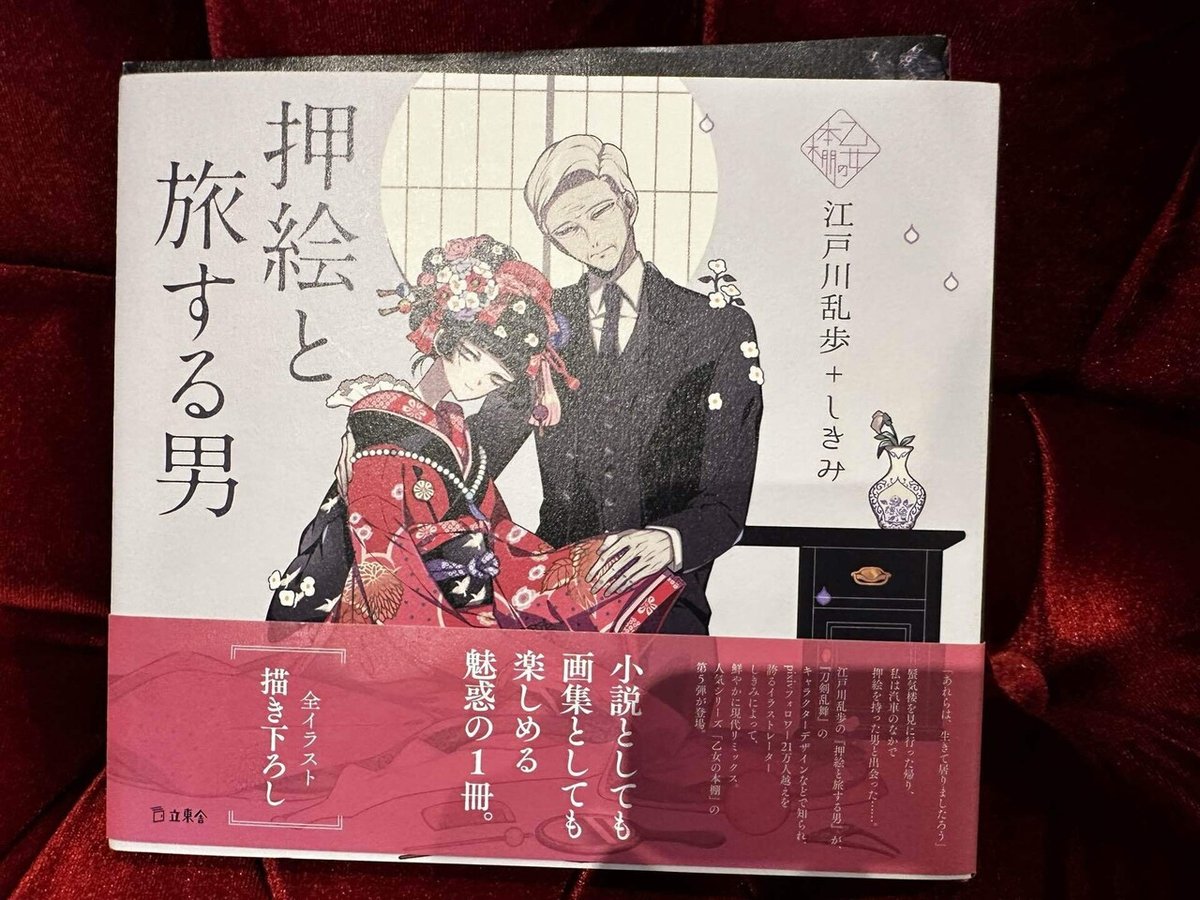
A few years after my last reread of Mouryou no Hako, I got so excited revisiting it that I decided to reread The Man Traveling with the Brocade Portrait as well. Then I discovered it had been published as part of the Maiden's Bookshelf series, which I absolutely adore, so naturally I bought it immediately.
That series, which pairs classic literature with decadent contemporary illustrators, feels like a dream come true to me. I’m genuinely grateful it exists.
At times, Edogawa Ranpo uses horror as a means of creating beautiful girls who seem utterly inhuman. Online, you often see people joke that “horror and comedy are two sides of the same coin,” but I wish more people remembered that horror and beauty are deeply intertwined as well. I see the entire gothic genre itself as an attempt to extract beauty from overwhelming darkness. That applies equally to Mouryou no Hako and ATLACH=NACHA.
One of horror’s greatest strengths is its ability to make impossible beauty feel convincing—to give weight to concepts like etherealness and uncanny elegance in beautiful boys and girls. Ranpo’s The Man Traveling with the Brocade Portrait and A Brute's Love strike directly at that idea.
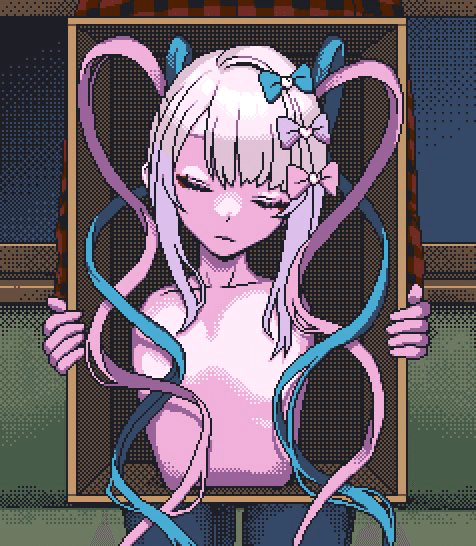
Simply put, The Man Traveling with the Brocade Portrait is a story about a young man who falls in love with a two-dimensional woman. Captivated by the beauty painted within a pasted picture, he becomes obsessively attached to her, until at last his wish is granted and he enters the painting itself.
What makes Ranpo so gentle is that he does not portray this as a bad ending. On the contrary—the man who chooses to live forever inside the painting with the beautiful woman seems genuinely happy even decades later. That balance is irresistible.
As the title suggests, A Brute's Love is about a man who falls in love with something nonhuman—in other words, a beautiful doll. Yet again, his days with the beautiful doll are portrayed as happy ones.
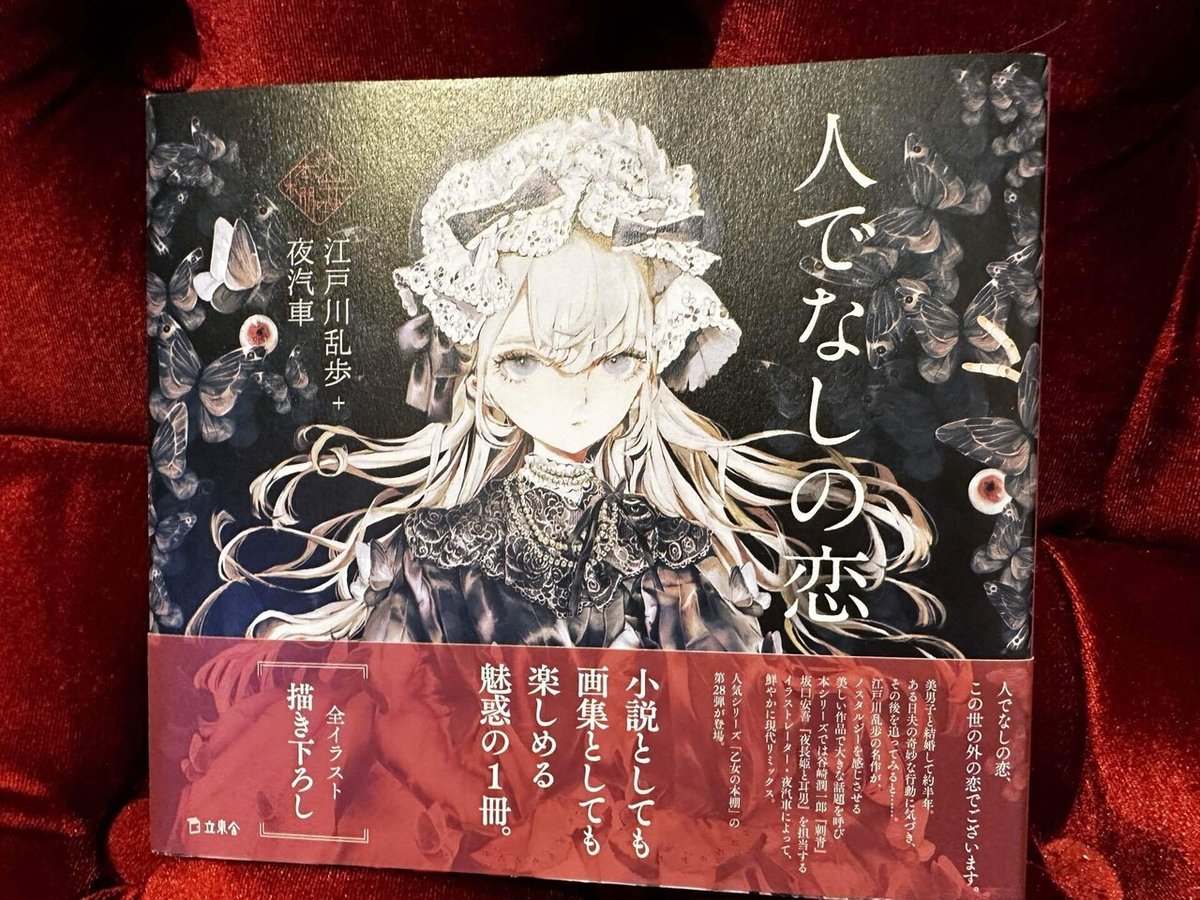
How hopeful that is. Living together with a two-dimensional character, talking with beautiful girl figures—these are cherished dreams even for modern-day otaku. Ranpo anticipated all of this in literary form and, moreover, treated it as a kind of happiness. Isn’t that wonderfully kind? Of course, from the perspective of ordinary people within the stories, these men appear abnormal. But what matters is not the objective judgment of others—it is whether the person themselves feels happiness.
Even Edogawa Ranpo, a literary giant from long ago, had already arrived at his own answer regarding love for the two-dimensional. And that makes me strangely happy.
Somehow, I found myself deeply envying the men in Ranpo’s stories.
I found myself, to my own dismay, strangely envious of those men in Ranpo’s tales.
Comments (3)
Leave a comment