

※ This article contains spoilers for the game. Sister Other Paranoia.
My name is HAYAO, and I’m the programmer at HazeDenki Inc.
If you’d like, please follow me on Twitter(X), too.
Now that the game is out, I’d like to start sharing some development stories that get a little more into spoiler territory from time to time.
(↓ Previous article)

This time, I want to talk about one of the core elements of the game: the execution sequences.
Presentation in a visual novel.
This was one area where I, as the programmer, was given a great deal of freedom. Since I was the only person actually implementing it, I suppose that was inevitable.
What could be done, and what couldn’t?
That all depended on my own abilities, and unless I actually presented the ideas in my head, nothing could move forward. At the same time, whatever I came up with had to match, to some extent, what Nyalra had envisioned while writing the scenario.
What kind of presentation brings out the strengths of a novel?
What kind of presentation doesn’t get in the novel’s way?
I spent more time than anything else selecting and developing presentation that fit the image the game was aiming for.
And among all of that, the part I spent the longest thinking about was the execution sequence.
So this article will cover the development process that led to the final direction for those scenes.
First, I’ll just paste my original notes for the execution sequences as they were.
Looking at them now, practically everything is different.
At first, I imagined they would be something closer to minigames.
■ Minigame Ideas
- Tie them to famous methods of execution
- Tie them to each character’s eventual fate
- Insert a minigame at the moment you refute them / deliver the final words
For the minigames, it would be nice to have some kind of reference point. Shooting, parodies of famous execution methods—iron maiden, making someone sit seiza on top of a tree, the wooden horse, water torture.
■ Notes by Character
Hiyakawa: Fire / Water Torture
Sink to the bottom of the water.
Words gradually set them ablaze. Then they jump into the water.
A UI that feels like you’re refuting their work.
Igusa: Crucifixion
Insect → specimen → crucifixion.
The button is linked to a hammer, and you keep driving pins through them.
Let our moth-like friend spread their wings.
Tenjikubotan: Iron maiden, freezing, preserved in formalin, wax figure
Turn her into an “eternal heroine.”
Dokudami: Buried alive
No execution.
Maybe a game where they beg you to save them and you simply abandon them?
The Parents: Duel
This one is unusual—you provoke them into killing each other.
The Classmate at the Beginning
Cut into their heart with a scalpel.
Decapitate them with words that target their inferiority complex.
The image of stabbing them with a knife.
...This is starting to sound like Danganronpa.
Maybe sharp words float around the screen, and clicking them makes them stab into the target.
Animation. Blood comes out.
For the finishing blow, maybe an interaction where you hold down the mouse button.
A guillotine, or something like that.
--------------
But once the actual scripts for each character’s fate started coming in, it became obvious that the tone simply wasn’t going to work with minigames like these.
The first execution scene for one of the main characters to be completed was Tenjikubotan’s, in April 2026.
Anyone who has played the game already knows what that scene is like.
The story quietly progresses toward death—how on earth could you suddenly insert a “formalin-preservation minigame” into that?
I had to rethink everything, including the execution scene for the classmate in the prologue, and it gave me a serious headache.
While I was struggling with that, Maruino-sensei sent over the single illustration for the classmate’s execution scene.
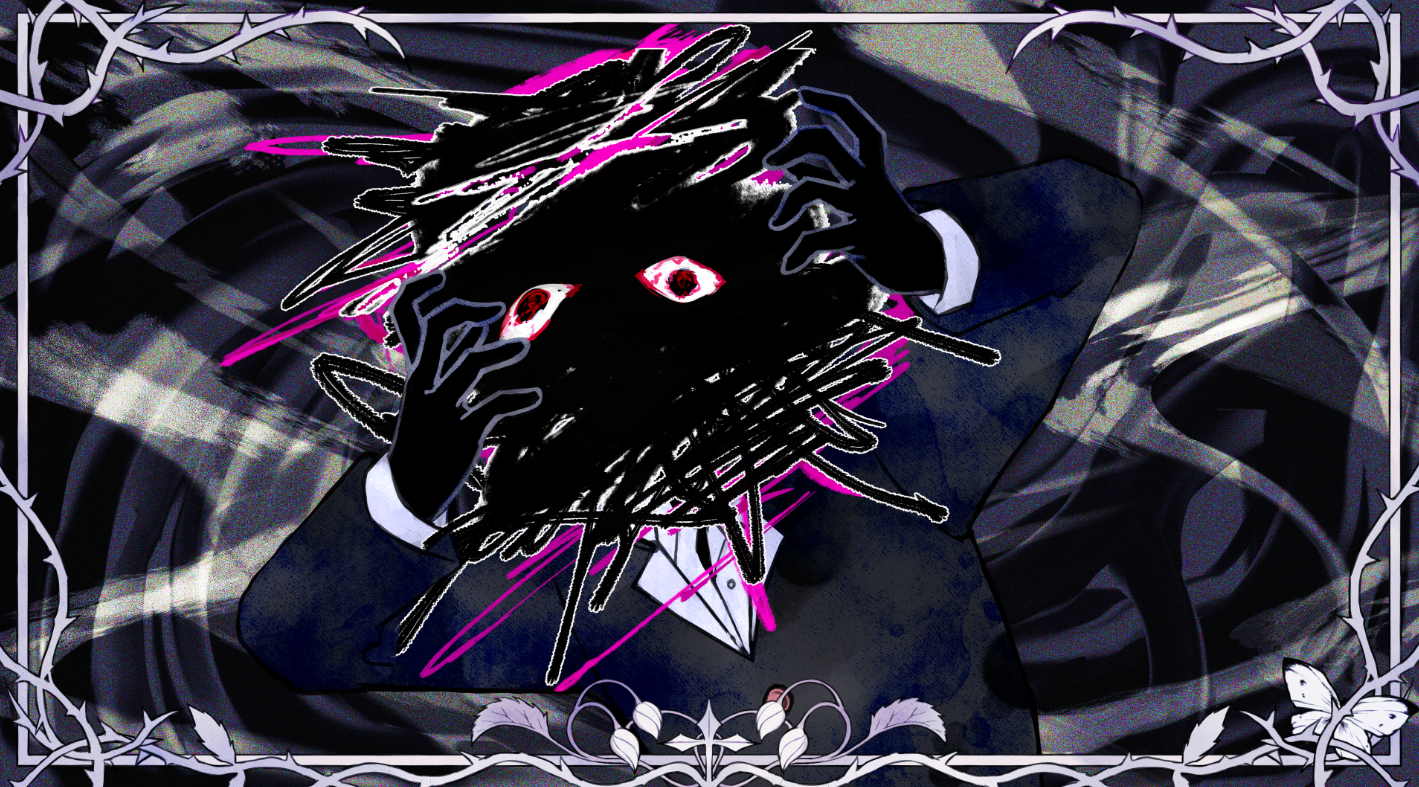
I had requested an image where the classmate’s face was blacked out, their eyes wide open in anguish.
But what came back had their entire face crushed beneath a mess of chaotic lines, and it was far more eerie—and far better—than I had imagined.
The instant I saw that image, the idea came to me: the execution scene should use words emerging from inside the target’s own mind.
The power of artists—and of illustration—is incredible.
Maruino-sensei told me the image had been developed from the motifs of the lines, the eye, and the game’s logo.
That was a real revelation.
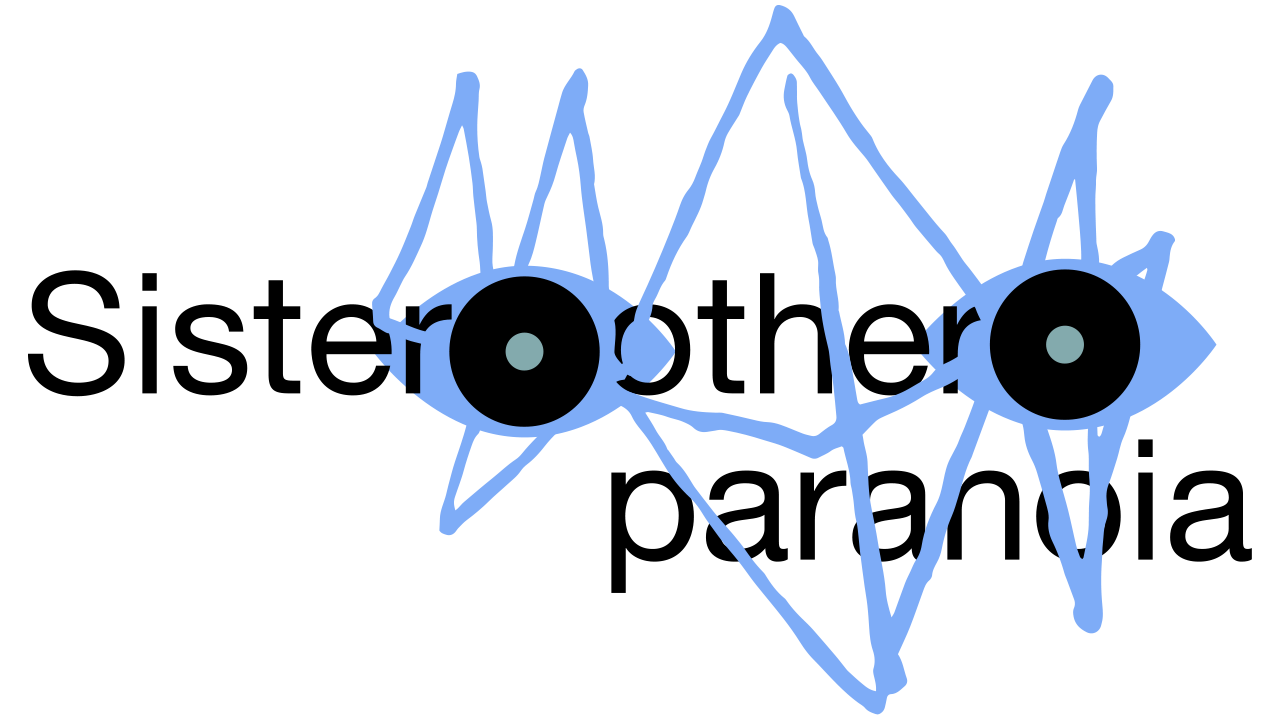
If I unified the presentation around the logo’s simple, refined visual language, I became convinced that I could create something that would also fit the quietness of the writing.
Once the image had formed in my head, I made it in about two or three hours.
That version ended up being the one we actually used.
It really drove home for me that with presentation, the amount of time you spend isn’t always the most important thing. What matters is the spark—the seed of an idea.
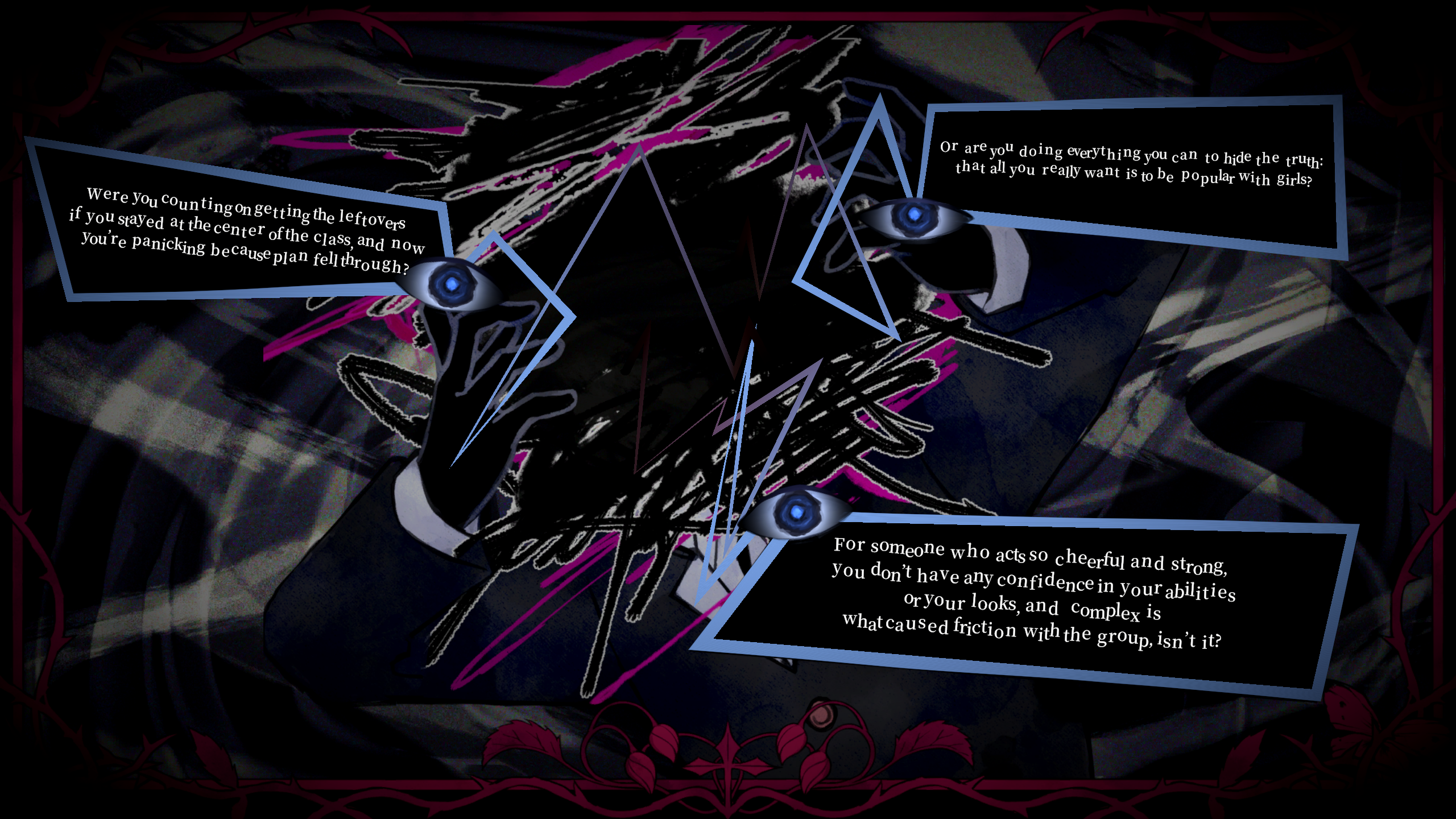
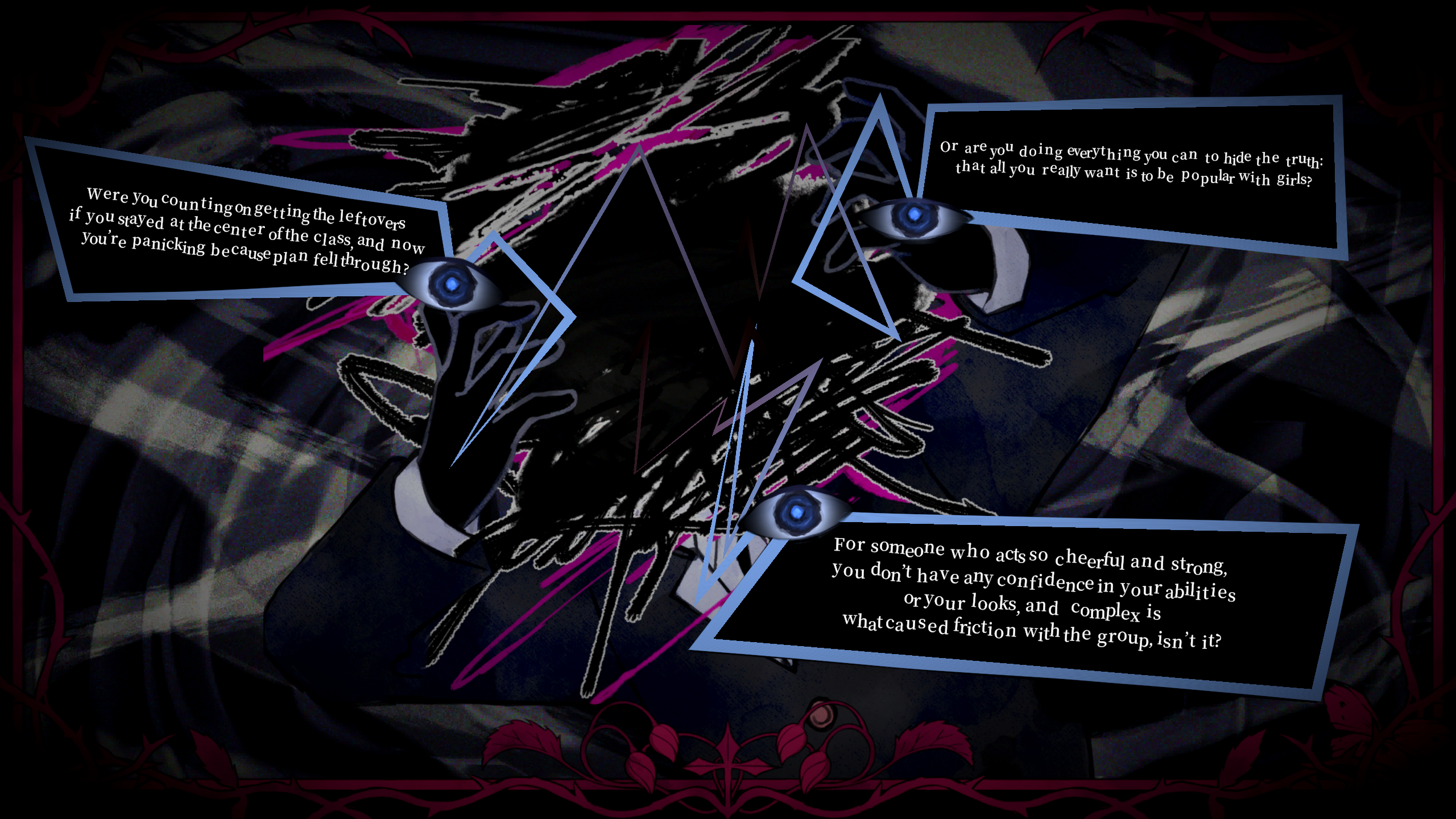
Blue lines, resembling those in the logo, emerge from the person being executed.
Then an eye opens—the symbol representing the act of reading someone’s mind.
Once the player chooses an option, a line stained deep red pierces all the way into the deepest part of the target’s mind.
Nyalra approved it immediately, and with that, the fundamental structure of the execution sequences was finally settled.
I think that was the moment the biggest weight came off my shoulders.
Why did deciding the presentation for just the opening scene free me from so much pressure?
Because I was certain that this same presentation would also work perfectly with Ohisashiburi-sensei’s CG for Botan.
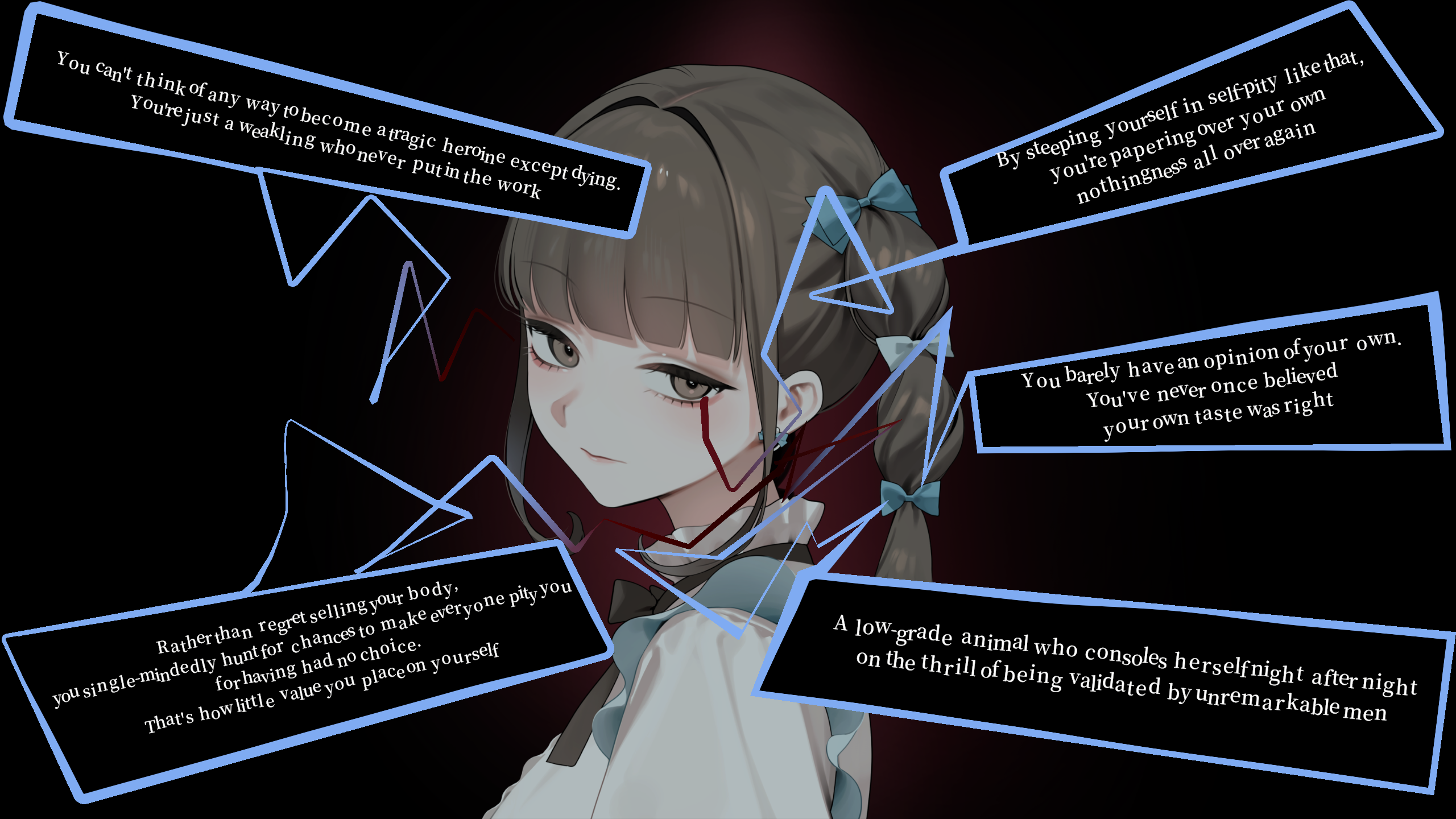
If it worked for both of those scenes, then the obvious direction was to unify the execution sequences around this visual language.
That was the moment when a huge part of the game’s overall presentation philosophy fell into place.
This presentation allows the text itself to take center stage, while still fitting naturally into quiet monologue scenes.
At the same time, it ties directly into the visual identity of the game.
I think it ended up becoming something simple, but effective.
Since this is a development diary, I should probably talk about the technical side as well.
Anyone familiar with Unity will probably know that this isn’t an especially complicated feature.
It uses Unity’s Line Renderer.
Line Renderer is a basic feature that draws a line between specified points, and you can configure things like thickness and color for different sections of the line.
From there, all I needed was a Custom Command and a control script so the effect could be called from Naninovel.
The positions of the points are stored in an array, and then the line is drawn using DOTween.
That’s essentially all the core processing involves.
It’s also nice that, despite looking like an animated effect, it can be implemented primarily through coding.
There are various other details after the line is drawn—displaying windows, defining what happens after the player clicks, and so on—but I’ll leave those out here.
Compared to this approach, implementing the original minigame idea would have required an incomparable amount of additional material and development time to make the presentation convincing.
And even after all that, I still think it would have ended up being something that didn’t fit the game.
The original minigame concept came directly from the word “execution.”
The Line Renderer concept, on the other hand, was built upon the ideas of Maruino-sensei and Hama-sensei, who designed the logo.
It was an experience that made me strongly feel that, if you want to create presentation that is simple and smart, it’s incredibly important to know how to build upon the work of your artists and designers.
And that, roughly speaking, is the process that led us to settle on the final execution sequence.
While writing this, I actually got chills thinking about how rough things would have been if that idea had never come to me.
I’m glad we managed to release the game on schedule...
I’ll keep writing these development articles little by little from here on.
And over on Patreon, I’m hoping to share even more behind-the-scenes material!
Please check it out here as well.
HAYAO
Comments (3)
Leave a comment