


Written by Fumiya Iwakura
This was a year in which I found myself returning to visual novels from time to time.
From indie classics like VA-11 Hall-A and Coffee Talk to major titles like Umineko: When They Cry - Saku and Magical Girl Witch Trials, I went through one after another of the games I had always meant to play but never quite gotten around to.
The reason was simple: I had too much free time.
This year, I published two books, traveled to Taiwan and Okinawa, and even have a few projects moving along behind the scenes, so by any reasonable measure, I shouldn't have had that much time on my hands. And yet, from my own perspective, I had so much free time that it became genuinely painful. I was so bored that I even fell back into my bad habit of frequenting arcades.
The likely cause was that I had developed a regular exercise routine and accidentally become far too healthy. In the past, I would spend about half of every week feeling sick and lying in bed, so I never had to worry about being bored. When you're feeling unwell, simply resting your body is enough to fill the time. But when you're healthy, you can't get away with that. If I have nothing to do, I become irrationally irritated and start wanting to leave the house. Having nothing to do is painful.
That was what led me to pick up visual novels again after several years away from them. At first, I only intended to use them to kill some time, but the medium has changed dramatically, and before long I found myself completely absorbed, just as I had been when I was a university student.
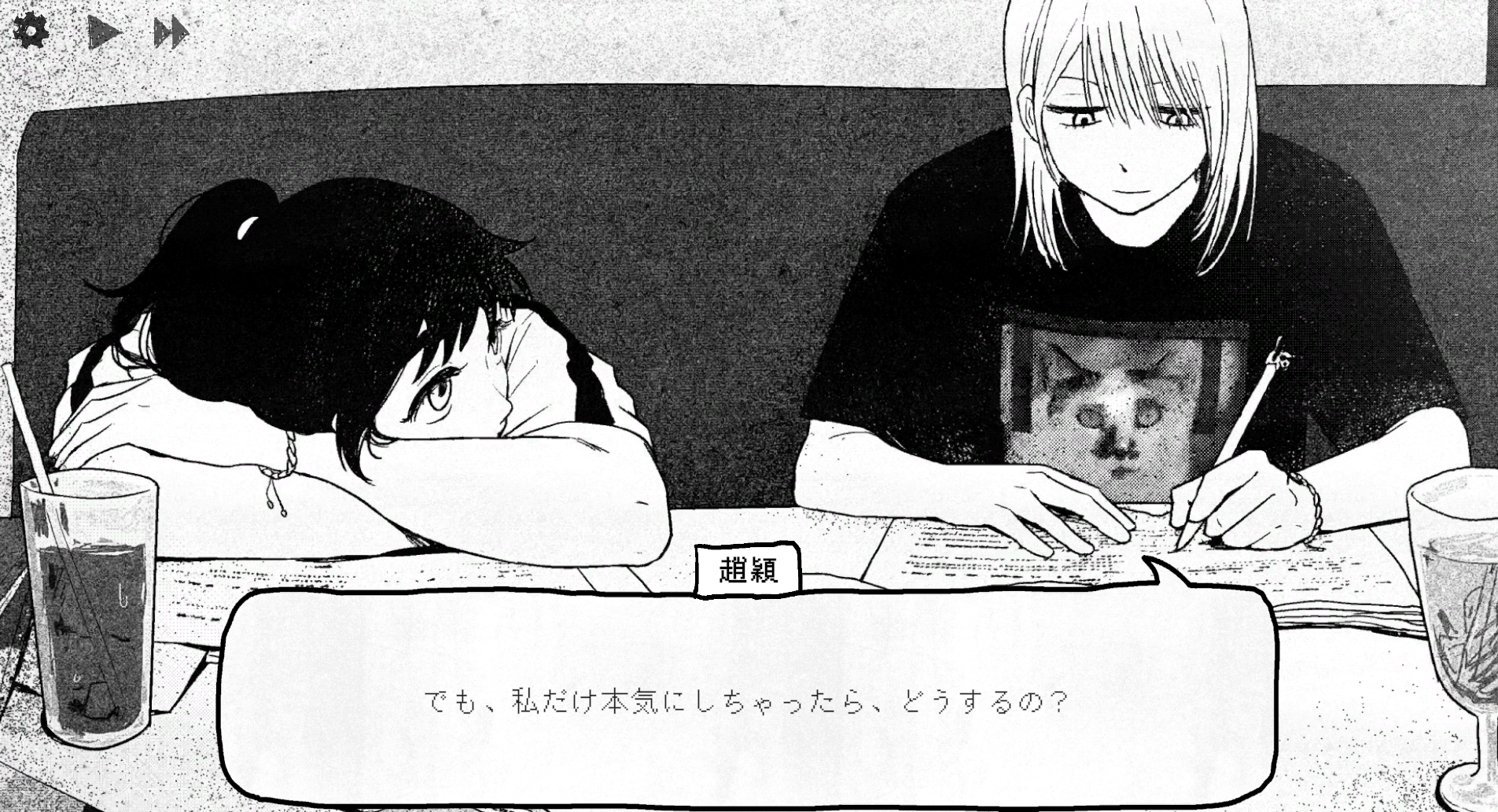
Of the games I've played recently, the one that has left the strongest impression on me is Sweet Home, released in August 2025 by the Chinese indie development team 开心茶房. The game became a major hit in China, selling 200,000 copies within its first month, but because it didn't support multiple languages, it remained difficult to play in Japan for quite some time. Then, in September 2026, Japanese language support was finally added, allowing me to properly play it at last.
The game is set in 2018 and follows Zhao Ying, a high school student living in a provincial Chinese city, as she meets various people and makes choices that determine her fate. In terms of its basic structure, it is a quintessential visual novel. There are four heroines, each with three endings. There are also a considerable number of choices, with complicated branching, so carefully selecting your options is essential if you want to complete every route.
But the story contained within this old-fashioned vessel is remarkably contemporary.
Zhao Ying lives with her biological father, his new wife—her stepmother—and her young half-sister. Her father routinely beats her, while her stepmother turns a blind eye. If anything, she actively tries to get Zhao Ying kicked out of the house and sent to a dormitory. Needless to say, home is an absolutely miserable place for her.
Her best friend, Wang Yihan, is Zhao Ying's emotional support, but unlike Zhao Ying, she was raised in a wealthy, loving family and is already set to study abroad in the United States before long. A home where she has no place, a best friend who is about to leave, and the struggle over whether she might be a lesbian herself—everything weighs down on Zhao Ying, pushing her toward a point of no return.
Yes, this is a dark game.
The hope it offers is only the faintest glimmer.
But the appeal of the game doesn't lie in that darkness. It lies in the accumulation of countless small details. It offers Japanese players a vivid glimpse into life in a provincial part of China that is otherwise difficult for us to imagine.
Go to the neighborhood square and you'll find familiar Japanese chains like McDonald's and bubble tea shops, but you'll also see dogs being sold on the roadside and chickens being slaughtered and sold right there on the spot. Visit the home of a homeroom teacher you happen to meet, and you'll casually be served rabbit. Students smoke at school. Dorm life is filled with constant arguments. There is the burden of schoolwork... These details are rendered with such vitality that they create an intense sense of reality. Through this game, I was able to experience Chinese student life for the first time as something concrete and tangible.
This attention to detail is reflected in the individual character routes as well.
As I mentioned earlier, the game follows the format of a classic visual novel, in which you raise your affection for each character and ultimately “romance”—win them over. But the way you “romance” someone here is very different from that of a typical romance game, where the goal is simply to fall in love with someone or make them fall in love with you.
Rather than pursuing romantic relationships, the game seeks out queer forms of connection—relationships in which the characters become bound to one another in ways that cannot be defined simply as romance.
Zhao Ying finds herself wavering between love and friendship, between murderous intent and codependency, and between admiration and complicity. In doing so, the game depicts new forms of relationships that seem to update the established “rules” of visual novels. We are allowed to connect with other people in ways that have nothing to do with romance.
Another aspect that cannot be overlooked when discussing the game is the enthusiasm surrounding it on bilibili.
Search for the original title, 纸房子, on bilibili and you'll find a huge number of videos, ranging from detailed walkthroughs to what could be called MAD-style fan edits. There is a thriving culture of fan works and secondary creations reminiscent of what once flourished on Nico Nico Douga, and you can see that in China, the game has also come to be embraced as a kind of “character-driven game.”
I hope everyone reading this will give the game a try and experience the very best of contemporary Chinese visual novels for yourselves.
Comments (0)
Leave a comment
No comments yet. Be the first to comment!