

※Originally published on note, Oct 21, 2024.
When I asked my friends if they wanted to see Joker 2, they said they hadn’t watched the first one,
so we ended up watching Joker together.
I’ve always liked that movie. There are many parts that hit close to home.
Halfway through, one of my friends said he couldn’t resist watching The Dark Knight afterward. So we did.
Four and a half hours of uninterrupted Joker immersion—perfect preparation for Joker 2.
When he said, “Man, I can’t wait to see Arthur wreaking havoc in The Dark Knight,”
I couldn’t help laughing.
Men really can’t help loving The Dark Knight, no matter how much we get teased for it.
It had been a long time since I’d watched it properly,
and once again, Heath Ledger’s Joker blew me away.
Even the way he turns his head—too cool. It’s unfair.
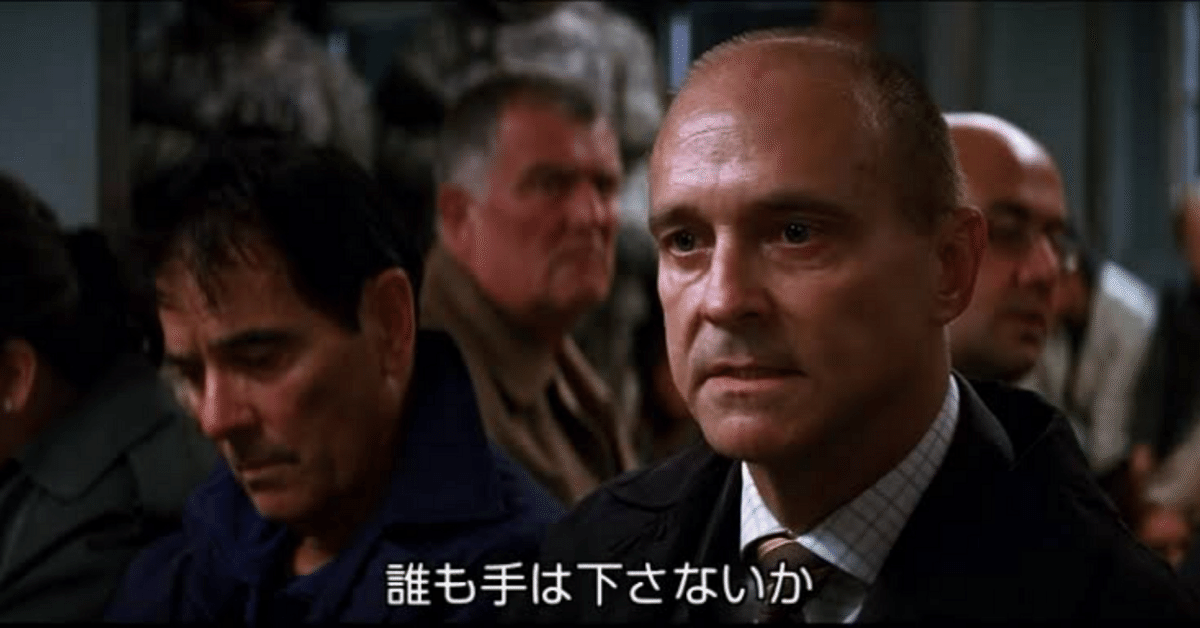
But my favorite scene has always been the one with the two ferries
each given a detonator that will blow up the other ship.
If one presses the switch, they live and the other dies.
One ferry carries prisoners. The passengers panic.
In that chaos, could anyone really choose to trust humanity enough not to press the button?
Even knowing the Joker might blow them both up anyway?
The prisoners throw their detonator into the sea.
The civilians hesitate, but ultimately choose not to press theirs.
In that moment, they defeat the Joker’s malice.
They become “good.”
It’s the part that’s fascinated me the most since the first time I saw it.
I didn’t expect the film to depict goodness so directly,
and like the Joker himself, I was stunned.
What would I have done?
Realistically, probably just sit among the other passengers and watch things unfold.
But emotionally?
I think I’d choose not to press the button—and accept death.
But that’s a passive choice.
The true “answer” here is faith in the other side’s goodness,
trusting they won’t press it either.
Me, I’d probably think, “Well, there’s a decent chance they’ll push it.”
That resignation, that quiet acceptance of whatever happens—
it’s not belief in human goodness. It’s giving up.
One of my friends said he hates roller coasters because
he can’t stop imagining the one-in-a-million accident.
He doesn’t want to draw a bad ticket on purpose.
Fair enough.
I think of that feeling too—before a flight, before walking alone in a foreign city.
Especially when curiosity pushes me into risky places.
And then, right before I do, the same thought always crosses my mind:
If something happens, it happens.
If I draw the unlucky number, so be it.
Even death, I can accept.
So if I were on one of the Joker’s ferries, it’d be the same.
Sure, it’s the worst possible draw, but once I’ve drawn it—
what can you do?
I wouldn’t want to live knowing I killed hundreds of people just to save myself.
So I’d probably sit quietly, breathing slowly, maybe meditating, until the end.
If someone else pressed the button, then that’s that.
And yet, in the film, the prisoners throw away their detonator.
The civilians decide not to press.
They make the right choice—an active act of goodness.
That’s something I could never do.
Even if I also “don’t press,” the reasoning is completely different.
It’s easy to go with the flow and accept whatever comes.
That’s what most people would do, I think.
But to consciously choose goodness, to trust, to stand firm—
that’s rare.
Their moral clarity overturns the Joker’s scheme.
Good film.
Comments (1)
Leave a comment