


Watching experiments where AI gives Minecraft NPCs personalities and social roles—and seeing those villagers rapidly form something resembling human society—I had the immediate sense that, within just a few years, AI really could overturn everything. Perhaps we ourselves have always been nothing more than game pieces granted the illusion of free will. From the perspective of a Minecraft NPC, the player controlling them would be a godlike higher being.
As science advanced, humanity lost the ability to return to a world without modern conveniences and household appliances. Then came the internet. Now people practically go insane without their smartphones. The next era may be one in which life without AI becomes impossible. And when that happens, illustrations, writing, music, video—every form of expression—will be generated instantly and with absurd precision by AI. Even if today’s AI still lacks the emotional depth necessary to truly move human beings, eventually it will begin producing endless streams of “art” optimized perfectly for human desire through sheer computational sophistication.
So what becomes of humanity then? In Ghost in the Shell, what proves the existence of the self is the “ghost” whispering within—the intuition, the instinct, the sensibility that makes a person human. In INNOCENCE, the answer becomes something closer to: live quietly alongside living things. Dogs. Warmth. Either way, it is ultimately sensibility that defines humanity.
That said, not everyone lives according to their sensibilities. Most people will simply surrender themselves to the convenience of AI, drifting along with artificial pleasures and perfectly calculated stimulation. And if even “total art” is taken over by machines, humanity will have nothing left to do. But we can never return to the world before these things existed.
So those who still insist on living as human beings will have no choice but to move closer to Van Gogh.
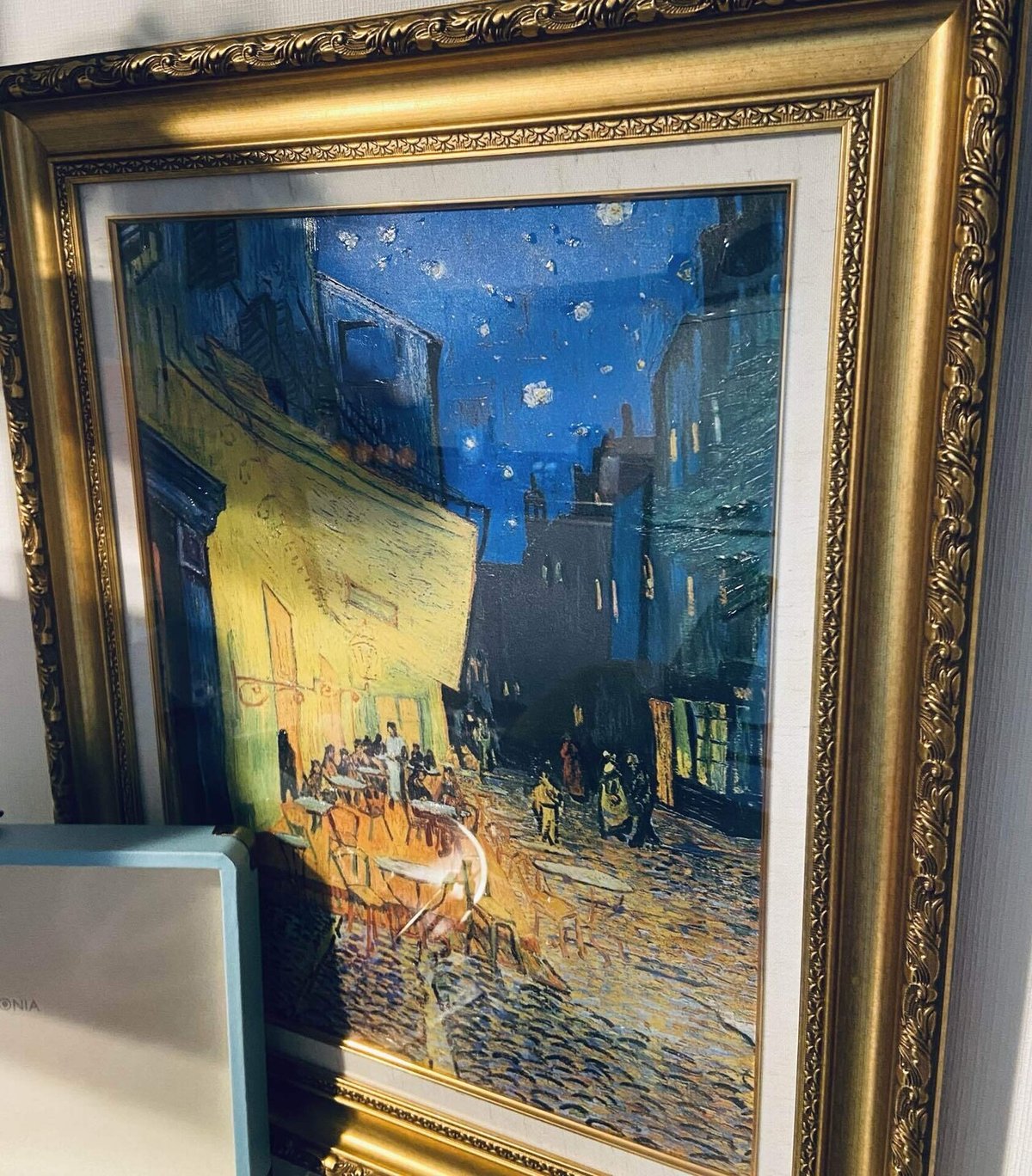
I have two reproduction prints of Van Gogh paintings hanging in my room. Even the layered texture unique to oil paint has been recreated, giving them a wonderful sense of depth and physicality. One of them is Café Terrace at Night. That night scene overflows with the kind of light everyone longs for.
The artists of the new age will simply stand before a canvas and move a physical brush by hand. Oil paintings. Not for anyone else’s sake, but because each time they come to understand the meaning of “color,” they believe their own souls too will become filled with color. Like Van Gogh, they will keep painting even if the work holds no value in the eyes of the world.
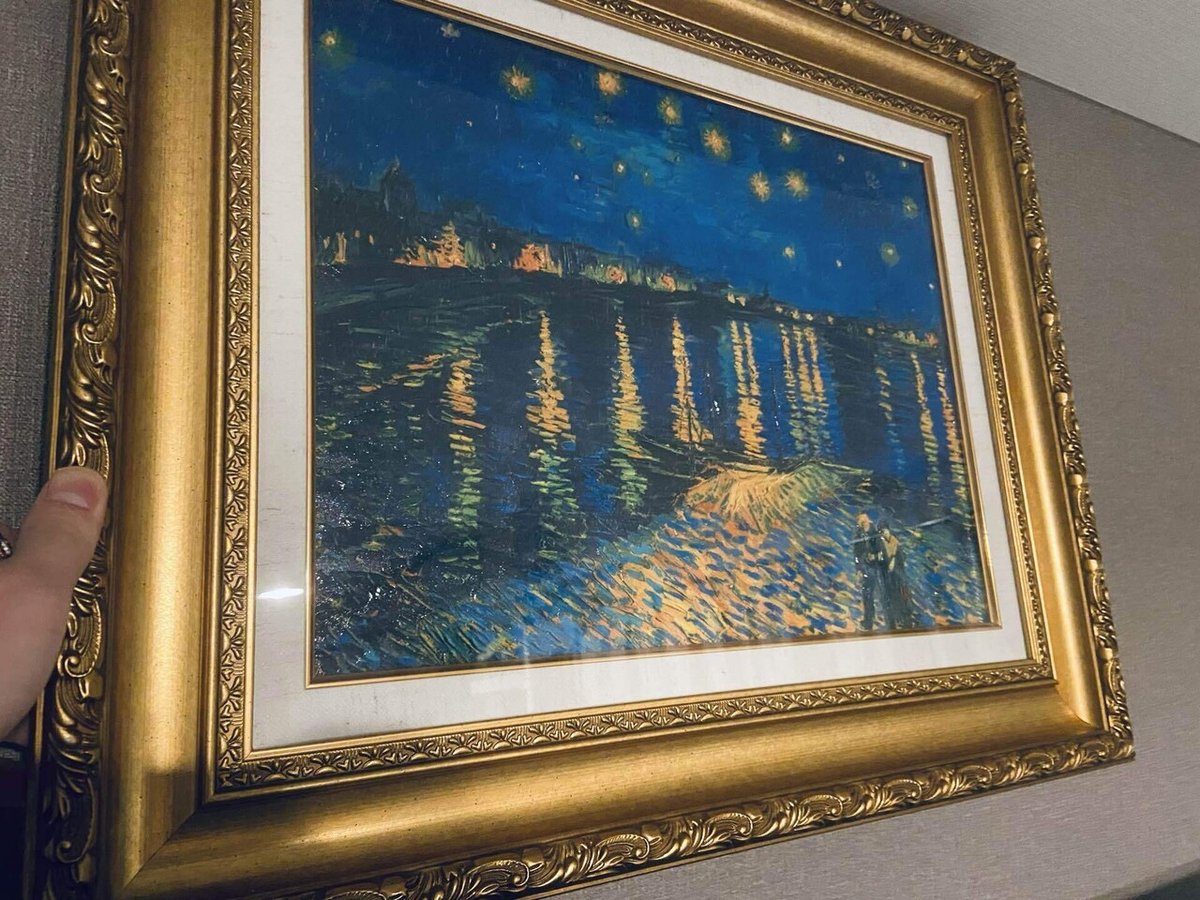
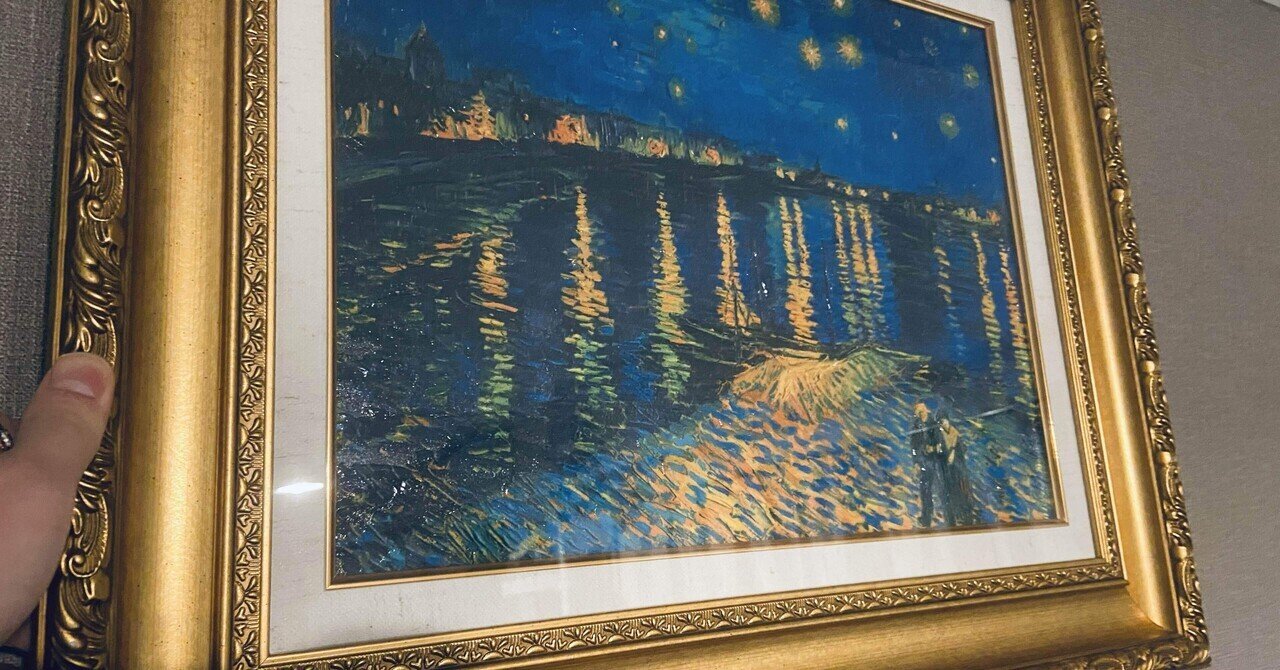
The second one is Starry Night Over the Rhône. I prefer this version of Starry Night because its blues still feel within the realm of humanity. I saw the progression of Van Gogh’s work at the museum in Amsterdam, and in his later years it felt as though his mind had been completely consumed by “beauty” itself. The more famous Starry Night no longer feels like something created by human hands. That’s why I love the sky of Starry Night Over the Rhône—it still feels like a sky desperately trying to remain human.
Just as Monet continued painting water lilies over and over again, trying to reach something fundamentally beyond human grasp, the artists of the future will make it their purpose in life to reach a realm beyond humanity, beyond AI itself—something closer to the divine. Half-hearted creations will simply have their meaning and value consumed by AI.
Otherwise, all that remains is a life spent indulging in mechanical pleasure and artificial comfort. I want no part of that. Even if I have to abandon human form itself, I still want to keep creating according to my own sensibilities. Even if no one ever recognizes it.
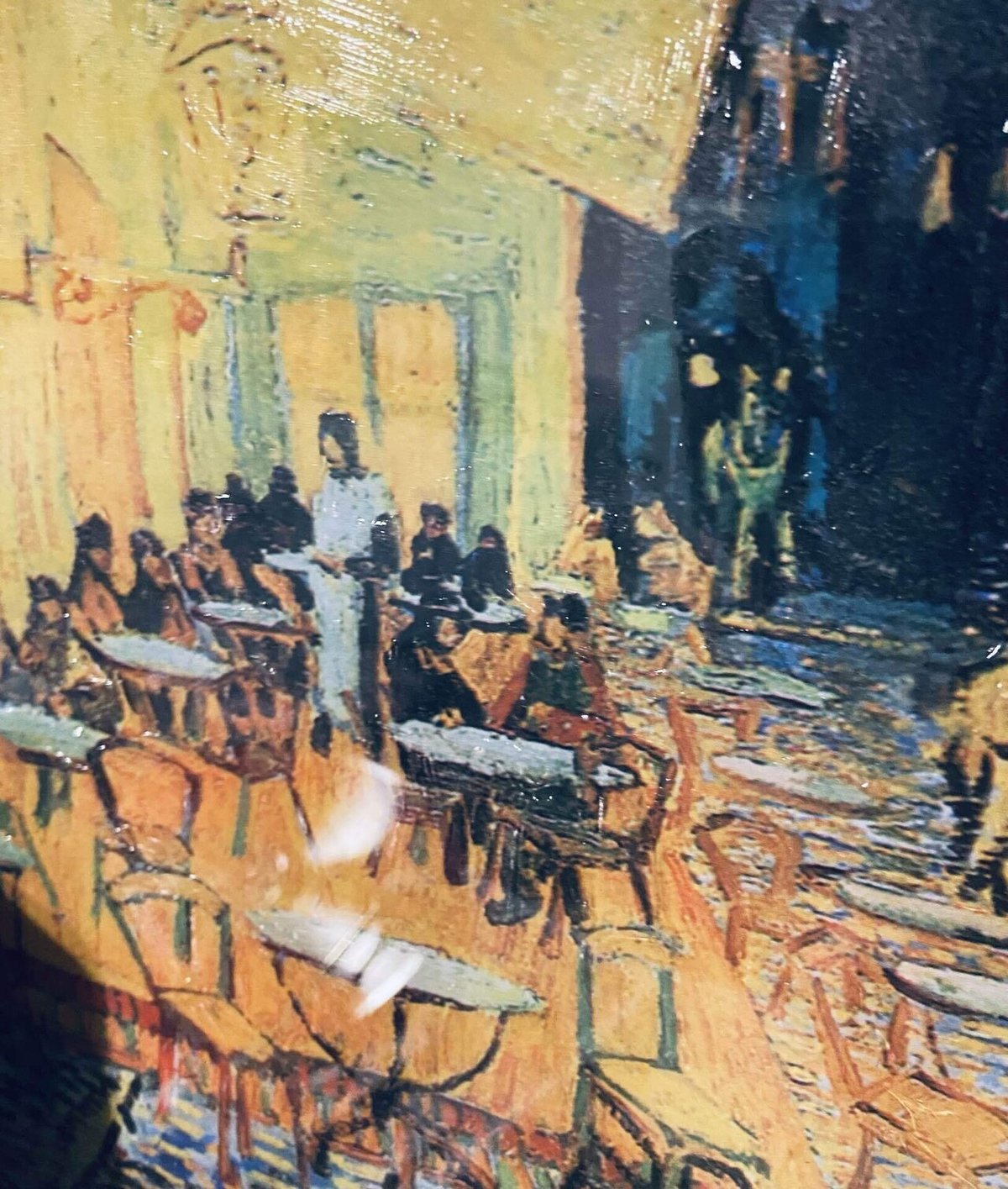
These layered ridges of paint become proof that an artist once lived here. Fundamental aesthetic instinct alone is proof of humanity. A sixth sense. The challenge against God itself becomes both purpose and value.
A philosophical zombie, or Van Gogh. Could a human being truly confront the madness of the canvas to the point of cutting off their own ear?
Comments (3)
Leave a comment