


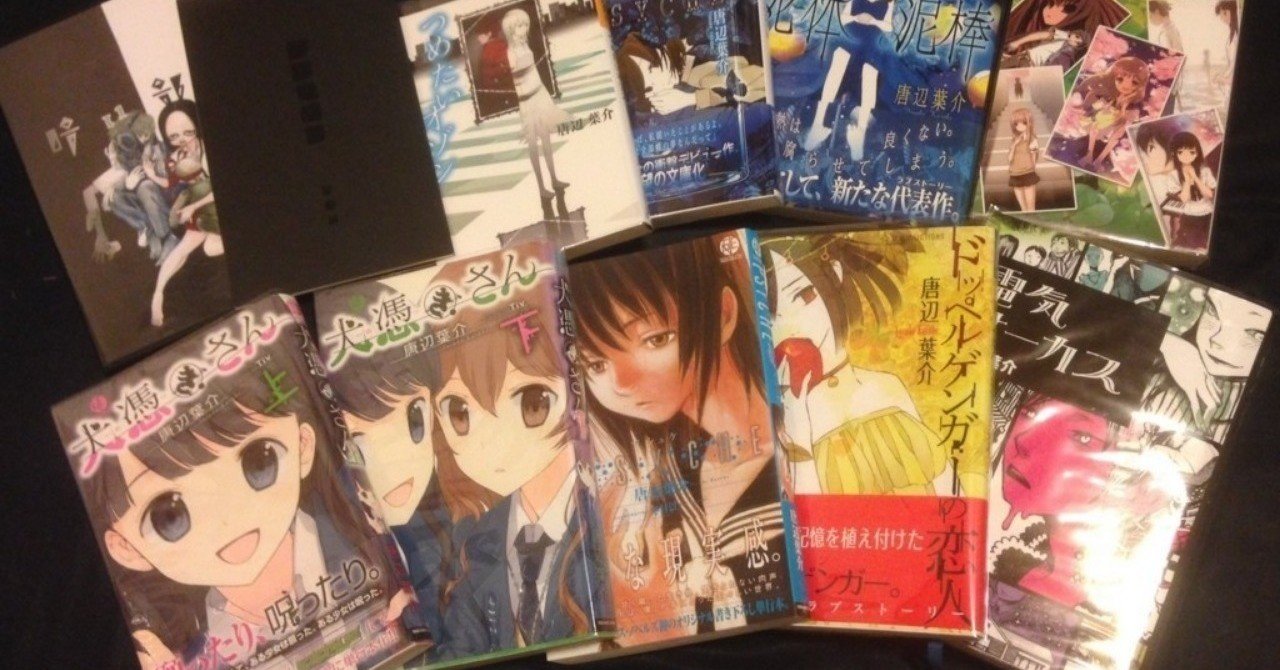
※This article is a repost of an article originally published about 10 years ago.
Setoguchi Renya and CARNIVAL
If I had to name my favorite eroge scenario writers, Setoguchi Renya would absolutely be in the top five—he’s the kind of writer who left a permanent mark on what I think “good writing” even is.
The name Karabe Yosuke, which I’m introducing today, is the pen name Setoguchi-sensei uses for his general-audience work—more specifically, the name he took up after retiring from writing adult games under “Setoguchi Renya.”
The point of this post is to introduce all of Karabe Yosuke’s novels, so I’m going to skip his eroge era… but I do want to briefly touch on his debut scenario work, CARNIVAL.
By the way: back when I wrote scenarios for audio works at an adult game company, the producer there told me he’d seen Setoguchi Renya in person once. Apparently he was wearing a jinbei and geta. That’s such an aggressively “writer” vibe that it makes me smile.
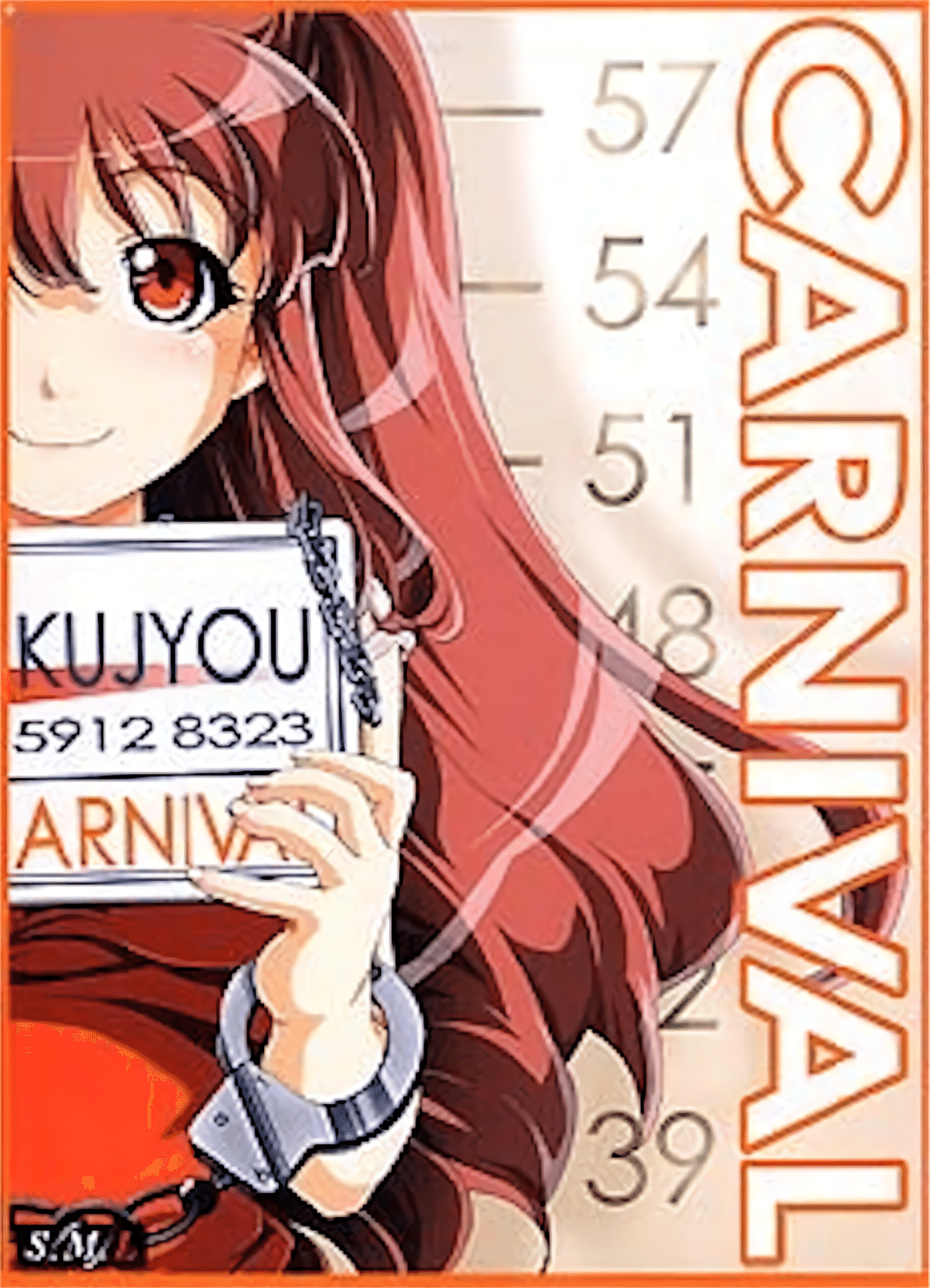
Themes: “how hard it is to believe,” and “everyone lives with some kind of wound.”
A psycho exploitation/humiliation novel + AVG about wounded young people struggling, suffering, and growing.
The story unfolds as the protagonist and heroine’s relationship, upbringing, and past events are gradually unraveled.
At the start, the protagonist is arrested on suspicion of murder, escapes while the police aren’t looking, and takes refuge at his childhood friend Risa’s house.
For a while, CARNIVAL was hard to get into because of insane secondhand prices—but now it’s available digitally, and you can play it with roughly 20$. Same with SWAN SONG, another Setoguchi work that used to be expensive: it’s been reissued too. We live in a better era.
I quoted the synopsis, but honestly, it’s a ridiculous opening. And that label—“psycho exploitation/humiliation novel”—is a genre you basically never see.
But CARNIVAL earns the “psycho” part: one of its central themes is the protagonist’s madness.
I got completely floored by CARNIVAL, and that’s what made me chase not only Setoguchi’s works, but also the novels under the Karabe Yosuke name. And across those other works too, that same thread keeps getting carried forward—the protagonist’s insanity. For me, that’s the biggest charm of his writing.
(There is a novelization of CARNIVAL credited to “Setoguchi Renya,” but it’s meaningless unless you’ve played the game, so I’m skipping it. Also it’s become a 500$ premium book, basically out of reach for normal people. I own a brand-new copy —yes, I’m bragging.)
He also contributed to an anthology called KUU 2, but since it’s only a few pages and under “Setoguchi Renya,” I’ll leave it out.
Karabe Yosuke Works
・A Dark Room
Back to Karabe Yosuke.
If I’m going to name the work where I personally felt the strongest sense of madness and the grotesque, it’s actually the bonus booklet that came with A Dark Room.
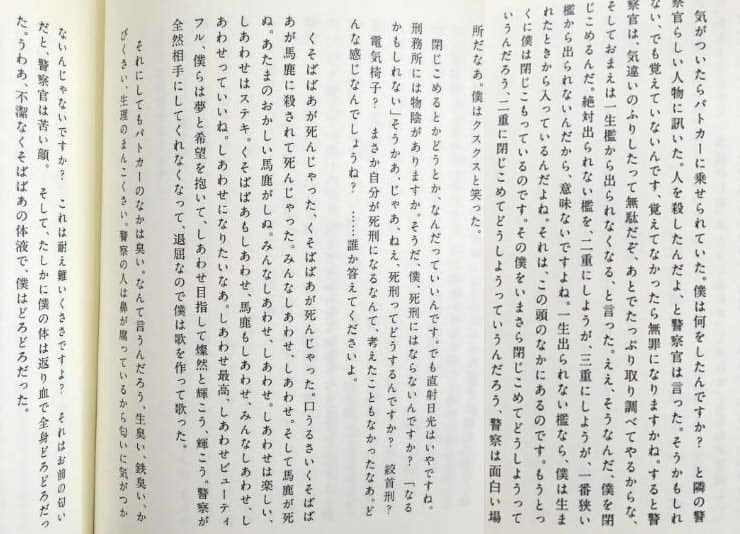
That booklet is made up entirely of short pieces where the protagonist keeps doing deranged things powered by totally mismatched logic. It’s probably the Karabe Yosuke book furthest from “understandable.” Once you step into that aggressively idiosyncratic worldview, you’ll start tripping just from reading.
Unfortunately, it sounds like the edition currently sold on Amazon doesn’t include that bonus booklet. Tragic. (Even without it, the main work is still a masterpiece.)
・First Novel Bunko (bonus)
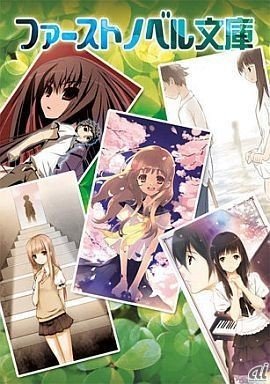
Another bonus-related item: there’s a short story included in First Novel Bunko, a booklet created by the writers involved in the novel game Second Novel: Her Summer, 15 Minutes of Memory, where Karabe Yosuke handled part of the scenario.
The five writers gathered for Second Novel were so perfectly “my taste” that I genuinely suspected my alter ego had secretly planned the lineup.
First: Ichikawa Tamaki, known for Unison Shift works—more recently, the Clockwork Ley-Line series.
Then the absurdly famous Tanaka Romeo (to the point where it’s hard to pick a single “representative work”). He also structured an anime-original route for Rewrite.
Then Uminekozawa Meron, the genius who wrote the light-novel “weird book” Hidarimaki-shiki Last Resort.
Then Motonaga Masaki, a veteran who’s been putting out classics since the late ’90s (Sense Off, Kiss to the Future, and more).
And finally: Karabe Yosuke.
It’s basically an Avengers team-up of eccentric adult-game writers.
That bonus booklet (it’s basically the thickness of a full light novel) centers on protagonists with unusual constitutions. Karabe Yosuke’s piece, “The Color of Sound,” is a bittersweet love story about a protagonist who can see colors in music and his lover.
Since it’s an omnibus with other writers, his style here is unusually restrained and “polite,” which makes it extra valuable. (My favorite in the booklet is Ichikawa Tamaki’s “Loss No. 21.”)
The cruel part is: the booklet is harder to obtain than the game itself. But if any of this grabs you, I really want you to somehow track it down. I’m willing to say you’ll never see a collection like this again—in the best possible way.
・PSYCHE
Putting those short pieces aside, in Karabe Yosuke’s solo works, you often get madness that feels like it’s rooted in real experience—twisted, but real. And you feel it most strongly in the protagonists.
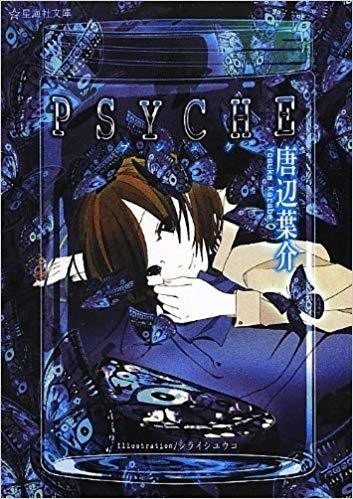
In his first novel, PSYCHE, the protagonist starts seeing the spirits of his dead family, shuts himself away at home, and spends his days painting on canvas. It’s a grim story—and near the end, the protagonist keeps ingesting the hallucinogenic wings of a morpho butterfly like a drug.
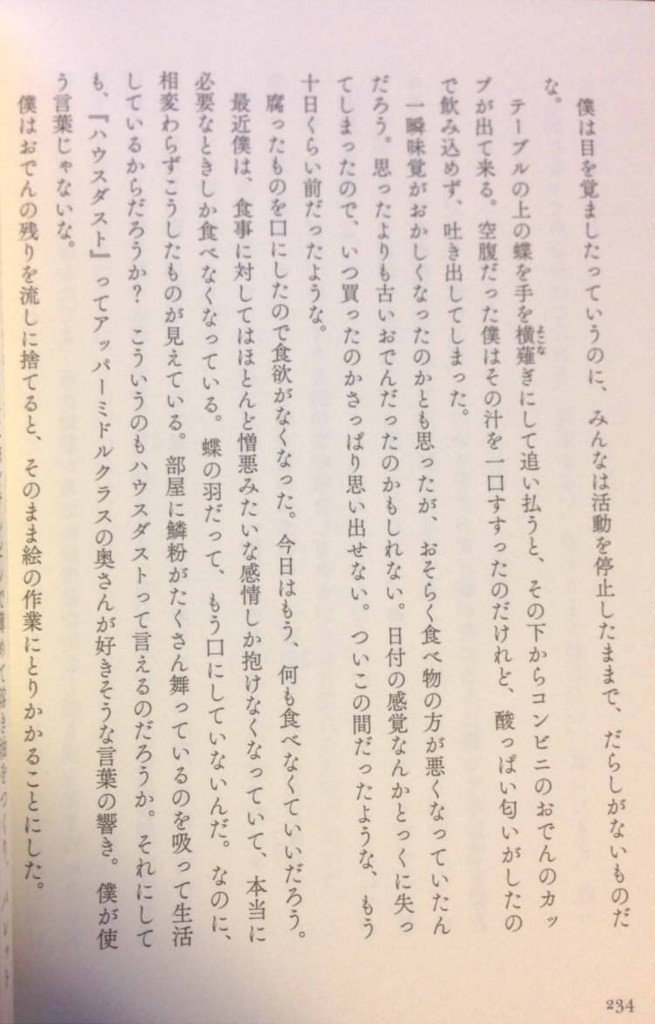
The protagonist eats “butterfly wings,” and gradually breaks down. My favorite line is the one that says he’s come to feel “almost something like hatred” toward eating.
Karabe’s works are packed with protagonist monologue—he keeps writing the inner world in a sticky, obsessive way, and the thought process is always missing some piece of ethics. In PSYCHE, for example, the protagonist loses interest in everything except painting while consuming butterfly wings.
That heavy negativity is exactly what makes Karabe’s work so appealing. And since it’s so strongly present even in his debut PSYCHE, I recommend it as the entry point. There are two cover versions—one by Shiraishi Yuko and one by Fuyume Kei—but the contents are the same aside from book size and whether it includes illustrations, so
pick whichever you like.
・A Doppelgänger’s Lover
My lover is a doppelgänger implanted with my dead lover’s memories.
I implanted every memory of the lover I lost into a clone.
I never imagined that living with this newly born “lover” would corner both of us—
A sci-fi love story about living with a clone of your deceased lover. The clone suffers over whether she’s truly the same as the original, and the happiness that seemed recovered collapses on a grand scale.
Here, the “madness” leans more toward the heroine—because she’s the clone—but by the end the protagonist also starts absorbing that madness. It’s like that phenomenon where, when one person in a couple spirals into instability, the other gets dragged along too.
ドッペルゲンガーの恋人 (星海社FICTIONS)amzn.to
・ Corpse Thief
After her sudden death, “I” sneaked into the funeral venue and stole her body.
In my one-room apartment, I began a strange cohabitation with her corpse, lying in a huge freezer…
As the title says: the protagonist steals his lover’s corpse and lives with it.
Written out like that, it sounds ethically insane—and it is—but among Karabe’s works, it’s a comparatively “clean” love story.
Stealing a corpse is a crime, even if it’s “for love.” The story mixes the dread of the police eventually coming with a drunken, self-intoxicating feeling of “I was capable of something that extreme.” It’s an ambitious work that calmly traces the process of slowly, inevitably realizing the lover’s death.

Also: the illustrations—especially the one of the massive freezer containing the body, paired with the protagonist’s inner world—are incredible.
・Cold Ozone
A boy meets a girl in a white room at a facility. Her name is Hanae Nakamura, with angelically pale skin and hair. They’re told they share a pathology:

Anna Mary Syndrome—a condition where you share another person’s senses, and eventually thoughts and emotions begin to melt together. Even since childhood, they’d been connected through dreams of each other’s lives, seen through shared vision.
Despite the synopsis, it leaves you with a strangely fresh aftertaste. Two unrelated people, whose thoughts and vision sometimes blur and fuse—this is that story.
At one point, the heroine gets confined by a perverted older man, and the psychological depiction of the unrelated protagonist receiving those fragmented sensations is brutal. As you read, it’s like the reader’s own consciousness begins to mix in too.
The contrast between the heroine—sickly, born with white hair, raised in misfortune—and the ordinary protagonist grinding away at shogi while aiming to become a professional player, plus the quiet madness born from the syndrome, makes this one stand out.
・Inutsuki-san
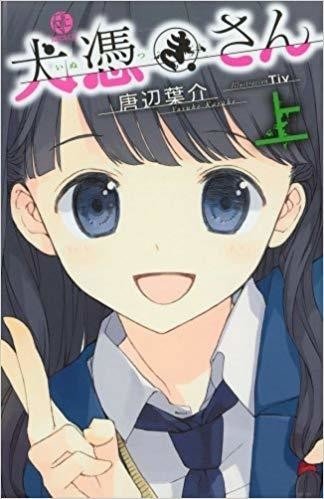
A two-volume work—Karabe Yosuke’s second major novel. It’s the only one I’ve listed here with a female protagonist, and it even has a rare touch of yuri.
But despite the cute cover, the content is more brutal than ever.
A girl wants to kill her classmate.
The reason is the cruel bullying she has endured.

She chooses kodoku"蟲毒" as her method—an atrocious curse that demands a living sacrifice…

At an all-girls’ school, occult incidents begin to unfold in the shadows, and the “dog-possessed” outcast Ayumu Kususe rises into action.
A chilling school occult novel begins.
In the first story, a bullied girl forced into compensated dating turns to kodoku—a brutal curse that requires a sacrifice—for revenge. She chooses the variant that uses a dog as the offering, aiming the curse at her tormentor.
Her conflict is written in a sticky, unpleasantly intimate way: even if it’s for revenge, she agonizes over killing her beloved dog with her own hands. You’d never guess that from the smiling cover.
And then, the woman on that cover—“Inutsuki-san”—steps in to resolve their occult problems. Of course, Inutsuki-san herself comes with a mountain of heavy baggage too.
Given the subject matter, it leans close to horror. And really—yuri is basically horror, isn’t it? With two volumes, the scale grows big. I want you to feel that gap firsthand: cute yuri-coded characters, and grotesque content.
犬憑きさん 上巻 (スクウェア・エニックス・ノベルズ)amzn.to
・Electric Circus
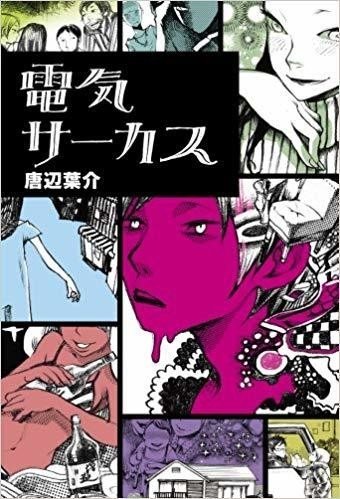
Back in the era before fast digital lines and always-on internet—
when everyone connected through phone lines.
young people tried to express themselves on personal websites.
Karabe’s style is “mostly protagonist monologue,” and the more you read, the more it feels like the protagonist’s negative, peculiar thinking starts seeping into you. The work where that’s most pronounced is Electric Circus.
The protagonist is an unemployed admin of a famous text site. He starts a room share with hopeless friends he met online, plus mentally unstable women who tell convenient lies for their own benefit—and sinks into days soaked in drugs and sex.
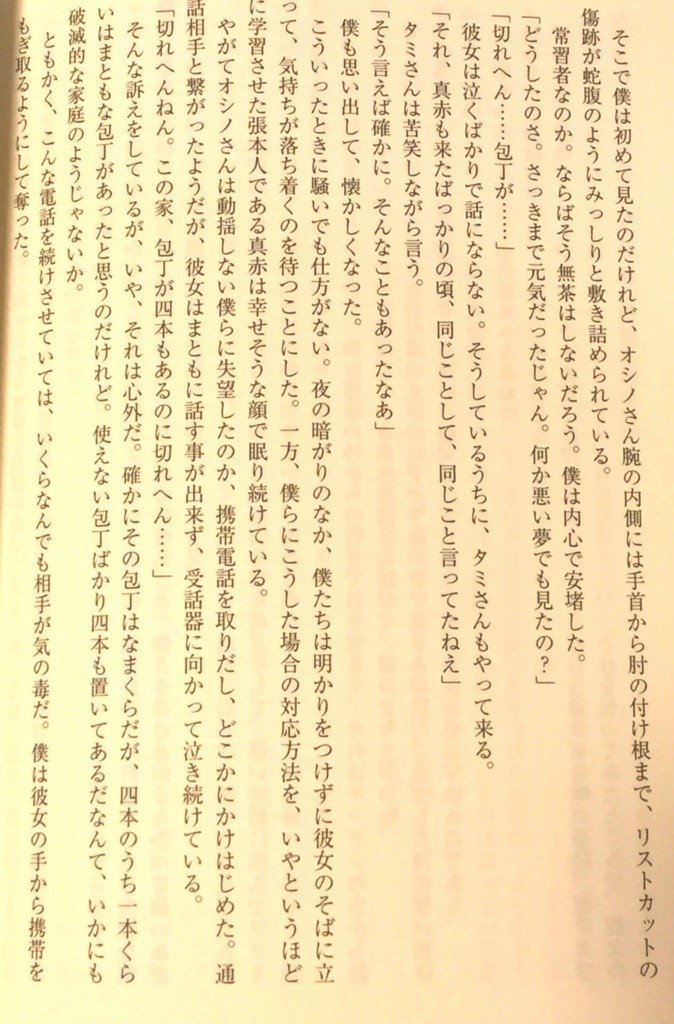
What’s especially vicious is how real the “messy” characters feel: women who cry through the night holding a kitchen knife just to get attention, or subculture girls who bring cookies laced with Depas to a club and hand them out—those “share house scene” details are painfully precise.
As he keeps looking down on internet people and being looked down on in return, the protagonist becomes someone who can’t live without psych meds and alcohol.
His calm descent into insanity is frighteningly intense—until he ends up hospitalized, screaming something completely nonsensical like, “You put a Gundam in my bag, didn’t you—A GUNDAM!”
There’s no big mystery, no grand incident—just a sick sensation quietly cultured and fermented.
These days it’s easy to get on Kindle, so if any of that internet-era texture catches on your skin, please give it a try.
・New Release: MUSICA!

Karabe Yosuke-sensei has been quiet for a while… and then suddenly: a brand-new bishoujo game under the Setoguchi Renya name is releasing this month.
That’s part of why I dug this article back up from the sea of the internet—I want more people to know.
Anyway: that was an otaku post that ran over 5,000 characters.
Comments (2)
Leave a comment