


※This is a piece I wrote for a doujinshi several years ago, now republished here.
To play a bishoujo game is to face “girls.”
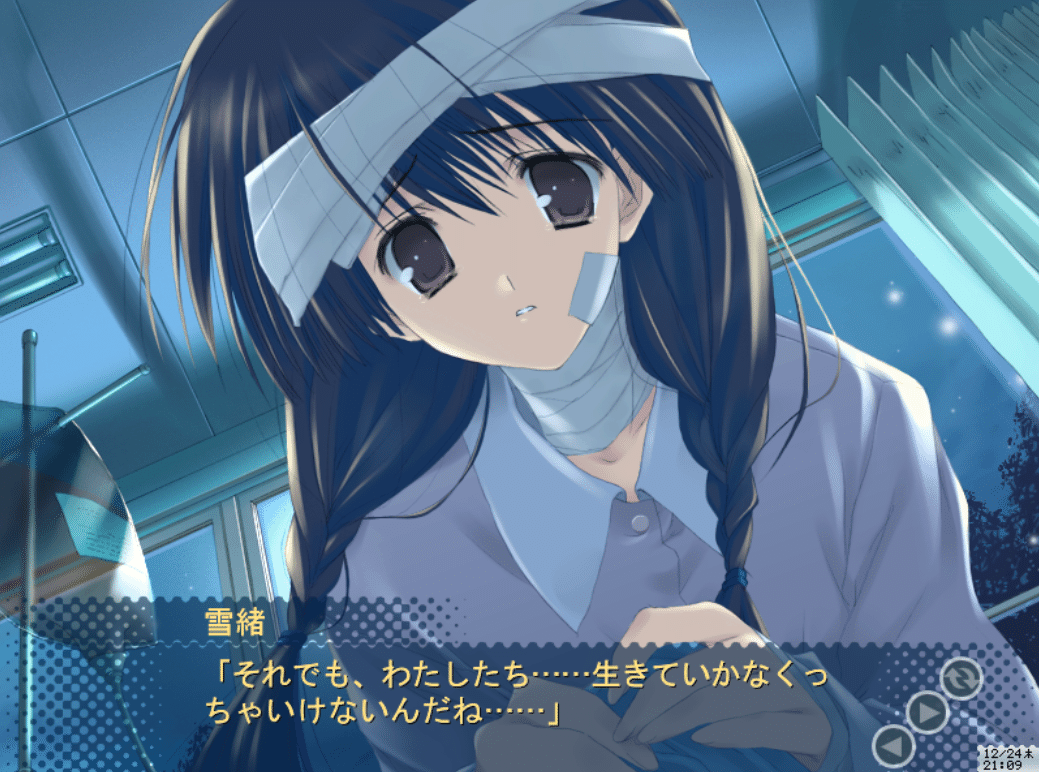
Bishoujo games are home to all kinds of girls. Some are girls whose very existence is connected to the world itself; others have no place in reality and wander the city streets late at night. Through these stories, we catch glimpses of the girls’ sensibilities. We bathe in the glittering sensitivity of adolescence, and we shed tears at the delicate shifts in their emotions.
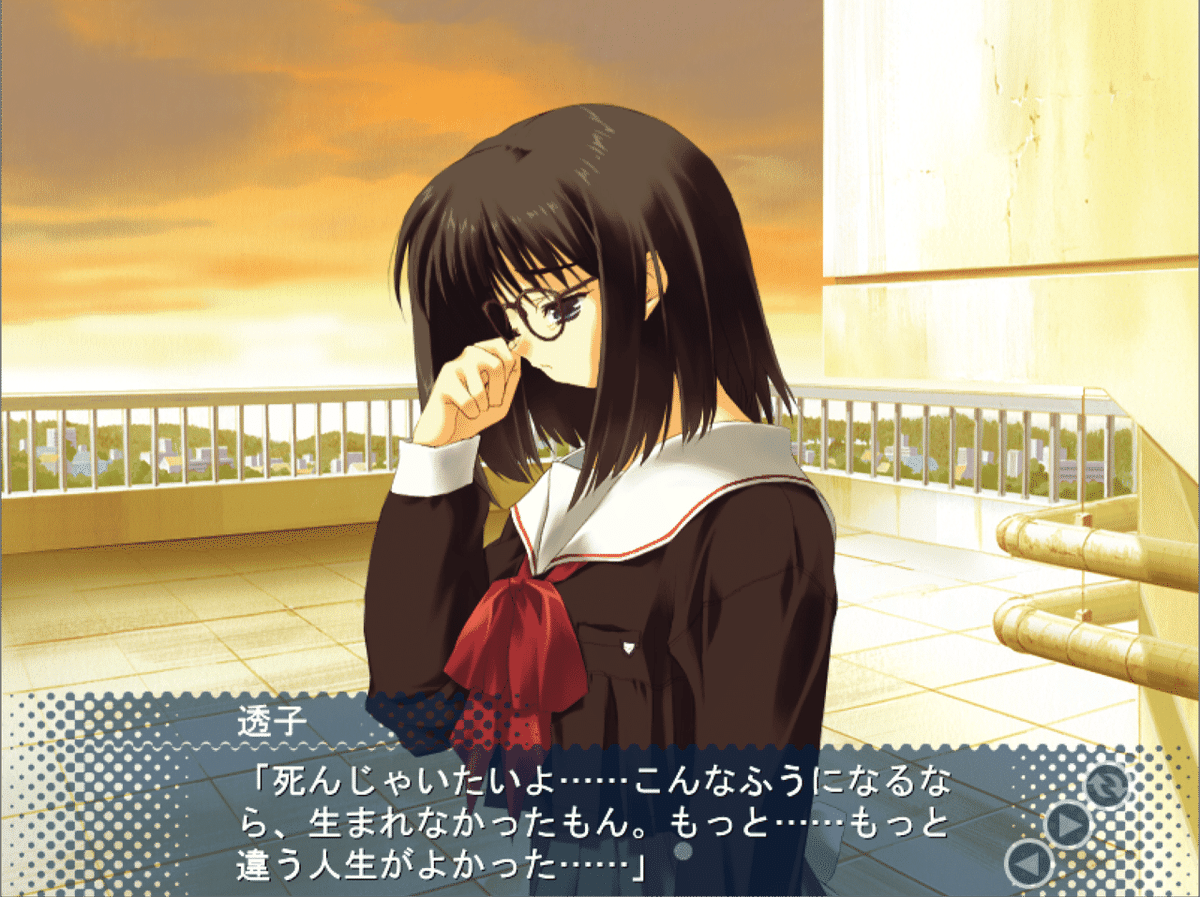
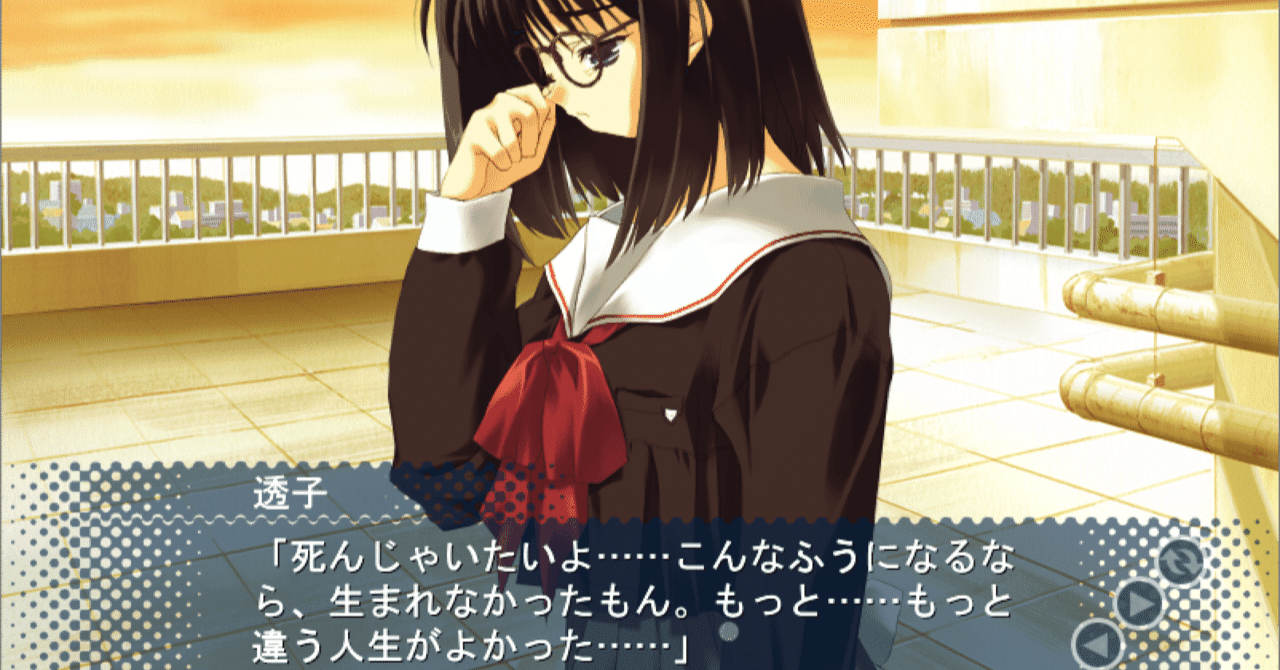
December When There Is No Angel is a work that depicts the pain of girls living in the present day—a pain born precisely because they are too pure. The heroines in this game include girls who use physical relationships with men as emotional support, girls who cut their wrists because they can’t keep their feelings under control, girls who feel no interest in the world and try to throw themselves from a rooftop, girls involved in compensated dating, infidelity, and more. To otaku who had escaped from reality and dreamed of “girls,” it thrusts the reality of girls right in front of them.

If you truly want to face “girls,” you have to touch upon their truth. I once published an interview book called A Field Guide to Girls with Approval Addiction. Marketed with phrases like “secret accounts, drugs, compensated dating—peering into the darkness in the hearts of girls from the SNS generation,” the book involved interviewing many women in an attempt to get as close to reality as possible. I then used the knowledge I gained from that book to create NEEDY GIRL OVERDOSE. I wanted to portray the “girl” I worship in a way that felt real.
![[本]承認欲求女子図鑑 新装版](https://imagedelivery.net/QondspN4HIUvB_R16-ddAQ/5b6c1a2d5496ff4fa1000c49/63c5acd21cee487ea329.jpg/fit=scale-down,w=1200)
Of course, bishoujo games have many different sides to them. Some serve to heal sensitive otaku through kindhearted girls, while others aim to cut deep into a girl’s inner world in order to unravel a complex story. Each approach has its own strengths and weaknesses, and there are plenty of works that mix them together.
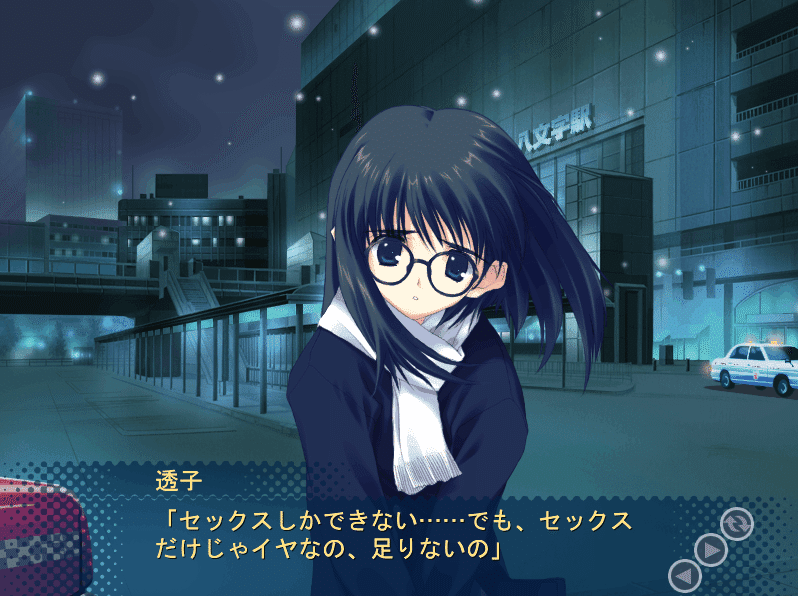
The element that drew me most strongly to bishoujo games was “the sharpened, pure sensitivity of adolescent girls.” As people grow older, they keep shaving away the pure sensitivity they were born with, exchanging it for sociality. I want to see that sensitivity at the moment when it shines brightest, in the narrow space between childhood and adulthood…!!!
The work that made me realize that desire was December When There Is No Angel. Including the protagonist himself, it portrays young men and women whose emotions clash like unsheathed knives—not merely cheerful in the way anime can be. It lets you relive, through multiple heroines, the fleeting brilliance that can only be seen during that brief period as they approach adulthood. How could there be anything more luxurious than that?
Comments (0)
Leave a comment
No comments yet. Be the first to comment!