


※This is a repost of an article originally published on September 9, 2019.
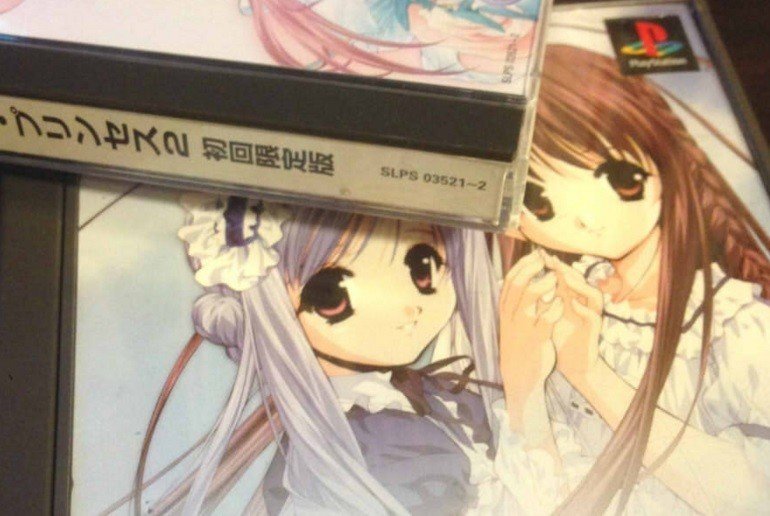
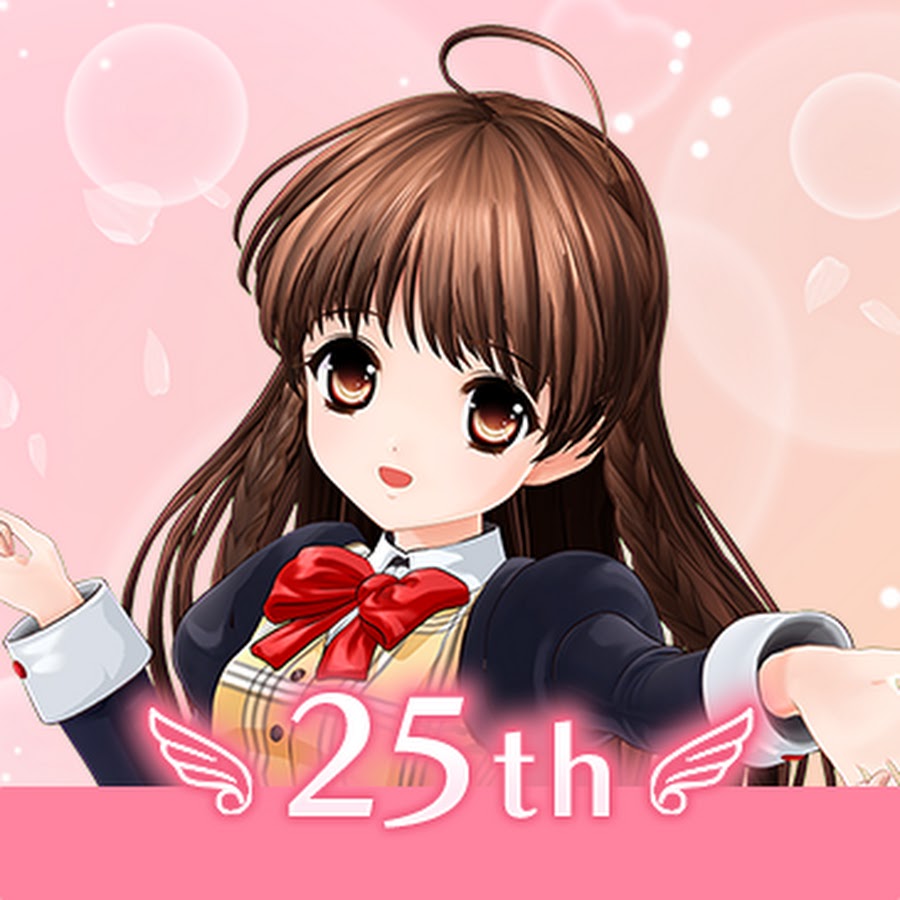
Apparently Sister Princess is celebrating its 20th anniversary. Along with that, Karen has become a Virtual YouTuber, and the whole SisPri project is restarting. On the official YouTube channel, it looks like they’re streaming one anime episode a day.
Even with how chaotic the VTuber world still is, Karen’s arrival feels like the point where everything finally converges—where every big brother on Earth gathers in one place, and the content at last becomes complete. Honestly, it wouldn’t even be an exaggeration.
Anyway—back at the 15th anniversary, I wrote a long post rambling about SisPri. But I was a nobody then, so of course nobody noticed, and it quietly vanished into some forgotten corner of the internet.
…Except: some SisPri otaku I don’t even know saved it on the Internet Archive.
So I’ve edited and expanded it a bit, and I’m reposting it here.
It’s a five-year-old article, so it’s even more impulsive, more “written in one breath,” and more of a mess than what I write now—please forgive me.
■Sister Princess
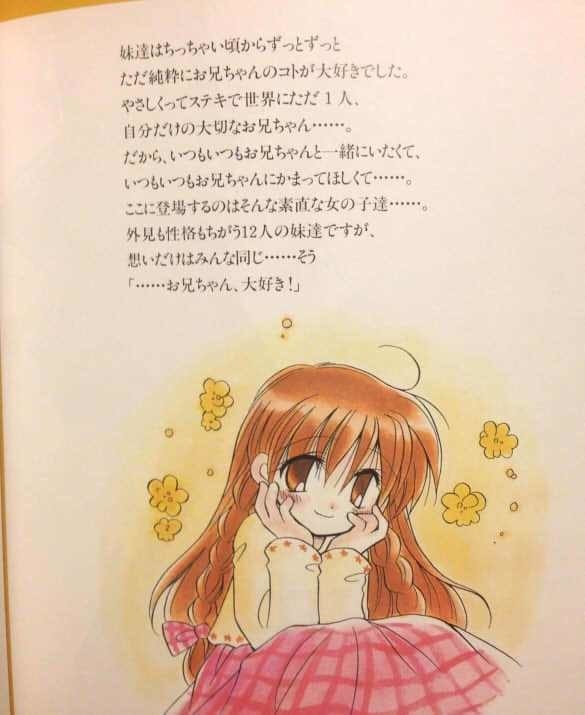
It starts with an utterly unhinged premise: “For no particular reason, you have twelve little sisters.” (At the start of the project it was eight, but still.) The fact that SisPri made otaku accept that premise—and genuinely love it—means its impact on the VisualNovel world is basically immeasurable.
On top of that, the system where your sisters become either “biological” or “adopted/step” depending on your choices was both divisive and groundbreaking even among hardcore “little-sister enthusiasts,” who will never stop arguing about “blood-related” vs “non-blood-related.”
Because of that system, SisPri is loaded with an absurd number of “whatever” choices. The sisters all adore Onii-chan (big brother), so they’re constantly talking to you, constantly checking your reactions—and the moment you step outside it’s like, “Where should we go?” If they invite you to a meal it becomes, “Which one was the tastiest?” Every conversation begins as a question.
And that’s prepared twelve times over. And on top of that, a single response can shift whether she’s treated as biological or not.
Depending on how you look at it, that’s horror.
More than “you have twelve sisters,” the real reason it caught on might simply be the fact that they actually prepared twelve sisters × multiple route patterns and committed to it.
But no matter what, one premise never breaks:
“The sisters love Onii-chan.”
From beginning to end, every single one of them approaches you with max affection—SisPri is a work overflowing with earnest, pure love.
■The Sister Princess Anime
Cool, kind…
The one and only Onii-chan in the world.
This is the story of twelve little sisters
who love their Onii-chan more than anything.
Of course, SisPri didn’t stop at reader-participation projects or games—an original-story anime was produced too. It’s currently being streamed on YouTube, so please do give it a watch.
Season 1 split opinion: they added a 13th original sister, the animation quality wasn’t great, and there were scenes with a sort of denpa weirdness to them.
But the opening song “Love Destiny” is undeniably a classic. It has those sentimental “I want to see you but I can’t” lyrics—though in the actual show, the sisters basically have no such problem and just charge in with blind devotion.
After Season 1 came Sister Princess RePure.
This time I’m mainly going to talk about RePure’s B-part—the segment usually called “Characters.”
RePure is made in a pretty unusual production format even for anime. (Except for the final episode,) every episode has an A-part and a B-part that are essentially independent.
The A-part is called “Stories” and shares settings and staff with Season 1.
But the B-part—the “Characters” segment—has a different director for each episode, and it runs on original setups and interpretations. In other words: in the B-part, everything is different each time—music, character designs, even core assumptions. The worldview gets built purely by the director’s taste.
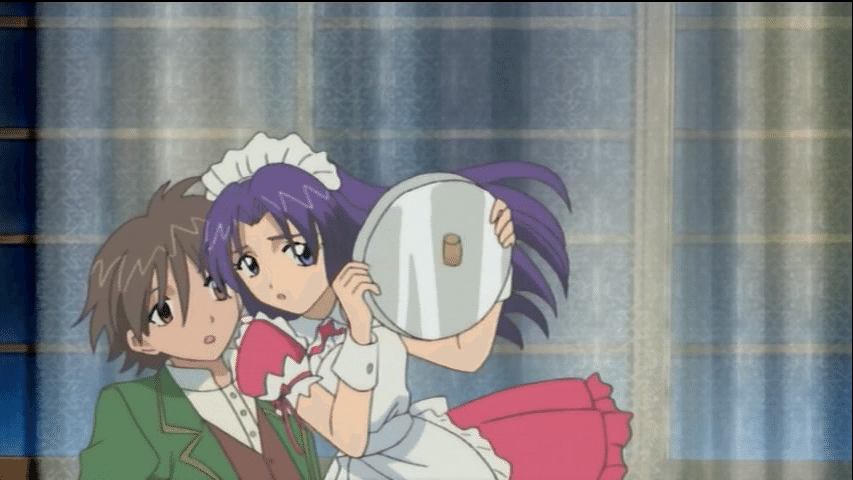
For example, in the A-part, Haruka is drawn like this:
(For context, this is the scene where she shields Onii-chan as if taking a bullet, because a customer accidentally launched a cork at him.)
And then in Haruka’s Characters episode, she looks like this.
I wanted to replay that beauty easily so badly that I learned how to make GIFs just to do it. The quality is unreal—like an OVA. The Characters segment is packed with episodes like that, so I’m going to pick out four of my favorites.
■Sister Princess RePure — Characters
Because RePure had twelve directors, each assigned to one sister, the atmosphere changes completely every episode.
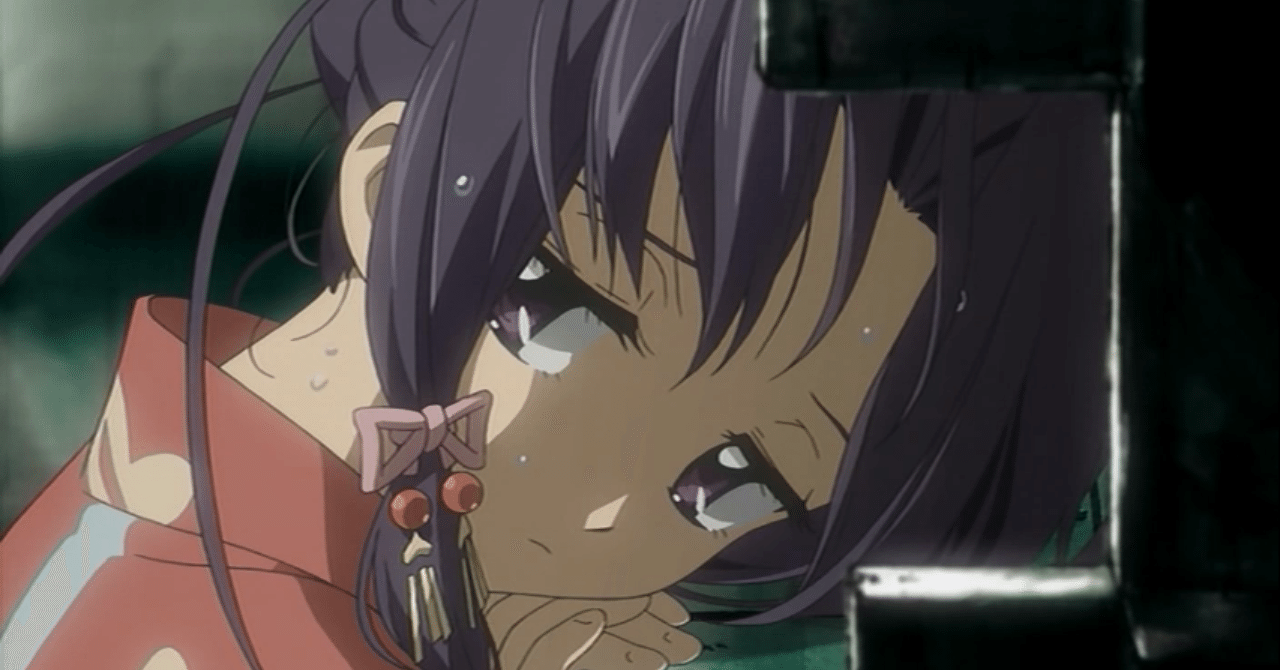
■Yotsuba — “Broken Unicorn”
Yotsuba’s episode is a story from before she meets Ani-chama (big bro), so Onii-chan doesn’t appear directly at all.
In the Stories side, Yotsuba is usually the clumsy chaos-maker, so just getting a serious short film with gorgeous animation already feels like a gift.
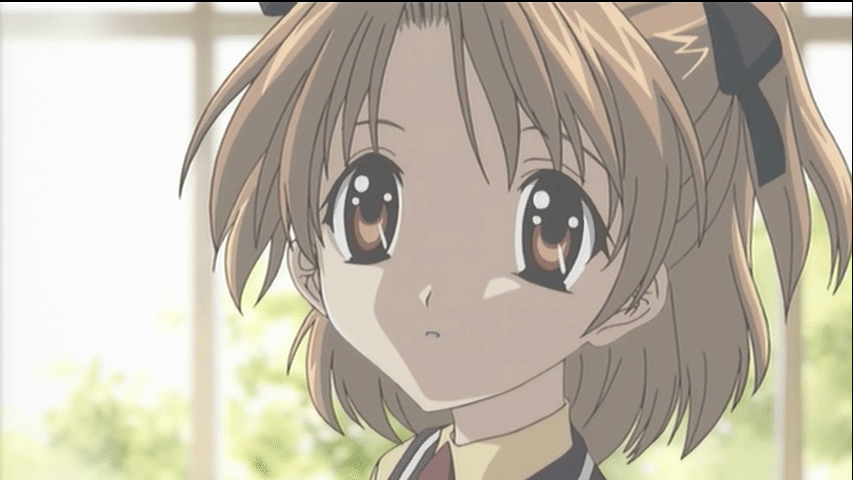
Watching Yotsuba quietly flutter with anticipation for the brother she hasn’t met yet is refreshing. Since Characters focuses tightly on one sister, you get to see sides of them you rarely see in the main work—Yotsuba in a wistful, anhedonic mood is especially rare, and it hits hard.
By the way: Sawako Yamamoto, who served as animation director for Yotsuba’s episode, also did animation direction on Futakoi Alternative, which I love—and she was also the mentor who raised Asako Nishida. Absolutely stacked staff.
■Aria — “The Day the Circus Came”
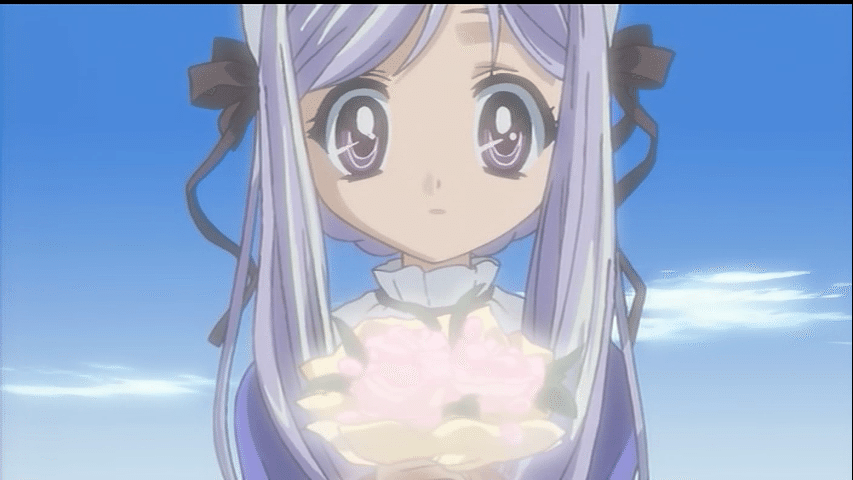
Episode 3, Aria’s episode, “The Day the Circus Came,” can be summed up in one phrase:
the animation is beautiful.
Also, the title feels like it could be an O-Ken song.
Aria has the strongest “lolita” energy among the sisters, and the episode leans fully into that—an oneiric, fairy-tale atmosphere that stands apart even within the B-part.
The episode was handled by Akemi Hayashi, who worked on many episodes of Revolutionary Girl Utena, and her skill at expressing a girl’s inner life through animation really shines.
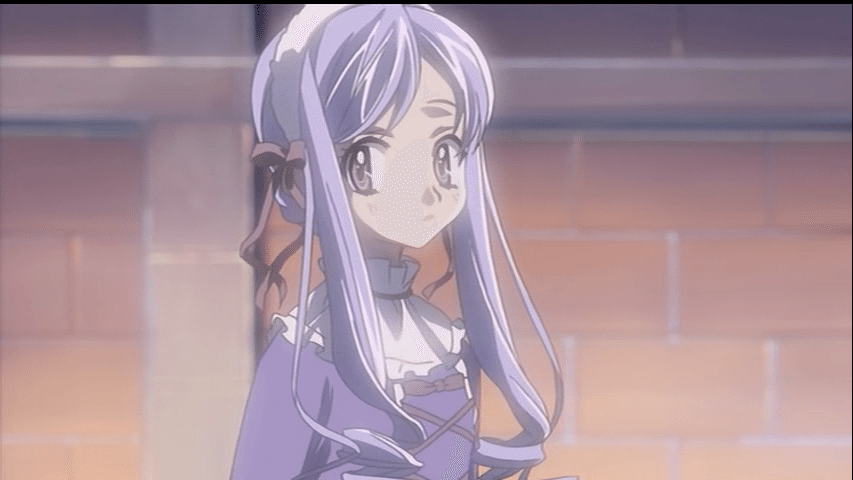
Like Yotsuba’s episode, it’s structured so Onii-chan doesn’t appear directly. And precisely because of that, you get to see these two—who are especially clingy and spoiled toward Onii-chan in the main work—show the kind of complicated, delicate inner feelings you don’t usually get from them.
These two episodes are the ones I most want people to watch, purely for the gap between them and the main show.
■Haruka — “My Swinging Heart to the Strip of Paper”
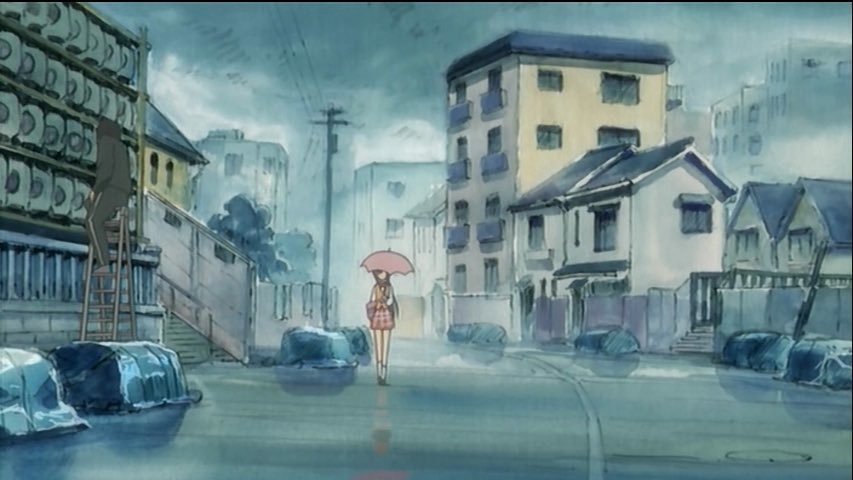
The highlight of Haruka’s episode is, without question, the background art—pale, wistful, and perfectly embodying her classical Japanese, old-fashioned mood.
I remember finishing it and immediately replaying it just to focus on the backgrounds.
Compared to the other sisters, Haruka has a slightly more adult sense of romance, and her episode expresses that “maidenly” side with really smart direction.
And then there’s the killer moment—the one that seals it.
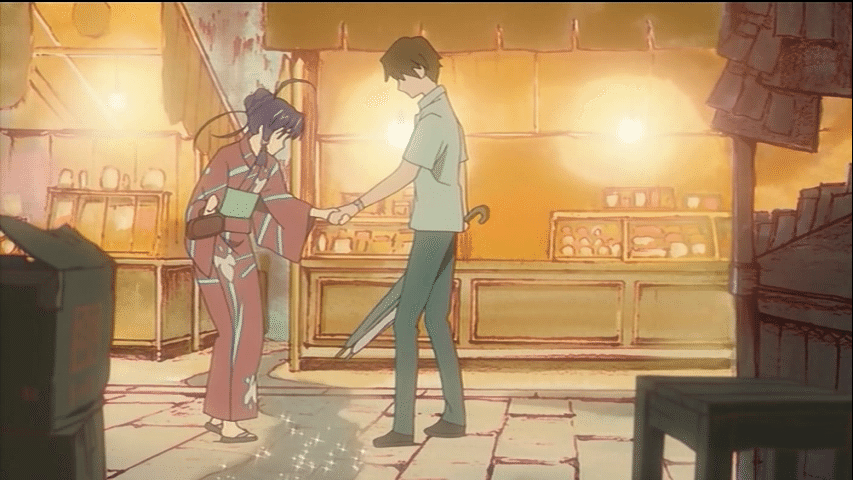
While you’re enjoying the festival with her feelings finally clearing up, a puddle appears like a tiny Milky Way, dividing the two of them like Orihime and Hikoboshi. Onii-kun reaches out. Haruka leaps over the little galaxy and jumps into him—
A hundred points.
As an aside: if you like the background art in this episode, I also recommend Sengoku Collection Episode 18. That series also shifts styles drastically episode by episode, just like Characters, and it’s a masterpiece.
■Sakuya — “Holy Wedding”
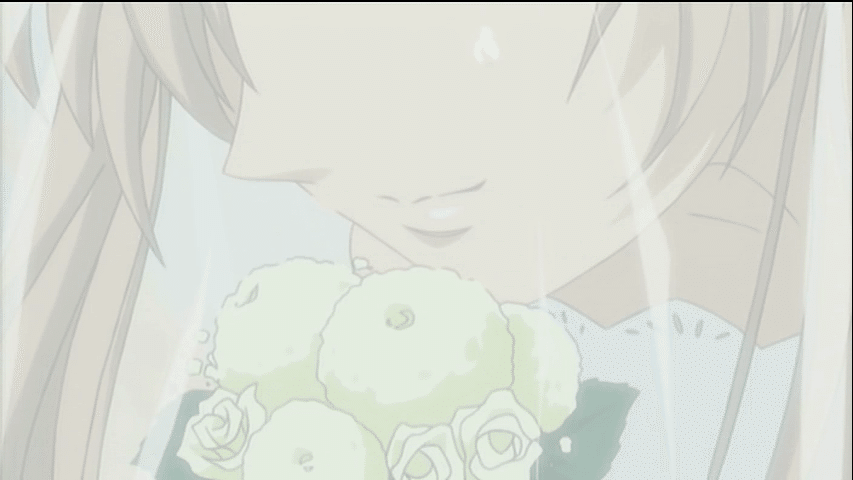
Finally, the most ferocious episode of them all: the Characters finale, and Sakuya’s episode—the sister who was the most popular.
It’s a bold culmination that tackles the taboo theme the main SisPri rarely dares to touch head-on: forbidden love and tragic romance with a biological sister, and Sakuya’s feelings as the only sister who truly sees reality.
Since the staff overlaps with the old Fruits Basket anime team, the whole presentation has a shoujo-manga vibe—screen composition, character design, everything.
In this episode, you get the contrast between:
- the young Sakuya, who blindly believed she would be united with Onii-chan, and
- the present-day Sakuya, who has learned the reality that she can never cross the boundary of “sisters.”
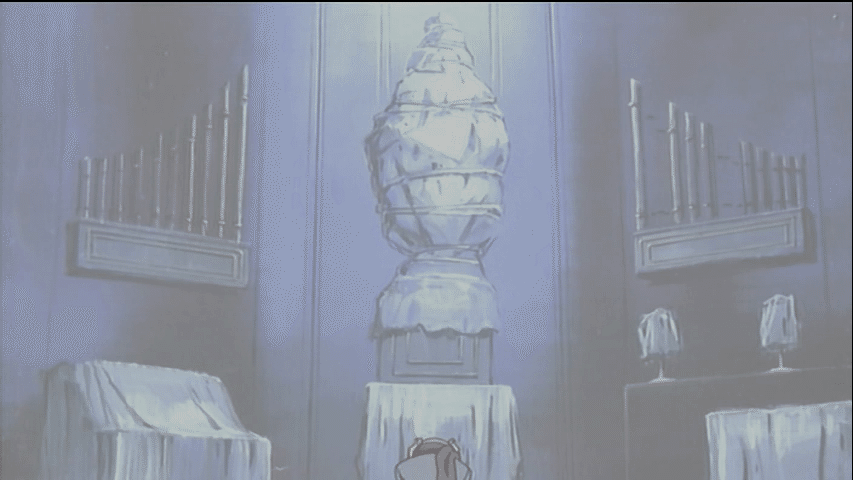
The statue of Mary in the chapel—the one she once adored as a child while dreaming of marrying Onii-chan—is now bound and hidden away.
Onii-chan will marry someone who isn’t her.
And the younger self who believed, without evidence, that she was tied to him by a red thread—
This is an ambitious work and a true finale: a story of cruel reality, something only Sakuya—always the most popular, the most adult, the one who loved Onii-chan the most—could carry.
(Meanwhile, in the main show, none of this seriousness exists; she’s basically the designated seductress, constantly teasing Onii-chan like it’s nothing.)
Sister Princess has reached its 20th anniversary at last.
And last year, we even got proof that Nana Mizuki’s performance as Aria hasn’t faded at all. Just thinking that we’ll get to see new sides of the sisters again makes me genuinely happy.
Comments (0)
Leave a comment
No comments yet. Be the first to comment!