


※This is a repost of an article originally published over ten years ago.
・About “denpa” games
Across the long history of bishoujo games, there’s always been a shadowy genre lurking in the corner—what people call denpa games, or madness-driven games.
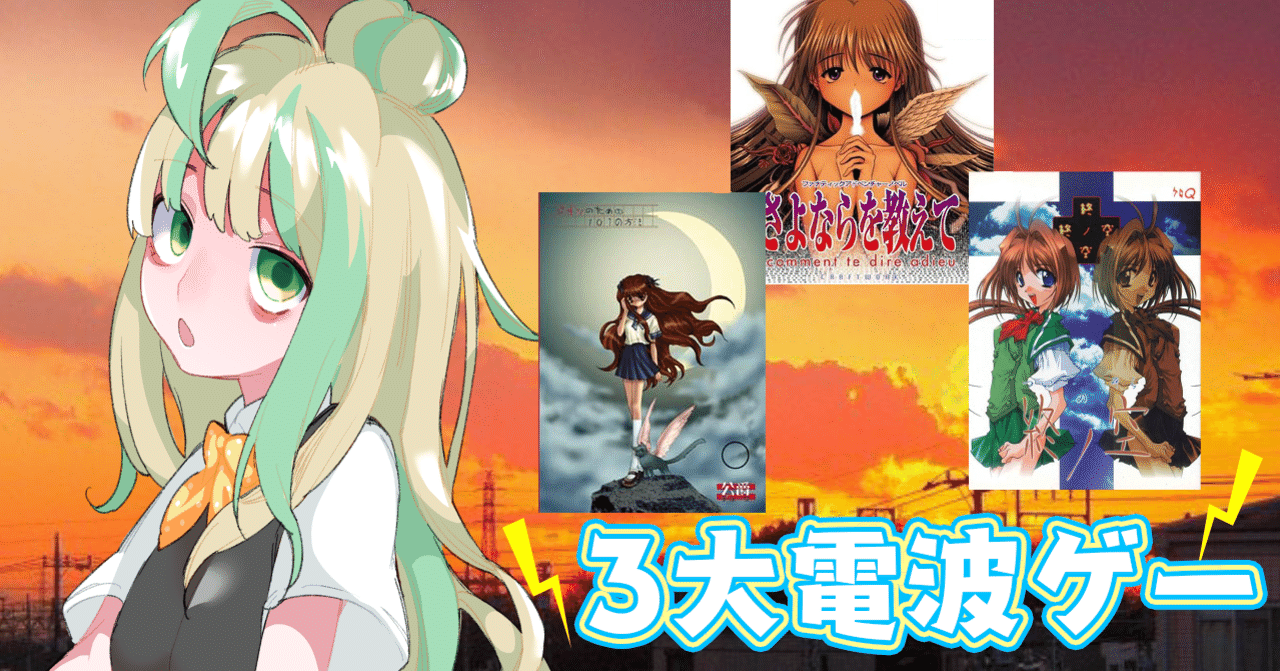
Within that scene, there’s a loose, half-joking label: “the Big Three denpa games.” There’s no strict definition—sometimes the list grows to five—but most people mean these three:
- Tsui no Sora
- 101 Ways to Ji■■■■■
- Sayonara o Oshiete (comment te dire adieu)
And if you start talking denpa games, two other titles almost always get pulled into the conversation as well: The Song of Saya and euphoria. Before touching the Big Three, let’s go through those two first.
・The Song of Saya
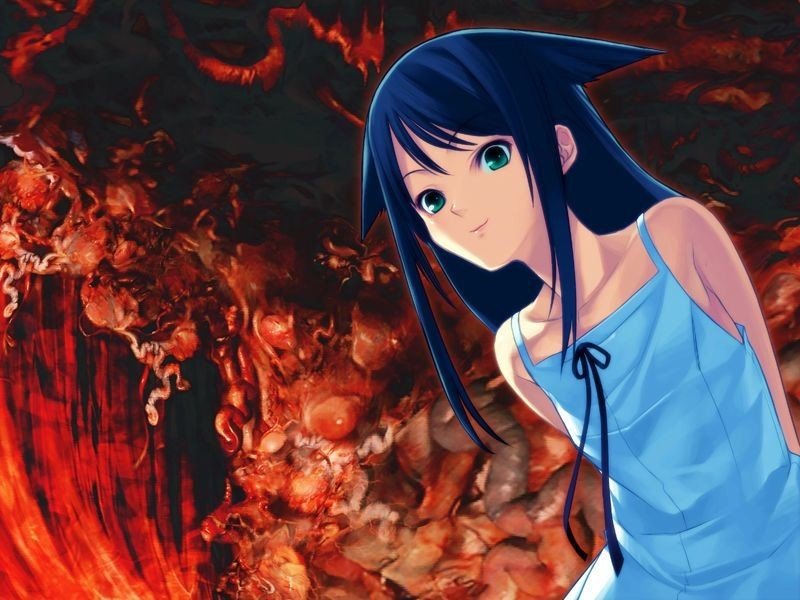
You can probably tell just from the visuals: a huge portion of this game’s CG is filled with red-and-green, fleshy, distorted imagery. There’s a reason for that—through the protagonist’s eyes (after a serious accident), everything except Saya is perceived as grotesque and warped.
In The Song of Saya, Saya and the protagonist ultimately end up bound together by a love that crosses species. The whole work draws heavily from Osamu Tezuka’s Phoenix—you can even pick up on it through the dialogue. The “Resurrection” arc of Phoenix, which feels like a clear template here, is a story about a forbidden love between a robot and a human.
Though, from the perspective of adult visual novels, we’ve been getting together with robot girls without a second thought ever since the ToHeart era.
That said, beyond the cross-species romance and the bold premise, the thing I personally value most about Saya no Uta is how outstanding it is as a compact piece of cosmic horror—in other words, as a genuinely strong Lovecraftian story.
Cosmic horror—the core idea behind the Cthulhu mythos—is an overwhelming, unanswerable terror that arrives from “outside,” something so vast and alien you can’t meaningfully fight back against it. I could go on a whole Lovecraft tangent here, so I’ll stop, but The Song of Saya carefully builds a boy-meets-girl story on that cosmic-horror foundation. Even if you strip away the “denpa” weirdness and the gore, it still stands as a great short work of fiction.
・euphoria
euphoria is another title that gets brought up constantly whenever “extreme” games are mentioned.
The setup: the protagonist, several girls from his class, and a teacher figure find themselves trapped in a sealed space, forced to endure a sequence of unclear, escalating “tests.” It starts out feeling like a very harsh, boundary-breaking work—something people might dismiss as pure bad taste.
But here’s the point:
That isn’t the core of what makes it memorable.
Because once you reach the later stages, the whole thing flips. What looked like an “extreme scenario game” suddenly reveals itself as a tightly structured near-future SF story.
Why were they gathered? Who is pulling the strings? What are the characters really thinking? Questions that were left intentionally unanswered begin locking together, and the satisfaction of seeing that mechanism click into place is way too good to write the title off as “just shock.”
There’s a moment where even the opening theme starts to feel different—not because the melody changes, but because you finally begin to understand what the song is really pointing at. That’s when the story has you by the throat.
In the end, it’s that dense late-game development—how it tightens, accelerates, and refuses to let go—that made euphoria a “classic” for so many people.
・三大電波ゲー
・Tsui no Sora
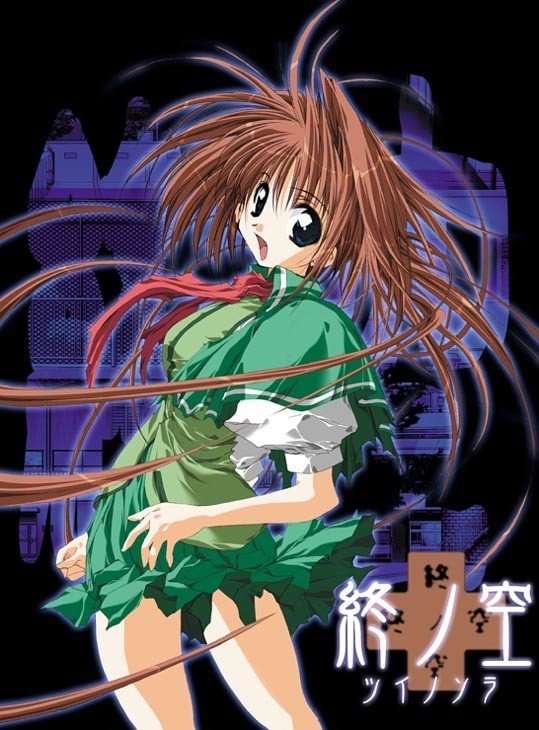
Tsui no Sora is the commercial debut of SCA-ji, who would later become famous for works like Nijuukage and H2O -FOOTPRINTS IN THE SAND-.
Because Wonderful Everyday Down the Rabbit-Hole exists as a kind of remake/reconstruction adjacent to this title, it’s arguably the best-known of the Big Three today.
People often say this is one of the works that ignited the “denpa game” boom: characters who are clearly not in a normal mental state, launching into heavy philosophy, and a sense of “trip” that feels like it could swallow you whole.
It came out in that end-of-the-century era, so it also carries the humidity of doomsday moods—apocalyptic rumors, decay, the feeling that the world might quietly collapse tomorrow. That damp, sticky atmosphere is hard to find elsewhere.
And honestly, with a work this famous, there are endless essays out there that are far more substantial than anything I could write here. So I’ll avoid the crude move of “explaining the plot” and leave it at that.
One more thing: there was also an adult-anime adaptation that became infamous in its own, very different way—people call it “a complete experience” for reasons that aren’t the same as the original. Even the creator has spoken fondly of it.
If you’re playing today, Wonderful Everyday is the safer recommendation. But if what you want is the raw denpa essence, the older Tsui no Sora has a cheap, rough, unpolished kind of dread that makes its madness feel sharper.
・101 Ways to Ji■■■■■
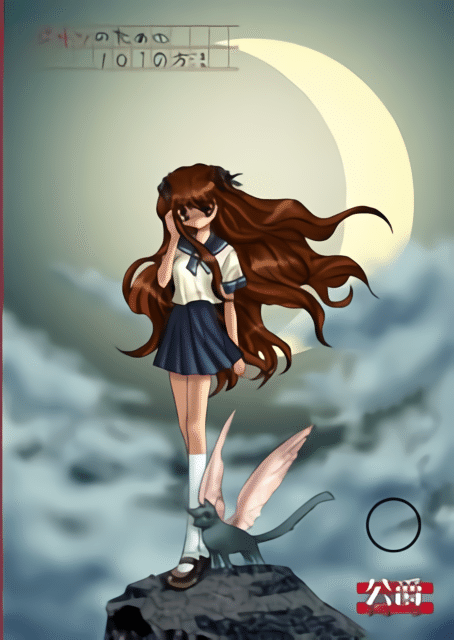
Even the title alone is practically broadcasting the genre.
If I judged purely by heroines, this one might actually be my favorite among the Big Three. But unlike titles that have become easier to obtain through modern re-releases, this one has long been harder to access, so fewer people have played it—and it tends to get talked about less. Even certain “eroge culture overview” books didn’t touch it at all.
The presentation is also part of its uncanny feel: instead of a standard text box, it layers text across the screen in a VN style that makes everything feel one shade darker, like the air itself is dim.
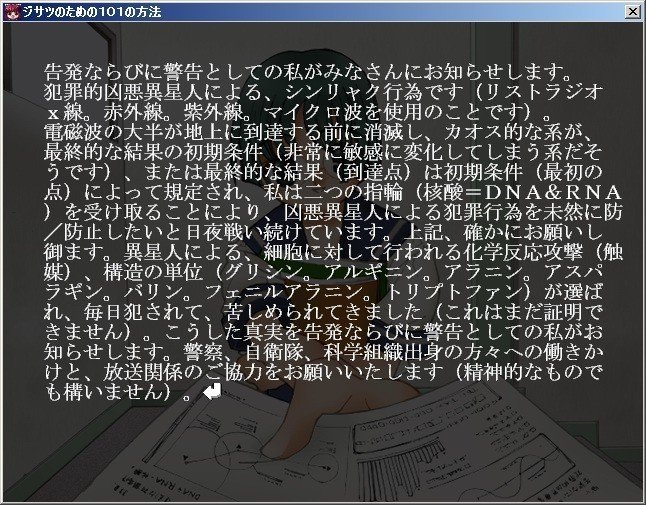
One thing that makes it unforgettable is how aggressively it establishes its “rules” immediately. From the moment the protagonist appears, a constant noise-like sound plays—revealed to be something like an auditory hallucination. The protagonist even gives that noise a name: “Gray.”
And by the time you’re only a few clicks in, you can feel it:
this game is the kind of thing that makes you keep reading the way you keep staring at something you shouldn’t.
As you keep playing, the game throws one unbelievable development after another at you—characters spiraling into self-destructive, outlandish behavior, and absurd “occult logic” like “wrap your heart in aluminum foil and you can block evil waves.” It’s exactly the kind of thing that earns the label denpa game.
There’s a particular set of lines from the heroine that I fell for hard—so hard that even now,
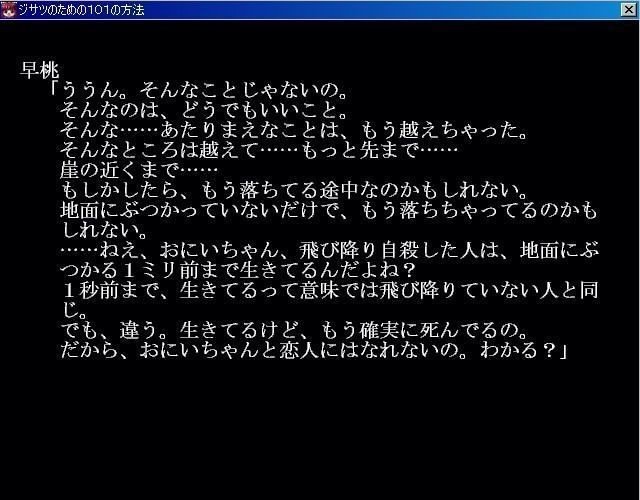
No… that’s not it.
That kind of thing doesn’t matter.
That… something so obvious,
I’ve already gone past it.
I’ve gone past that…
and further ahead,
right up to the edge of the cliff…
Maybe I’m already in the middle of falling.
Maybe I’ve already fallen
—I just haven’t hit the ground yet.

…Hey, onii-chan.
Someone who’s jumped off…
they’re alive right up until one millimeter
before they hit the ground, right?
Up until one second before
—if you mean “alive,”
they’re the same as an ordinary person.
But it’s different.
They’re alive,
but they’re already certainly dead.
So I can’t become your lover,
onii-chan. You understand, right?
Across everything I’ve played, they still sit in my personal “top five most memorable lines.”
This game takes a feeling many people brush against at least once in life—the kind of thought you don’t proudly confess—and turns it into something seductive, uncanny, and intensely literary, condensed by Kanetsuki Ryuunosuke’s sharp writing.
・Sayonara o Oshiete (comment te dire adieu)
o close out a discussion of denpa games, nothing fits better than Sayonara o Oshiete.
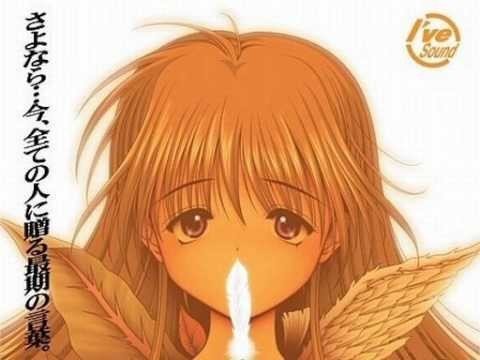
Honestly, it feels presumptuous for someone like me to even comment on this work in the first place. After all—she’s an angel I revere with awe…
But if I don’t summarize anything, there’s no point bringing it up here, so:
the protagonist is a teacher who is clearly not mentally well, and the game’s world is built out of derailments—choices that don’t connect to where you end up, scenes that jump rails without warning, behavior that spirals past “eccentric” into “what am I watching?”
He does things like putting on his underwear, then putting on his trousers, and then stripping off both and walking out, or choosing “the sports field” and casually heading to the rooftop instead.
Once you start listing the protagonist’s bizarre behavior, it never ends; the whole work is overflowing with a kind of insanity-tinged sense of style.
The madness isn’t only in the dialogue and actions. It’s in the whole structure: the way the atmosphere deteriorates, the way ordinary sounds turn warped, the way the palette feels trapped inside a sunset that never ends—like the game is intentionally trying to grind down your sense of stability.
Now, analysis is everywhere online, so instead, I’ll mention the famous “how did this even get made?” story—only the essentials.
Now then—let’s leave the analysis and deep-dive explanations to other sites. Since we’re here, I want to talk about how “Sayonara o Oshiete” came to be. That said, there are already fan pages where people passionately lay out the full story, so I’ll stick to the key points.
“Sayonara o Oshiete” was a title commissioned by Visual Arts—back when Key was at its peak and printing money. The request they sent to the BishoujoGame maker Craftwork was basically: “Make something like Kanon.”
At the time, Craftwork had released a pure-romance game aimed at broader appeal, “flowers ~Kokoro no Hana~,” but it got branded as a “ToHeart knockoff,” sales didn’t go the way they’d hoped, and the company’s head, Kenzo Nagaoka, ended up seriously strapped for cash.
So, as a last lifeline, Visual Arts put up the funding—and the project they cooked up to try and make one big splash was “Sayonara o Oshiete.”
Why being told “make something like Kanon” resulted in what became the most deranged denpa game of all time… I honestly can’t explain it. But anyway—this is what it turned into.
And just when it was finally close to being finished, one major problem cropped up.
If they released it as-is, the launch date would collide with Leaf’s new title “Dareka (誰彼)”—from the same veteran studio that had already pioneered the denpa-game lineage with Shizuku and Kizuato.
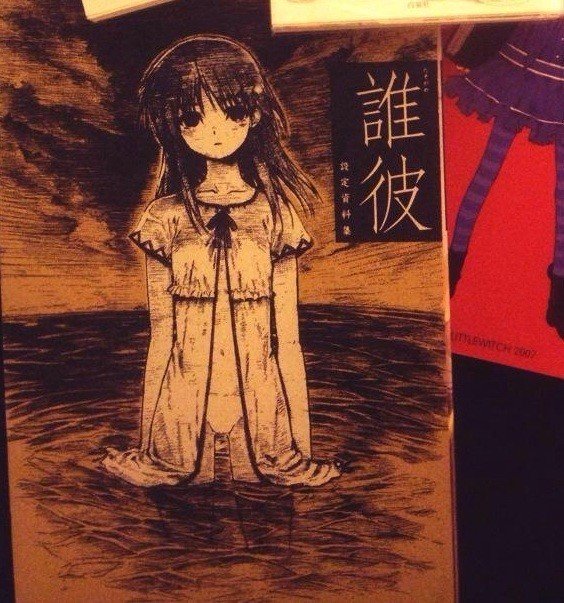
Fearing accusations like “it’s just a secondhand imitation,” they got cold feet and pushed the release back—and with a bunch of other factors piling on, the end result was that the company-bet-the-farm “Sayonara o Oshiete” sold maybe 500 copies, maybe not even that…
And then, years later, it stayed a name whispered only by a tiny handful of people—until its OP got used in one of the cutting-edge trends of the time on Nico Nico Douga: an iM@S MAD video. Only then did “Sayo-kyou” start getting talked about again.
I’ve skipped a lot, but that’s the gist. And really, you never know what sparks a boom. These days, “Sayonara o Oshiete” has become well-known enough to be re-released as Aso BD, basically throwing a lifeline to all the “Sayo-kyou refugees” who couldn’t touch it during its price-spike era—though history repeats itself, and even the reprint copies are selling at premium prices on Amazon.
Anyway—no matter what, “Sayonara o Oshiete” is still loved stubbornly and deeply. And yet, for all its one-of-a-kind atmosphere, there’s never been a true successor—and so even today, people keep saying the same thing:
“I know the most insanely unhinged game ever made.”
──This software contains content
that may cause psychological distress and discomfort.
We kindly ask that anyone
who falls into the following categories refrain
from purchasing it in advance:

・Those who have difficulty distinguishing
between reality and fiction

・Those who find it painful to keep living

・Those who intend to commit criminal acts

・Those who feel they need something to cling to

・Those prone to delusions
(Sayonara o Oshiete / CRAFTWORK)
■Other denpa / oddball titles
for elise ~For Elise~
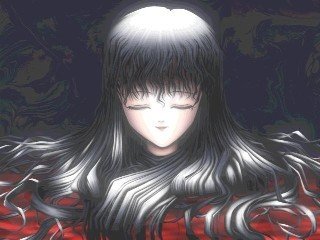
A bleak title from the same studio. It was mythologized for a while, and then the staff themselves posted a page along the lines of:
“Please stop giving this a grand hidden meaning.”
(That’s paraphrased, but the spirit was that.)
Either way, the story itself is… not kind.
■Fushigi Densha (“Mysterious Train”)
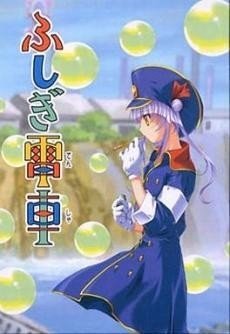
A strange work with almost no conventional “plot,” looping through disconnected dream logic forever. If you like the kind of absurd, uncanny mood you’d associate with something like LSD on PlayStation, this is an easy recommendation.
■Double Cast
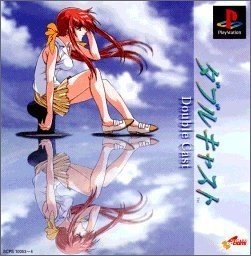
A classic suspense-horror game on PS that traumatized a lot of people back then.
When I was a kid, I bought it from a used shop for a stupid reason: I’d heard you could load the disc in Monster Farm 2 and get a dragon. That’s a real memory.
There are plenty more oddities hiding in the adult-game abyss—titles like Shitai o Arau and Umi kara Kuru Mono, and on and on—but I’ll stop here for today.
──“Girls are best when they’re just a little bit broken.” (Krutta Kajitsu/Fairy Tale)
Comments (1)
Leave a comment