


As we get ready to open our Steam store page, I’m being reminded—again—that a huge chunk of the audience waiting for visual novels is in China. So we’ve been talking with supportive publishers, local fans, all of that. How do we get our VN across the sea—how do we make it land with all those potential players out there?
Perfect timing: some English-speaking fans started bringing up visual novels with me.
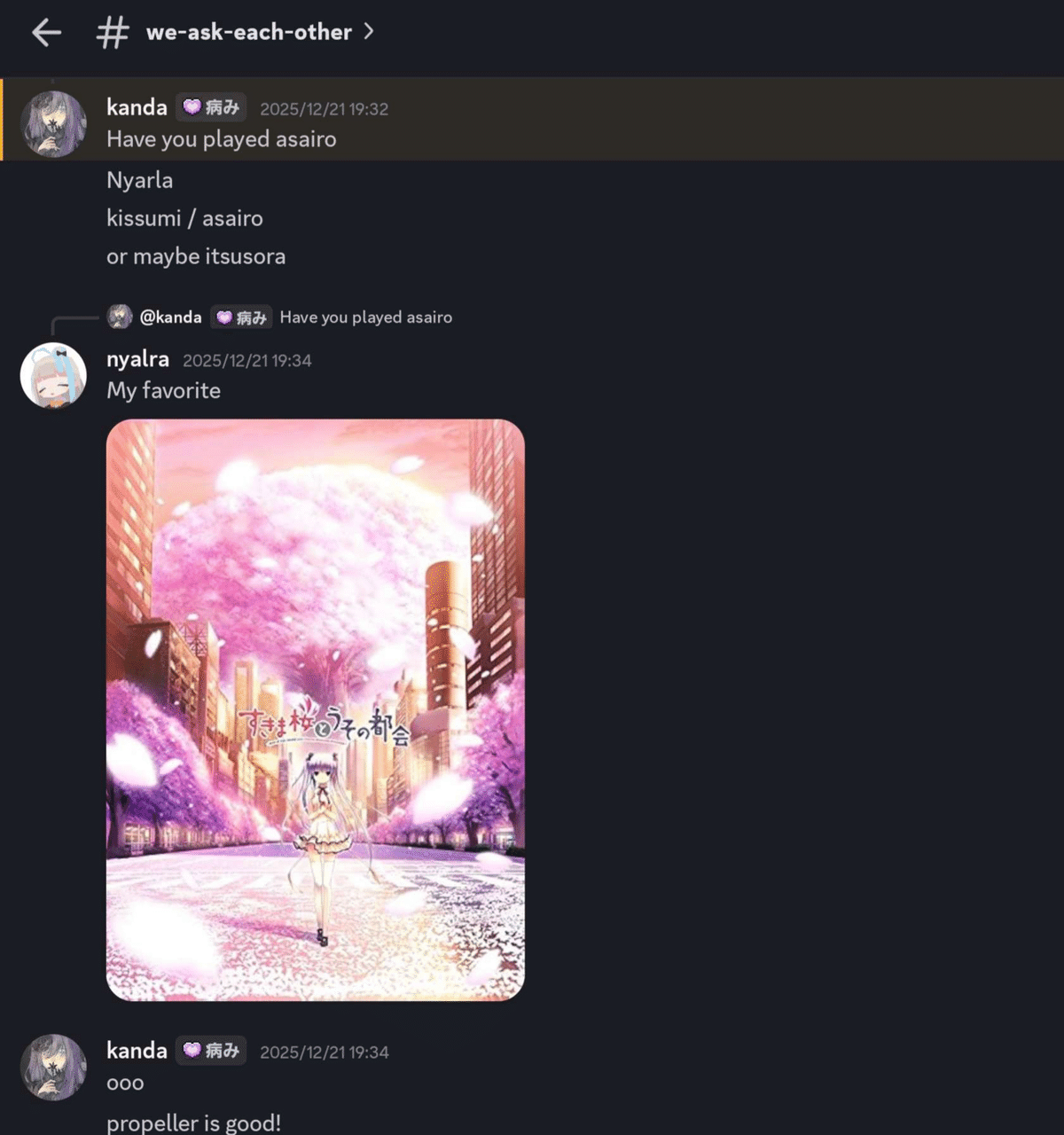
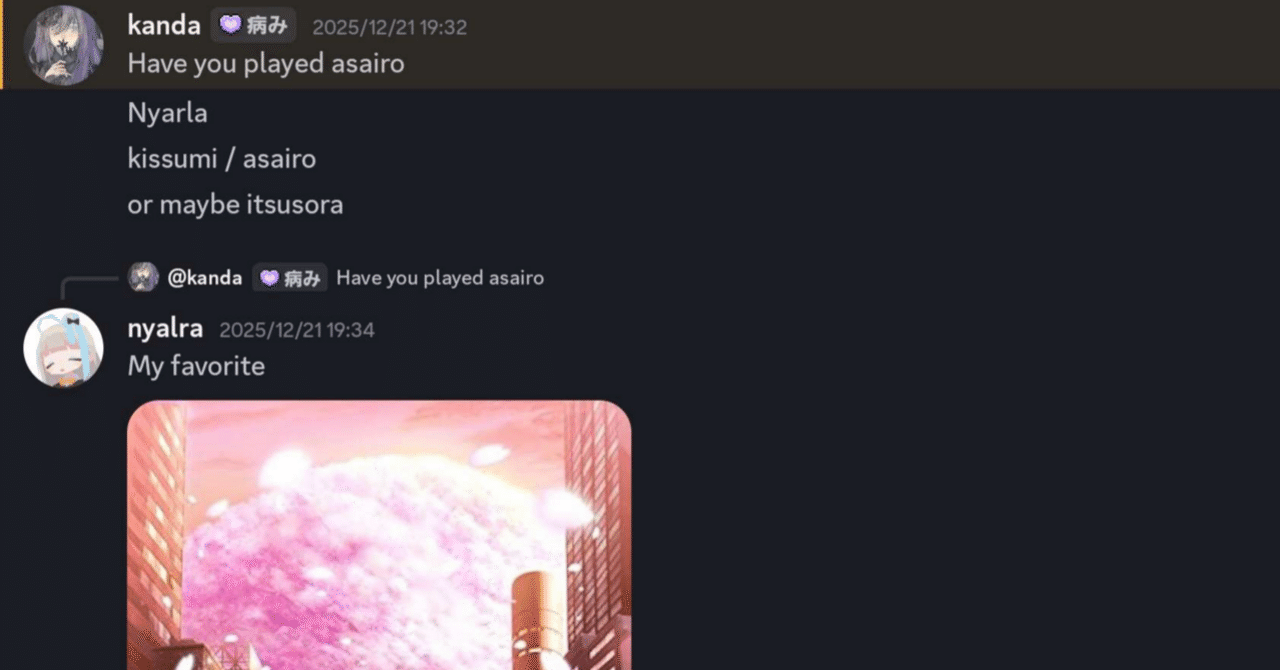
They’ll hit me with, “Have you played this one?”
And I’ll go, “If we’re talking that studio, this is my favorite.”
They get it. They’re happy. I’m happy.
Yeah.
The population of people who actually play bishoujo games is small to begin with. And if it never got an anime adaptation, then getting hyped together over a post-“golden age” title is rare—even in the vast electronic ocean. When you do find someone you can share that niche with, it feels absurdly good.
Right. This is what was fun.
An eroge is a total art form—built out of sight, sound, and touch. You could even call it total pornography. Not just sex, but the whole package: emotion, violence, everything. Total porn.
And then you stir in a text-heavy kind of literary quality, and what you get is otaku desire that’s been simmering since the ’90s—finally sublimated into the most efficient form possible.
Cutier than “pure literature,” harder than light novels, and with more experience than anime.
A miracle like that spun its history for twenty years or so. And because it was a miracle, it gradually shrank.
Somewhere on Earth, someone had the thought:
“Wouldn’t it be perfect if the world felt like something Sakaguchi Ango would write… but the heroine was a moe girl with pink twin-tails?”
So they cooked existing literature into something that wouldn’t get noticed, and blended in a moe heroine as a strong seasoning. With the rise of the internet, it was a miracle era where even a bizarre recipe like that was allowed.
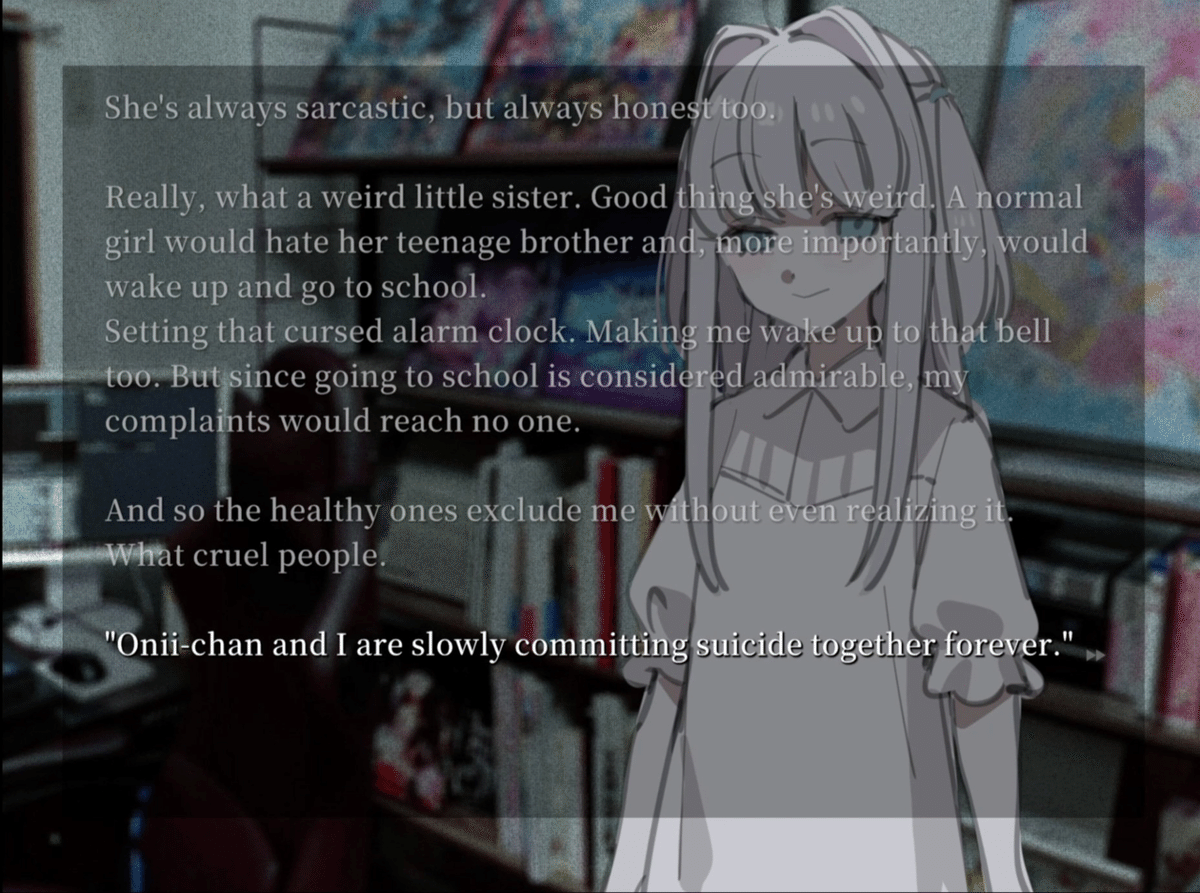
For my part, I’ve pushed it even further. I’ve thinned out the “girl攻略”—the traditional galgame element—and I make the text window cover the screen, so the feel pulls you toward the story more than the heroine.
A game for following words.
Not a bishoujo game. Not a galgame. A visual novel.
And the thing is—if you scrape the world wide enough, there’s a real “resistance” out there: people who genuinely love this stuff, weird souls who’ve been waiting for something this niche. So I tell publishers and fellow creators: wouldn’t it be great if we could get every region fired up together?
And everyone’s… kind.
They understand the cause. They get it—“the dark stuff you want to do is actually a kind of salvation for a certain slice of the world.” People who love games lean in hard.
I mean—let’s be real. A follow-up to a globally hit indie game, going even deeper into a genre that isn’t exactly built for mega-hits? That’s the path we’re choosing.
Just “playing it straight” and walking the classic road is already enough to call it a challenge. A thorny road.
And people are gentle to an adventurer stumbling through thorns, covered in cuts.
If you believe in that strange distortion—literature, pretty girls, and a keyboard—I hope you’ll play it.
That’s what I found myself thinking.
Comments (1)
Leave a comment