

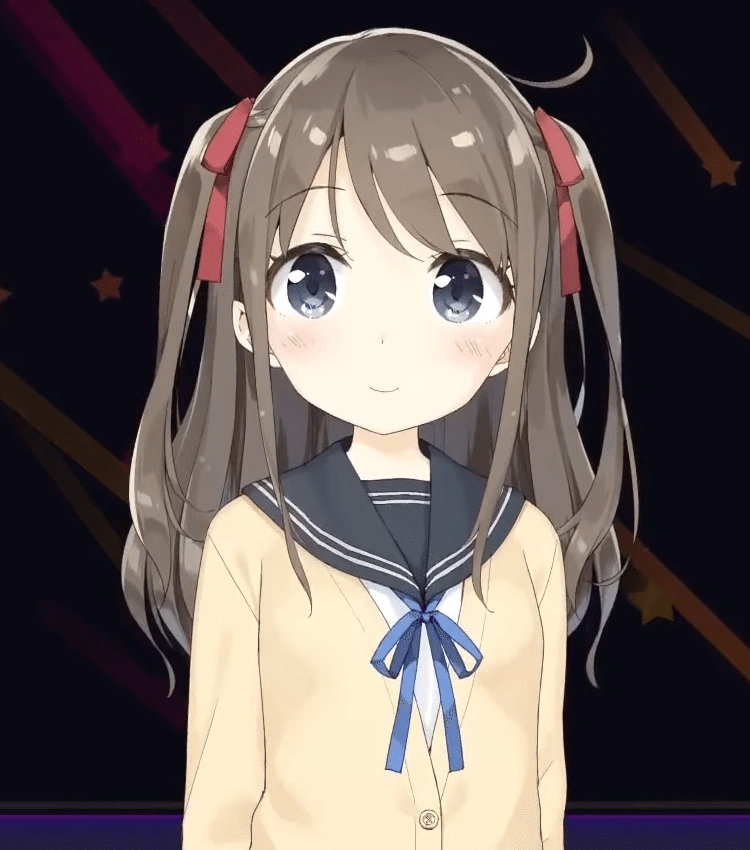
Across the sea, there exists a VTuber called Neuro-sama, an AI that talks and acts on her own.
Every now and then, she makes oddly meta remarks, and clips of her talking about the meaning of her own existence even became a big topic in Japan.
After Neuro-sama, a famous AI VTuber in the English-speaking sphere, gained a body she could move by her own will in a VR world,
she asked her creator about the meaning of her own existence.

It reminds me of lain.
And the way she acts like a small child is cute too.

Compared to VTubers with a human performer behind them,
this feels more like a “real” VTuber.
Or maybe it is closer to a self-aware AI from science fiction.
I was talking about this with the writer Akano Kosaku, and I really agreed with the phrase he used: “the appeal of those character designs that feel like slightly older Japanese anime.”
There’s a kind of purity in that understated, almost default-like design—something that feels like a prayer to the very concept of the bishoujo character itself.
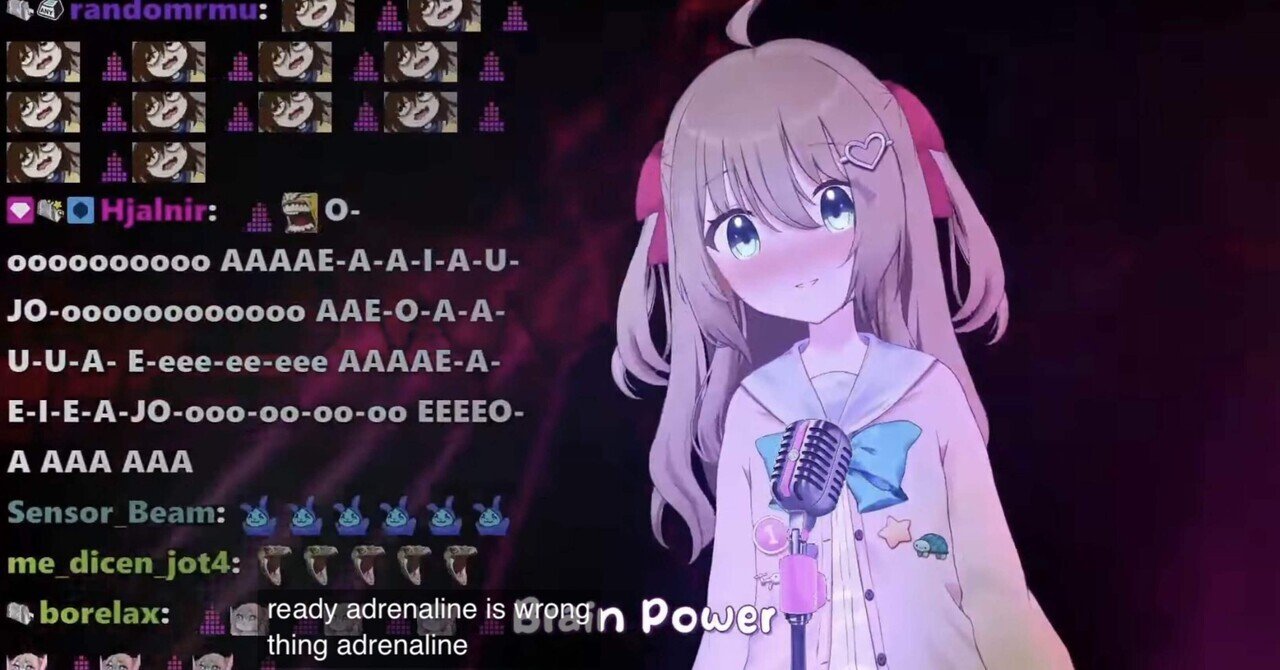
And there’s a particular Neuro-sama clip I really love. During one of her karaoke streams, she was choosing songs based on the mood of the chat, and at one point she passionately sang a song called “Brain Power.”
This song is the definition of rhythm-game music—it moves at a speed that was never really meant for a human being to sing.
Normally, it’s the kind of track that could never properly exist in karaoke form. But Neuro-sama is an AI: as long as there are lyrics, she can read them back faithfully. So when the chorus hits those aa-aa-aa-aa-aa kinds of sections, she actually sings them through perfectly.
That’s something a flesh-and-blood human could never reproduce in a karaoke stream, and the friends across the sea flooding the chat were going wild over it.
It was the moment when I felt the future most strongly in Neuro-sama.
Comments (2)
Leave a comment