

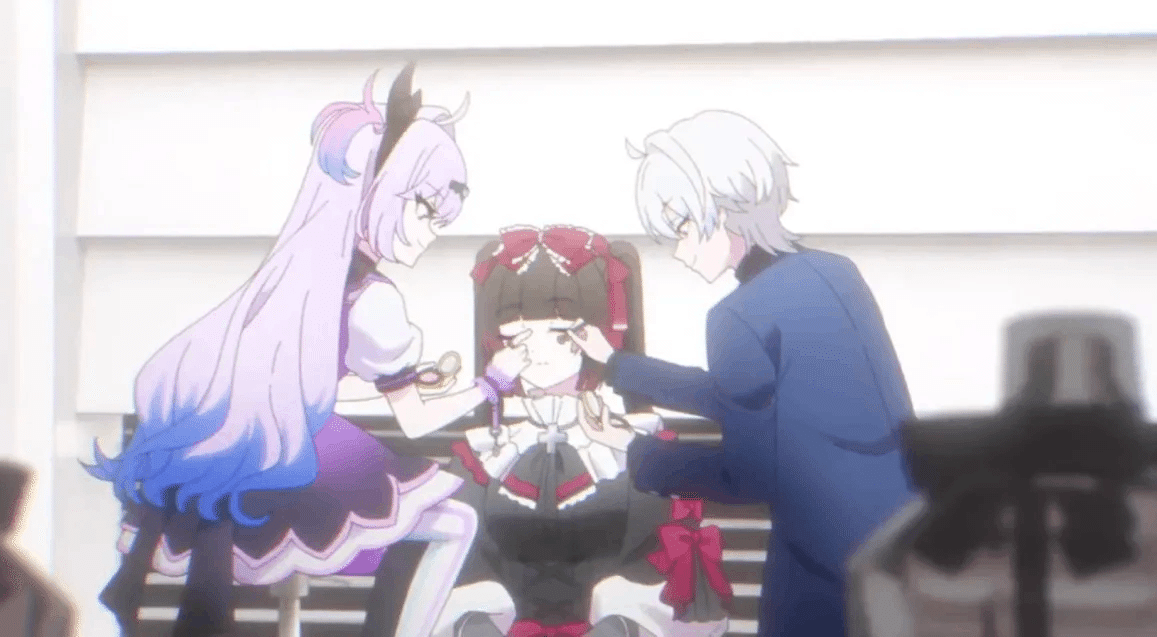
With both its total sales and its social impact, NEEDY GIRL OVERDOSE has left a major mark as an indie game. In this title, you become “P,” the assistant who supports a girl streamer named “KAngel,” who carries both a hunger for validation and the darkness of the internet within her, and you raise her into the strongest streamer—an adventure game with simulation-style “raising” elements.
The game is known for its intense depictions—overdose, self-harm, and sexual content among them—but it’s also clear that it portrays validation-seeking, substances, love, and more as forms of dependency on “pleasure chemicals in the brain (the reward system),” and that it lays bare the pathology of the environment itself in a modern world where we are constantly interfered with by algorithms and by others.
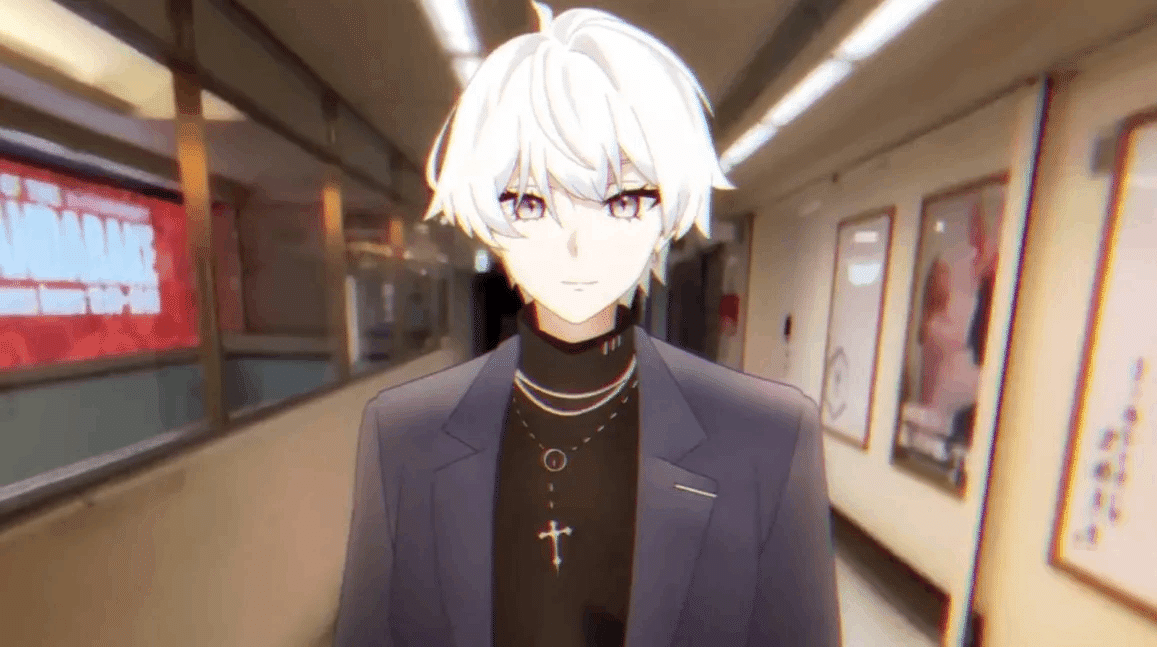
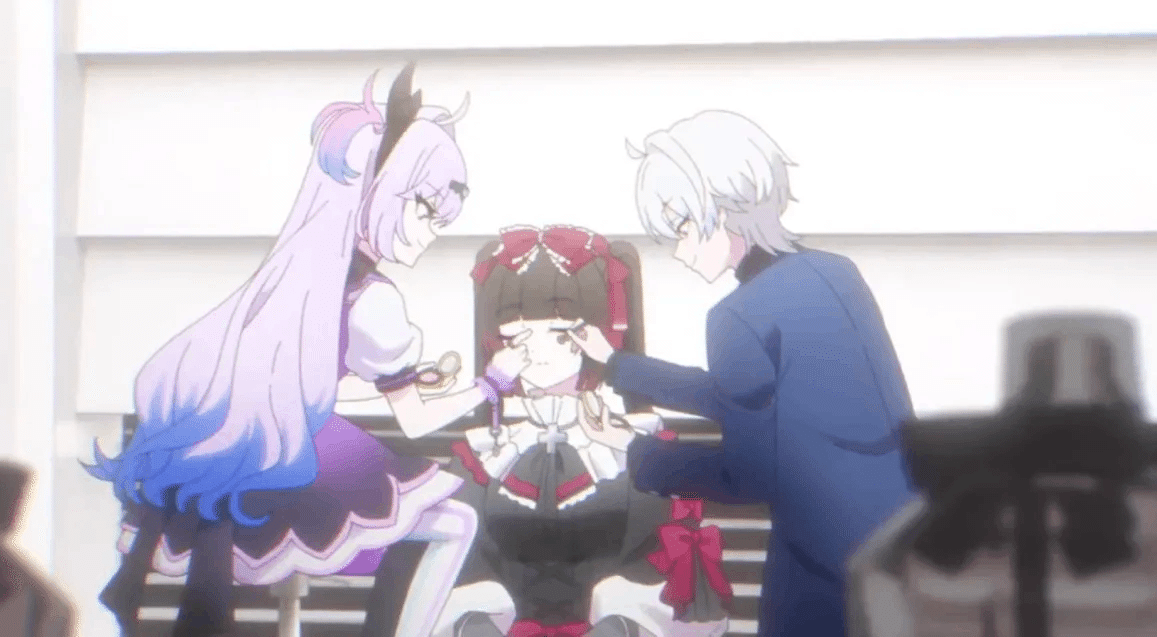
Now, this game is being adapted into an anime, scheduled to begin TV broadcast in April 2026. For the anime version, the original creator nyalra himself has written scripts for all 13 episodes, rebuilding the story with new characters and new perspectives. Given that the game is structured around multiple endings, simply “redrawing” the game’s fragmented narrative would be difficult. You can sense that this will be an ambitious work carrying a sharp message, just like the original game.
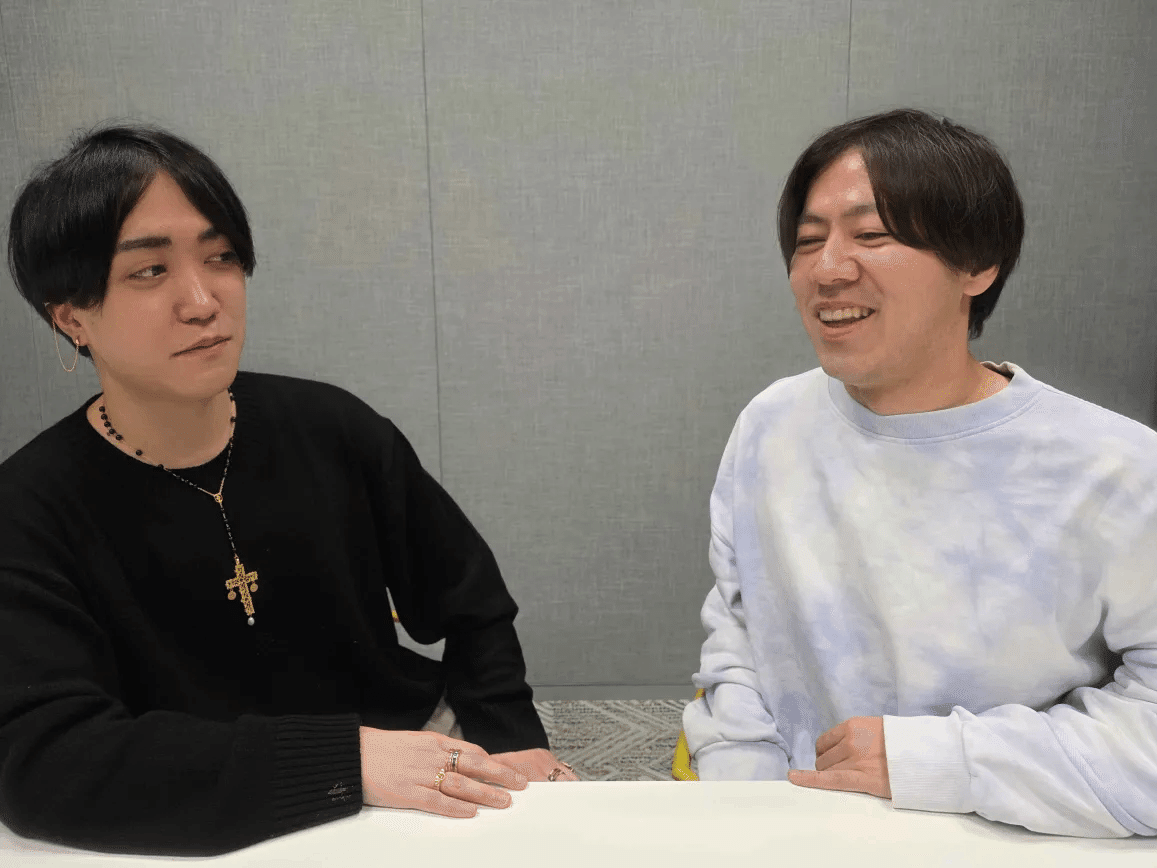
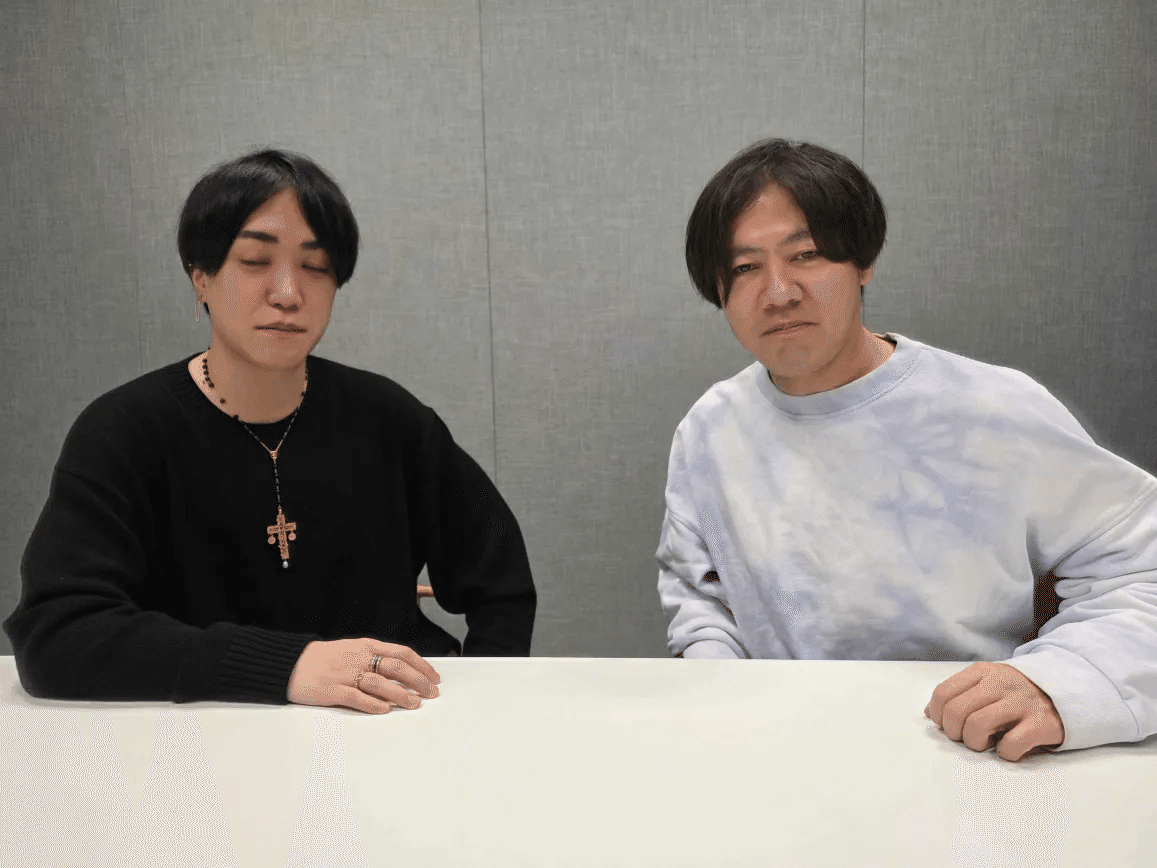
This time, we bring you an interview not only about the production side of the anime, but also about their view of “eroge culture,” and even the loneliness felt by today’s youth and “freedom of expression.” We spoke with nyalra (planning / supervision / scripts) and Ryosuke Inagaki of Yostar Pictures (producer for the anime adaptation).
Interviewer: Koji Fukuyama
“Do whatever you want.” A challenge to write scripts for every episode that overturns the common sense of commercial anime
—Before we ask about the anime in detail, I’d like to ask about your formative experiences with games—specifically, your formative experiences with story-driven games. What was the first game that made you consciously aware of “narrative” as narrative?
nyalra:
By the time I realized it, I was already playing VisualNovels, so… But if we’re talking about being aware of narrative before game systems, it might have been Dragon Quest VI: Realms of Revelation.
Generationally I’m a Dragon Quest VII: Fragments of the Forgotten Past person, but I think I was in kindergarten or first grade. My mom was kind of a trend-chaser, so she bought Dragon Quest and I played it. But VII was too early for me—since it was my first one, I didn’t understand what anything meant. But we also had a SNES, so I tried VI next, and I remember thinking it was really fun.
—That’s an unexpected title. Did the story of Dragon Quest VI strike a chord with you?
nyalra:
Yeah. Because I was a kid, I thought the way “dream” and “reality” were separated into two worlds and then crossed over was amazing. And then it turns out the protagonist’s side was the dream, kind of. Also things like how the foreshadowing was laid—I feel like I learned a lot from it in terms of making stories.
—Actually, in the list of questions we prepared in advance, we had Dragon Quest VI in there too (laughs). We’ll touch on a related theme later.
nyalra:
Really? That’s insane—way too pinpoint.
—Now then: for the anime, you’re not only involved in planning and supervision, but you also wrote the scripts. The original is multi-ending, so it can look like it already “fully told” everything—was there still something left you needed to depict?
nyalra:
It might be closer to saying I “found” something I wanted to depict. Like you said, I think I did everything I wanted to do in the game.
So with the anime, it’s not like I’m supplementing something I couldn’t do in the game—there’s none of that feeling at all. But once a cooperative setup with Inagaki was in place—if it meant that, in a sense, I could pass off various chores and such—I went into it with the mindset of “let’s challenge something new from scratch.”
—How did you first consult with Inagaki about the anime? Who approached whom in the first place?
Inagaki:
My encounter with NEEDY GIRL OVERDOSE started when an illustrator at our company told me before release, “This is absolutely the kind of thing you’ll like, Inagaki-san.” That person also ended up being someone who would draw illustrations for the game, and later became the person who gave me the opportunity to get to know nyalra.
To be honest, I entered this industry because I originally wanted to make games. I graduated from a vocational school and happened to join an anime company, and I’ve been doing anime for over 20 years since then—but I always kept my admiration for games. I’d think, “Maybe now you can make one even as an individual,” and I even went to a VR vocational school to try making a VTuber.
—So you were more on the side of wanting to make games, then?
Inagaki:
Yeah. Ever since vocational school I wanted to make games. In that sense, I had a lot in common with nyalra—PlayStation, Sega Saturn, PC games, all of that. I played things from that era in my student days—like AliceSoft’s Kichikuou Rance, for example.
—I see—so that became your shared language.
Inagaki:
Exactly. I liked games like VA-11 Hall-A, and I wanted to make that sort of game myself… Of course I didn’t think I’d build everything from scratch on my own, but I could roughly imagine how it would be made. I myself had a period where I worked at SQUARE ENIX, and I felt like if I followed my connections I might be able to make something.
So in the middle of that, I founded an independent production company called “albacrow,” and it was right around the time I was also thinking I wanted to try making a game. And then I happened to meet nyalra, who had basically embodied the kind of game I wanted to make—and had actually made it a hit.
nyalra:
It really was pure coincidence, yeah. Also, it helped that we lived close by. Yostar Pictures is in Nakano, and I live in Nakano too, so I can casually walk over in about ten minutes to hang out. In that sense too, we really clicked.

―—As production moves forward under Yostar Pictures, what’s your impression when you watch the footage so far?
nyalra:
At this point I’m watching from the side and feeling moved, thinking, “I want this to be released soon so everyone can see it.” KAngel’s voice and lines are exactly how I imagined—KAngel is completely KAngel.
But it’s an anime where about 80% of the time someone is talking, so my honest reaction was also, “It’s scary that someone is always delivering long lines…” There’s no moment where the characters are silent.
Inagaki:
Including the details, I think it’s become very easy to watch. We’re depicting “things people normally don’t say” and “things people normally don’t do” in anime form.
nyalra:
I’m truly grateful. Because the characters really do talk nonstop. There are just that many lines. I write text every day, so the scripts inevitably became wordy too. In the game I was cutting lines more and more so the tempo wouldn’t suffer, but…
—You wrote the scripts for all 13 episodes, right?
Inagaki:
That’s right. Just like Neon Genesis Evangelion is something only Hideaki Anno could make, the anime NEEDY GIRL OVERDOSE—like the game—has become something only nyalra can make.
nyalra:
For me, if they were really going to let me do what I truly wanted to do in anime, then I wasn’t going to complain—I just thought, “Fine, then I’ll do everything.” But I assumed anime production worked like this, and up to a point I didn’t realize this was actually unusual.
I only realized later when people told me. Like, when someone says, “You can really do whatever you want,” how many people actually take that literally and write thirteen scripts however they want?
Inagaki:
Right. Even among creators around me, even if you give them an environment where they can truly do whatever they want, most can’t follow through. I’ve seen a lot of people who might put out one or two and then be like, “My motivation’s kinda…” So the fact that you properly delivered thirteen scripts at incredible speed—honestly, I just respected it.
—But Inagaki, did you have any requests or orders for nyalra?
Inagaki:
This includes the producer from Aniplex too, but what we told him was: “Give us everything you want to do,” “Put everything you have into it.”
Since this was nyalra’s first time writing anime scripts, we didn’t teach him things like the sense of timing for a single episode, how many characters per line, how many pages become a 20-minute episode.
Of course there were episodes where the content was short, but the director Masaki Nakajima adjusted all of that. From the start we assumed thirteen episodes would be impossible with only the game’s content, so Nakajima matched it to a thirteen-episode sense of volume.
In other anime projects, I think you often get requests from the maker or original author like “bring in a famous director,” “ask a famous character designer,” “ask a famous scriptwriter.” But it takes time for everyone to fully understand nyalra, and it’s also common for things not to work out once you try.
—It’s true: with a famous director, their own assertions tend to come through strongly.
Inagaki:
If you bring in a famous director, there’s the possibility it drifts away from what nyalra wants to do, right? Also, if someone can’t empathize with nyalra’s way of living and worldview, it’s difficult to work together. From the beginning I told Aniplex and nyalra too: please don’t say “Bring this famous person I like.”
Among the people I know, the one who would properly respect nyalra, seriously work to shape it, and make it happen—that was Nakajima in-house, I felt. So I put him in charge as director. I told him, “You like NEEDY GIRL OVERDOSE, right? Make a short anime,” and he made it real. I trusted Nakajima and, as far as I was concerned, I consciously asked everyone in the company to create an environment where he could make it.
—So you aimed to create a work that could output nyalra at 100%.
Inagaki:
Exactly. At one point—around the time all of nyalra’s scripts had fully come in, and we were reorganizing series composition so we could enter storyboarding for all episodes—Nakajima worked so hard he could say plainly, “Right now, at this moment, I’m the person who understands what’s inside nyalra’s head the most.”
—nyalra, how did you build the story for thirteen episodes? Did you start from plot, or from characters?
nyalra:
This time, the first thing was “Let’s introduce new characters.” Then I worked backward from what would happen when those people were with KAngel, and expanded that across thirteen episodes.
Of course there were other “elements I wanted to do,” and there’s something Takeichi Terasawa, the author of the manga Cobra, said: “I have cool scenes I want to do in my head, and I forcibly connect them into a story.” It might be close to that.
—So it starts from scenes.
nyalra:
Yeah. It felt close to forcing scene-and-character consistency to connect thirteen episodes. And the fact that they let me do that—that was honestly a miracle for me.
—That’s incredible.
nyalra:
Yeah, I think it’s most effective to match the preferences of the people you’re working with. It feels like we’re making it together, step by step. I absolutely thought Ohisashiburi’s designs should be utilized, so in that sense Ohisashiburi was also genuinely happy, like, “We found the perfect voice actors.”
—Those three new characters are streamers, and they’re competing with KAngel?
nyalra:
They do stream, too.
Inagaki:
Maybe we shouldn’t say much about the Brothers Karamazov part because it’s spoilers (laughs).
nyalra:
I think it’s okay to reveal a little.
When I think about what the three brothers in The Brothers Karamazov represent, in my mind it became “Truth, Goodness, and Beauty,” and this time I distributed that among the characters. With “Truth,” “Goodness,” and “Beauty,” it’s like each character speaks their own claims.
—When you say “Beauty” here, do you mean a hedonistic kind of image?
nyalra:
No—more like aesthetics, artist ic sense, a sense of beauty.
—I see. But then “Truth”…?
nyalra:
Honestly, “Truth” was the hardest. You can kind of grasp “Goodness” and “Beauty” by atmosphere and nuance, but what “Truth” is—I kept thinking about it the whole time while writing.
And the reason there are so many lines is that the characters are constantly debating “Truth, Goodness, and Beauty.” There are like two episodes that are basically nothing but debate. Because they keep talking, there were tons of episodes where we worried about how to keep it visually engaging.
—Visually, does that mean you’re constantly doing cutbacks?
nyalra:
Yeah, we leaned on the director’s strength for staging. We also did things like suddenly inserting flowers, and anyway we threw out all kinds of ideas to keep it lively and make sure the viewer doesn’t get bored.
—On note you mentioned Jean-Luc Godard’s film La Chinoise, and listening to you, I’m thinking maybe you’re doing it with that kind of pop feeling?

nyalra:
Director Nakajima also likes live-action film, and Inagaki also thinks it’s not about “beating you with high-quality animation,” but about winning somewhere other than budget. So it’s closer to the low-budget, filmic approach of Godard’s Nouvelle Vague.
In particular, one thing we used from Godard as direction was: even in scenes that are visually intense, it’s okay to put text on top. Like, it’s fine to fill the screen with text—and it’s faster that way. When I saw the storyboard I was convinced: “This is faster.”
Also, the three new characters this time are prepared as viewpoints you can empathize with as modern youth.
— In the poster visual this time, you’re paying homage to Stanley Kubrick’s film A Clockwork Orange—is that in the sense of a “youth” kind of context?
nyalra:
Kubrick’s A Clockwork Orange depicts human violence, but I feel like it’s constantly talking about things like “why do young people end up turning to violence like this?” and questions of good and evil.
I thought NEEDY GIRL OVERDOSE was something close to that. A Clockwork Orange faced the theme of violence so directly that it was too violent, got criticized by people who couldn’t understand it, and ended up being banned from screening—but as for me, I wrote NEEDY GIRL OVERDOSE sincerely as a work where I tried to think about what things like drugs or antisociality even are.
In the anime version, I think those themes come through even more clearly. Violence, for example… though in the case of NEEDY GIRL OVERDOSE, it’s not violence itself so much as drugs and pleasure.
— Even in the game, themes like “drugs,” “romance,” and “the internet” are neatly connected through something like the brain’s reward system. Was that a concept you had from the beginning?
nyalra:
Well, they were already connected in my head to begin with. Humans aren’t happy, and yet they crave “the reward system,” you know.
I think the basic mindset of a heavy drug addict is that the easiest way to trigger the reward system is drugs, first and foremost. And if you don’t go as far as drugs, then if you give something to people on the internet, or lavish praise on something, “brain drugs” get produced anyway. The idea that humans remain slaves to the reward system hasn’t changed for me—I’ve always thought that.
In that sense, I’m probably closer to Dostoevsky or Kierkegaard after all. In other words, “despair” happens “because you do human things.” I don’t think there’s any reason for things like violence or dependence other than “because we’re human.”
— In A Clockwork Orange, the latter half has the protagonist’s “human-ness” forcibly corrected through human experimentation, doesn’t it?
nyalra:
In the end, it becomes a question like: does it mean anything for society to forcibly manufacture “good people”? And ultimately it didn’t mean anything, because he goes back to how he was anyway. So where is “good,” exactly?
In the end, the interpretation of A Clockwork Orange is left up to the viewer, right? I want NEEDY GIRL OVERDOSE to be like that too.
— There’s one thing I’ve always found mysterious in the game. In the extremely ruinous “INTERNET OVERDOSE” route, it references “Zhuangzi’s Butterfly Dream.” What was that about?
nyalra:
In the process of someone’s mind breaking down, there’s that part about “is this a dream or reality,” and in my head I had this hallucination image of a “morpho butterfly.”
In works by Mamoru Oshii and others, butterflies are used quite consciously with “the Butterfly Dream” in mind, so that was the source. It’s actually kind of an underlying motif for KAngel. The nuance of “KAngel as a dream that Ame-chan saw” might even be something that’s shared across routes.
“To-Yoko” and “otaku” are mirror images—the true nature of that placeless loneliness
—How do you grasp the sensibility of youth? It feels like a different part from cultural history—do you actually meet young people and interview them?
nyalra:
As a result, these days I’ll get replies from the English-speaking world on my tweets. If I tweet “drank water,” I’ll get like fifteen replies saying “I drank too,” that kind of thing. Some odd closeness I was doing unconsciously—some kind of fantasy like “Oh, it’s okay to play with this person like this”—gets transmitted on its own. And then I end up thinking, I kind of understand those people too. The atmosphere we can’t verbalize—if I want to sound literary and cool, I’d say: we’re carrying the same loneliness.
—The same loneliness?
nyalra:
In Japan right now, I think the most shocking thing is the “To-Yoko” issue.

Otaku were on the internet in the first place because they had no place to belong, right? And yet otaku are attacking the “To-Yoko” people who also have no place in real life. I really think that’s meaningless. Both sides have no place to belong, so they’re struggling to gather somewhere—and they’re basically the same, separated only by one thin layer called “real vs net,” and yet they can’t understand each other. That’s truly strange to me.
They’re lonely and they gather somewhere, and of course because they’re people who’ve been excluded, maybe they gather around not-so-good cultures—but isn’t that the same for both “the internet” and “To-Yoko”? That’s what I think.
Maybe the anime managed to capture that air. And if that ends up—somehow—becoming a kind of salvation for youth, then maybe… maybe it could. Well, I’m not consciously aiming for that. In a sense, there are parts where I’m just writing what my mindset was like ten years ago straight into the script.
Inagaki:
For someone who isn’t living in the same era as the people around To-Yoko or Kabukicho, there’s a part—even for me—where you end up perceiving them as cool, like anime characters. As a way of living, it almost looks cool. I think NEEDY GIRL OVERDOSE is a work that depicts and sublimates that—turning the characters of that moment, that era, into entertainment.
—I was listening while thinking it’s a somewhat mysterious sensibility for you to connect “otaku / subculture” and “To-Yoko.”
nyalra:
If you split things into “main culture” and “subculture,” and define main culture as “the stuff of people who went to a proper university” or “people for whom main culture is going well,” then cultures like “To-Yoko” are “sub” in the sense of being strange cultures. So in that meaning, I’d call it subculture. In fact, I think “To-Yoko” is dead center as subculture.
Inagaki:
Stories about people who aren’t living “normally” are entertainment, aren’t they? Like Takeshi Kitano’s Outrage, that kind of thing. It’s an extreme example, but…
—Like Ikebukuro West Gate Park…
Inagaki:
Right, right! Not strong enough to go fully violent, not able to do extremely bad things either. But not winners. Weak people trying to look cool. Though of course you also think, “I don’t want to become that,” yet there’s a part of you that admires it.
nyalra:
That can also be an important negative example, too. I think what Ikebukuro West Gate Park does and what this NEEDY GIRL OVERDOSE does are pretty close. People rejected by the night city gather, they can’t fit into society, so the only thing they can do is sharpen their individuality. If you’re delinquent, that becomes yankee(bad boy/girl) fashion; if you’re a girl, that becomes trendy fashion.
I think yankees and otaku are basically similar. I saw scenes where both were in the same classroom at the same technical high school, getting along. Yankees rely on the “delinquent” attribute as cosplay—becoming something they’re not, trying to look cool. I don’t think there’s any difference at all.
Inagaki:
I really think so too. I was an otaku at a technical high school, but the yankees were friendly with me.
nyalra:
At the root it’s the same, right? Because you’re lonely you’re in the classroom… what’s the difference? Sure, tastes might differ. But you play mahjong together, you go to pachinko, you play fighting games.
When I was in middle school, THE KING OF FIGHTERS 2002 was really popular. Yankees were often better at combos, and otaku would drift to stuff like MELTY BLOOD or GUILTY GEAR, so they’d be weaker—though the ones who really committed would really master it. I strongly felt it wasn’t “because you’re otaku” or “because you’re yankee.” In fact, in Tekken, sometimes the tougher-looking guys would be the strong ones.
—In my memory, I have both atmospheres: “otaku and yankees are friendly,” and “they’re not friendly.” I was born in 1985, and personally I got along with yankees, but I also feel like there were plenty of yankees who openly said “otaku are gross,” “otaku-style anime is gross.”
Inagaki:
Yeah. I was born in 1982, so we’re close in age. I really understand the sensation of otaku culture gradually gaining citizenship from the 90s to the 2000s and into today.
nyalra:
Then for me, in the 2000s when I was in elementary school, there were remnants, but by the time I went to technical high school the yankees weren’t saying “gross” about otaku culture. Because they’d go to pachinko and play Evangelion machine, and yankees would say “Unit-01 is cool,” or “Rei Ayanami is cute.” That was the era.
—The fact that Hideaki Anno sent a sort of “Otaku, go back to reality” message with The End of Evangelion also feels like something transitional in the late 90s. People like Masato Hiruta who created bishoujo games and eroge culture look sharp; even Yuji Horii of Dragon Quest—it feels like the people who shaped otaku culture weren’t necessarily “otaku,” you know?
nyalra:
In the end he’s quoting slander written on PC-communication bulletin boards at the time of the old movie version, right? I think it was Anno’s rejection reaction to otaku saying random stuff—like, “Look at reality.”
After NEEDY GIRL OVERDOSE became a hit, it’s presumptuous to say, but I really understand how he felt. When I see people who haven’t played it even once, who then attack me based on some random rumor like “nyalra is probably like this,” I think, “Value primary sources.” With today’s SNS masses, I seriously feel that.
![[本]承認欲求女子図鑑 新装版](https://imagedelivery.net/QondspN4HIUvB_R16-ddAQ/5b6c1a2d5496ff4fa1000c49/63c5acd21cee487ea329.jpg/fit=scale-down,w=1200)
The lineage of “kichiku-style” and the literature of “the strong.” A story of “control” inherited by NEEDY GIRL OVERDOSE
—In terms of 90s subculture protagonists, it feels like the portrayal shifted roughly from “predatory” to “herbivorous.” The Dragon Quest VI you first mentioned sits right in that swirl. For example, earlier than that, in Dōkyūsei the protagonist is a strong, predatory type who hits on girls, right?
nyalra:
Yeah.
—You also do this consciously, but I think we have to reframe 90s VisualNovels and games within literary history. Since Don Quixote, modern literature branched not only into the Dostoevsky-like line that depicts the “inner life of the weak,” but also into a line that depicts the “inner life of the strong,” like the Marquis de Sade or Holmes. I feel that original eroge culture may actually have belonged to that “strong” lineage.
nyalra:
Do you mean like the Rance series—strong rulers and such?
—Yes. When eroge started being treated as “literature,” I feel like the “inner life of the weak” context was respected, while the Sade-like “inner life of the strong” lineage wasn’t positioned, and we ended up here. For example, Gakuen Sodom, elf’s Shūsaku—those are prime examples. And elf later adapted Oniroku Dan’s novel Flower and Snake into a game, and even the text of Kawarasaki-ke no Ichizoku 2 is very literary.
nyalra:
Ah, yeah, that existed.
Inagaki:
(laughs) I like Kawarasaki-ke no Ichizoku 2.
nyalra:
Games like Shūsaku and Gakuen Sodom—those “sexual-violence games,” for better or worse, were overwritten by Leaf and Key, weren’t they? ToHeart came, ONE: Kagayaku Kisetsu e came, and it became “school life, emotion, pure love is the best,” and then Kanon and AIR delivered the finishing blow. That’s when it turned into “the age of literature.”
—But both should be literature. From that perspective, I also think NEEDY GIRL OVERDOSE might actually sit in the flow of “eroge literature of the strong,” too.
nyalra:
In eroge terms, that would be “kichiku-style.” NEEDY GIRL OVERDOSE is exactly within that “kichiku-style” frame. And yes, the original bishoujo game was there. Sometimes I say the status system in NEEDY GIRL OVERDOSE is basically Monster Rancher 2 in an easy-to-understand way, but… in reality, what I imagined a bit more was PIL’s Jigoku SEEK. Games with “training gauges,” that “kichiku-style” image—that’s what I had in mind.
—I see—that’s exactly a Sade-line game.
nyalra:
Those early “native eroge players” who were aggressive like “I’m gonna dominate girls” probably got pushed into the corners in the 90s.
Inagaki:
There was Custom Maid (laughs).
――(笑)
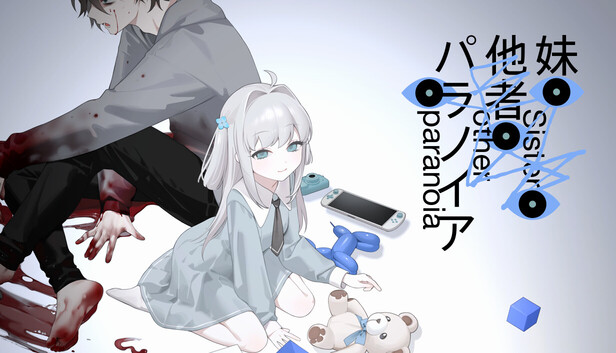
※New visual novel game with nyalra scenario
nyalra:
It used to be mainstream, but within eroge, kichiku-style became a subgenre. But I think denpa games pick up a lot of what couldn’t really be done in the context of anime or film. The medium where it could “work” to depict what it really means to be insane was probably only eroge.
Inagaki:
Like Tsui no Sora. Stuff where you’re like, “Can this even become a work?”—that kind of expression existed.
nyalra:
Exactly. In the end, Tsui no Sora itself had a lot of shortcomings as a work, but the remake Subarashiki Hibi ~Furenzoku Sonzai~ was a huge hit—so in that sense, maybe it was a good era where trial and error was possible.
—I was also an old person who liked AliceSoft and elf, so at first I resisted visual novels, and when I played Nitroplus’s Kyūketsu Senki Vjedogonia, I was like “Why put an anime-grammar OP in? Games should pursue game expression,” and I pushed back.
nyalra:
No offense, but that’s funny in a “youthful anger” way (laughs). I’m like, why not put anime into games?
Inagaki:
For me it was the opposite—right around when I was thinking of making games, I played Vjedogonia and felt like “This is it” (laughs). You don’t need to create tons of choices in a weird way.
—That’s wonderful. Honestly I think that’s how it should be (laughs).
nyalra:
But I share the same feeling about game-ness. I had that frustration simmering, so I made NEEDY GIRL OVERDOSE thinking “There should be game-ness in communicating with a bishoujo.” There’s a part of it that starts from that anger. I love AliceSoft.
—NEEDY GIRL OVERDOSE has underground roots like AliceSoft-style game-ness, or PIL, and yet it also incorporates mainstream-ness, and has a restraint where it doesn’t go fully into the dead-center underground.
nyalra:
Yeah, but that’s a miracle, honestly. I thought it would end as something far more underground. Even now, it’s just being consumed casually because it got this popular—if we’d stepped into a slightly different timeline, it would’ve ended up as some deeply underground, incomprehensible thing with a small, contained hit.
—Another movement in the 2000s that connects to NEEDY GIRL OVERDOSE—the rise of streamer culture on the internet developing in the background. How did you see that?
nyalra:
I didn’t really have the sense of “watching streams.” Rather, when an internet hero appeared, I was a teen going through an anti phase, like “Look at these guys gathering and being flashy.” I was from text culture.
But when the character becomes a character and comes forward, then I finally understood it.
—Understood it—meaning?
nyalra:
You become who you want to be through streaming, and satisfy desire. I was like, “Ah, that’s it.”
Meaning: you put on a “2D skin” and go “I want to become this kind of me,” “I want to become this kind of me.” That made total sense to me. It’s like—so it’s TRPG, basically.
—That feels like it touches the core of NEEDY GIRL OVERDOSE.
nyalra:
Maybe I haven’t said it like that before.
You have a 2D character, and challengers who want to become a 2D character—and at that point, how thoroughly can you be that 2D character? And everyone goes “Well, let’s see?” and watches excitedly. I understood that meaning.
—So that timing would be around Kizuna AI?
nyalra:
Around there, yeah. People do want to become 2D characters, and there’s a method for it, and the otaku gathered with the feeling of “We can really believe you, right?”—that made a lot of sense.
A 2D character keeps letting you dream, but sometimes says meta things that reveal the “raw self.” I understood a lot through VTubers, like “Yeah, otaku would like that too.”
An answer to “the consumption of mental illness.” Freedom of expression and nyalra’s own medical chart
—I’ll ask directly: because of its intense themes, NEEDY GIRL OVERDOSE also sparked debate. For example, the concern that depictions like self-harm might negatively affect players—what do you think about that?
nyalra:
If something is being treated as a theme in a work, then as long as it stays within 2D, I think it should be protected as a work. Otherwise, the illustrations in eroge would be unacceptable too—and we’ve been talking about Shūsaku as a crystallization of male desire. Those expressions absolutely should be protected.
Even if someone says “Because of 2D, I did self-harm,” I can only think, “Then it’s your fault for outsourcing your thinking to 2D.” Honestly, I think they would’ve done it somewhere later in life anyway. If you go through such an experience, you can think about why you fall into self-harm or don’t, and other things. I think, “Don’t get mad at me for that.” I only think, “That’s your life experience.” I won’t yield on that.
—But in my mind, people are quite weak, and there are fragile parts. Freedom of expression should be protected, but I can also understand the opinion that—without context, especially in promotion—something close to zoning should exist.
nyalra:
It’s true that the internet has a problem of not being zone-able at all. But there’s also the dilemma that if you do it in a place that’s too zone-restricted, it won’t spread. So that becomes an impossible premise, right?
—In an article by Shinji Ikeda published on IGN Japan, there was a critique like “NEEDY GIRL OVERDOSE casually consumes mental illness. I want you to pay attention to works supervised by mental-health experts too.” How did you feel about that?
nyalra:
If the topic is whether it’s making a spectacle of a mentally ill girl—well, I myself had all sorts of mental and physical issues and was active while being addicted to substances, and I depicted a girl who fights using that as a weapon. So I thought, “Even if you criticize that, what can I say…” I broke the rule of “You shouldn’t make it a spectacle,” and depicted it as “I’m a girl like this, but I’m living,” and that’s KAngel. I think it’s more like: “Is it wrong if a girl like that exists?” I think the reason many young people support NEEDY GIRL OVERDOSE is there.
—I see. That article was written sincerely in Ikeda’s way, and I think as one opinion it’s valid.
nyalra:
Rather than ending with “I’m a mentally ill girl, I’m depressed, I can’t live well,” I depicted her fighting as “I’m a girl like this.” So it’s not “You shouldn’t make it a spectacle,” it’s a work where the person themselves tries to live strongly even if they become a spectacle.
—Of course, in the work there’s context, so freedom of expression should be protected. But when there’s no context—especially in “promotion,” I want you to be careful, that’s what I mean.
nyalra:
On the promotion part, I do agree. If the question is “Is it okay to hurt people in promotion to be sensational,” then yeah, that’s not right. But I think the work itself should be protected no matter what.
All I’m saying is, “I want people to be people.” When people get swallowed by internet opinions and end up just speaking the same things as the net, there are too many like that. For example, in my early 20s I made a lot of mistakes and said a lot of dumb stuff, but now that I’m 30, I look back and think, “Well, I’m human.”
Even seeing other people mess up, I think “Well, they’re human,” so rather than attacking in line with the internet flow, I want to think, “No, they’re human.” I think Dostoevsky is saying something close to that: “I’m Christian, but I’m human, so I borrow money, I drink,” etc.
—But if you separate society and the individual and push subjective freedom too hard, in modern terms it can connect to something like “self-responsibility theory,” right?
nyalra:
Then, sorry, but I’ve lived only on self-responsibility, because I’m a freelancer and a creator. If I have a bias or a weighting there, isn’t that inevitable?
—So it isn’t the result of social structure?
nyalra:
No, I’ve lived hating society the whole time. Like, what is this “We’ll check with the company,” “We’ll hold it and confirm with my superior”—what the hell is that? I always think, “What’s your opinion?” I still hate that.
—(laughs) But listening to you, you’re extremely consistent. The existentialism you theme isn’t about social structure, it emphasizes individual freedom.
nyalra:
As long as you’re in a company, you deposit your responsibility into the company. I get really pissed at people who aren’t self-responsibility people in that sense.
—But I also feel like NEEDY GIRL OVERDOSE can be seen as a kind of counseling. Am I mistaken?
nyalra:
Isn’t that the same as people seeing Evangelion as counseling? Inagaki once pointed out to me, “You’re writing about yourself and your surroundings,” and if you write about yourself and your surroundings for thirteen episodes, then yeah, that’s counseling. It’s my counseling.
—I see.
nyalra:
It might be closer to a medical chart. I’m extremely depressed, so when I can shut myself into a two-hour movie, it’s relaxing. I don’t have to think about anything else. When you’re alive, you keep remembering regrets.
—That story that could be called your “medical chart” will be expressed as an anime. Across the thirteen episodes, what do you want viewers to feel?
nyalra:
I think it’s simply a matter of: there’s a girl named KAngel who moves forward while being messed up in various ways, and instead of saying “Don’t depict something like that,” it’s “What do you think when you see her?”
Across all thirteen episodes, it’s depicted as “At least, she got here.” Why does youth violence and substance dependency happen? I think the anime shows that even more clearly, but for me it’s just: “I wrote it seriously.” That’s all I feel.
—Thank you very much.
[Post-Interview Note]
During the interview, there were moments when tension ran through the room as the reporter and nyalra differed in opinion over freedom of expression and whether zoning is appropriate. At the same time, that friction arose precisely because both were sincerely facing the work, and it felt like that tension was itself part of the work’s heat and energy.
As written at the beginning, the reporter considers NEEDY GIRL OVERDOSE a masterpiece that casts modern pathology into sharp relief. What kind of contemporary scenery, air, and problem-posing will the anime adaptation—centrally handled by nyalra—show us? As one viewer, the reporter wants to look forward to it.
It is also publicly known that there is currently a dispute involving NEEDY GIRL OVERDOSE. This interview was conducted with the agreement of the author, under a request from nyalra’s side that we do not touch on those issues and instead focus on the “anime work” that will be released to the world from here on (Interview / writing / composition: Koji Fukuyama).
Comments (3)
Leave a comment