


※This article is a repost of an article originally published about 5 years ago.
・Suki Suki Daisuki!
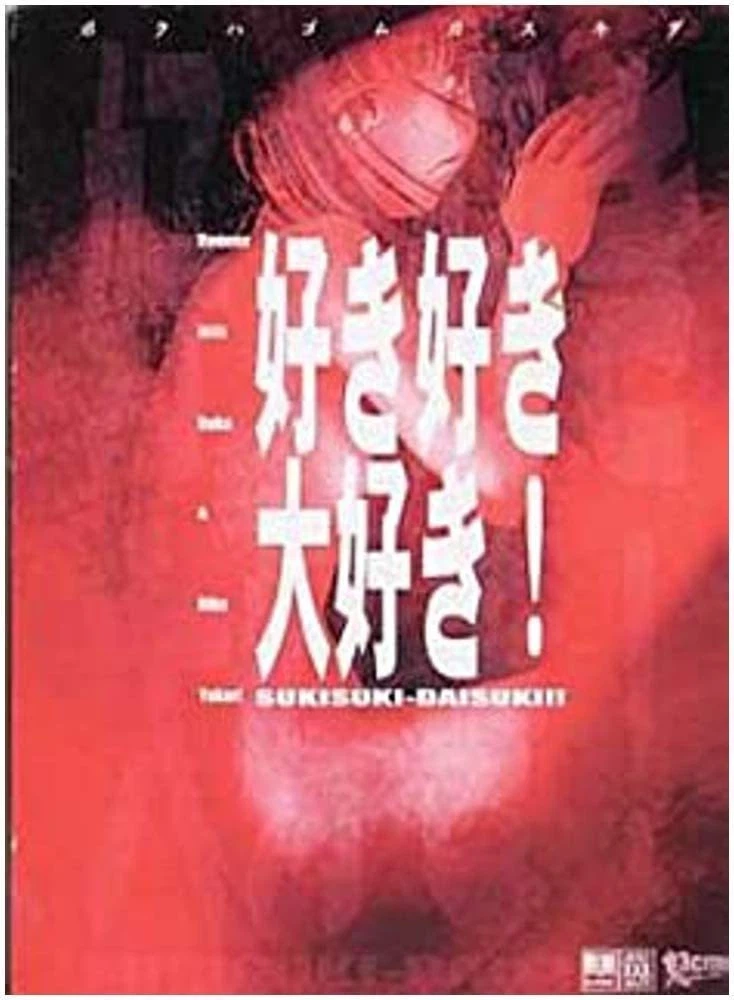
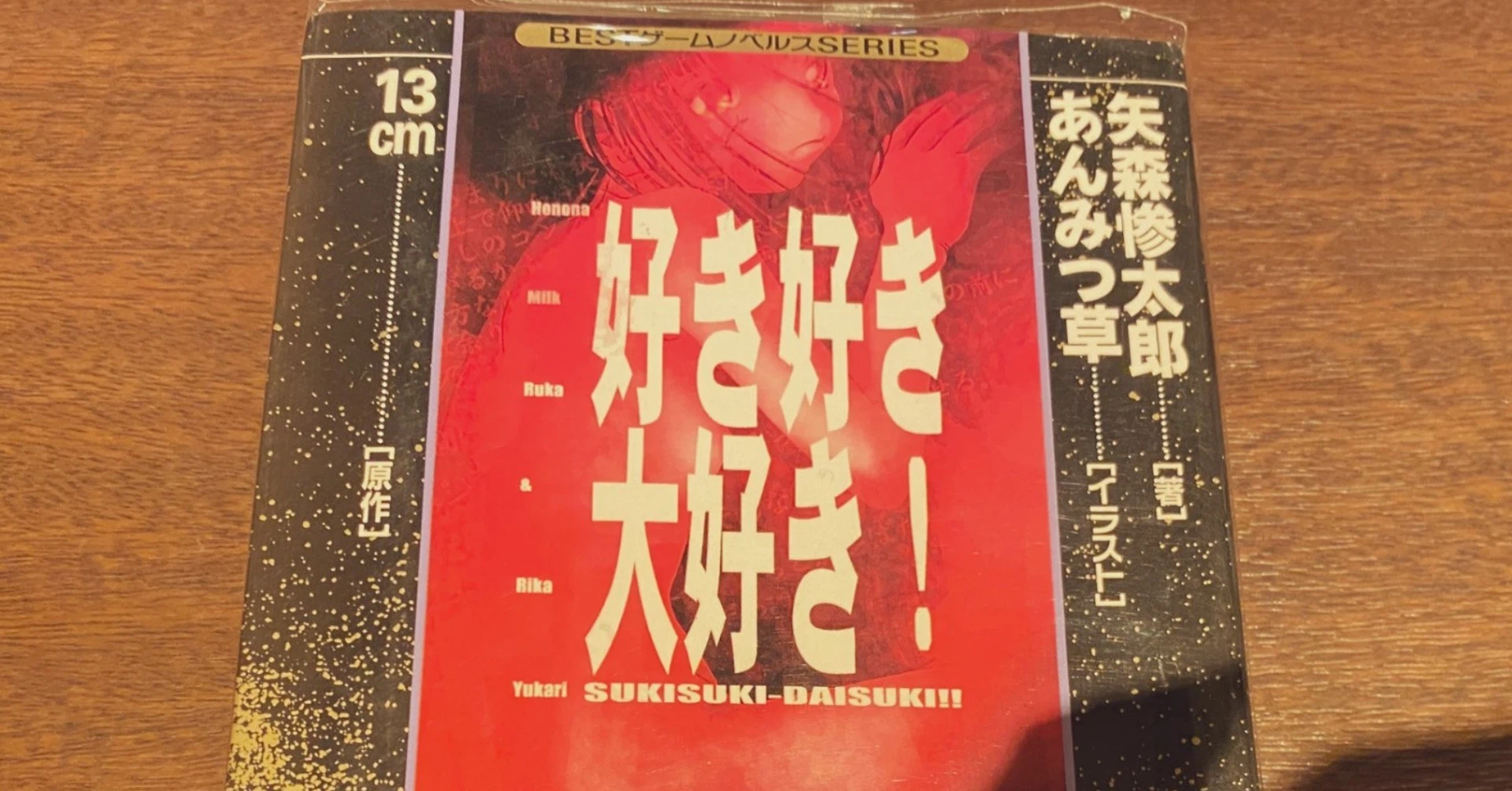
Suki Suki Daisuki! is a bishōjo game released by 13cm in 1998. What a punchy title. (And yes—there’s a reference behind the title too, but I’ll get to that in a bit.) Among “dark,” “depressing,” and “brutal” games, this one is especially pitch-black.
Synopsis ↓
An introverted Protagonist, Wataru Nagase, saves the heroine, Kanona Amagi, when she’s being harassed on the train. From that moment on, he becomes fixated on her—emotionally attached, then obsessed.
One day, Wataru finally abducts Kanona and locks her in the basement of an abandoned factory owned by his family. Facing a terrified Kanona, he says, “I won’t do anything. I just want you to stay by my side,” and he keeps treating her with relentless gentleness, trying to win her over. At the same time, in order to keep his secret intact, he tries to maintain “good” relationships with the women around him… which only drags him into an increasingly irreversible situation.
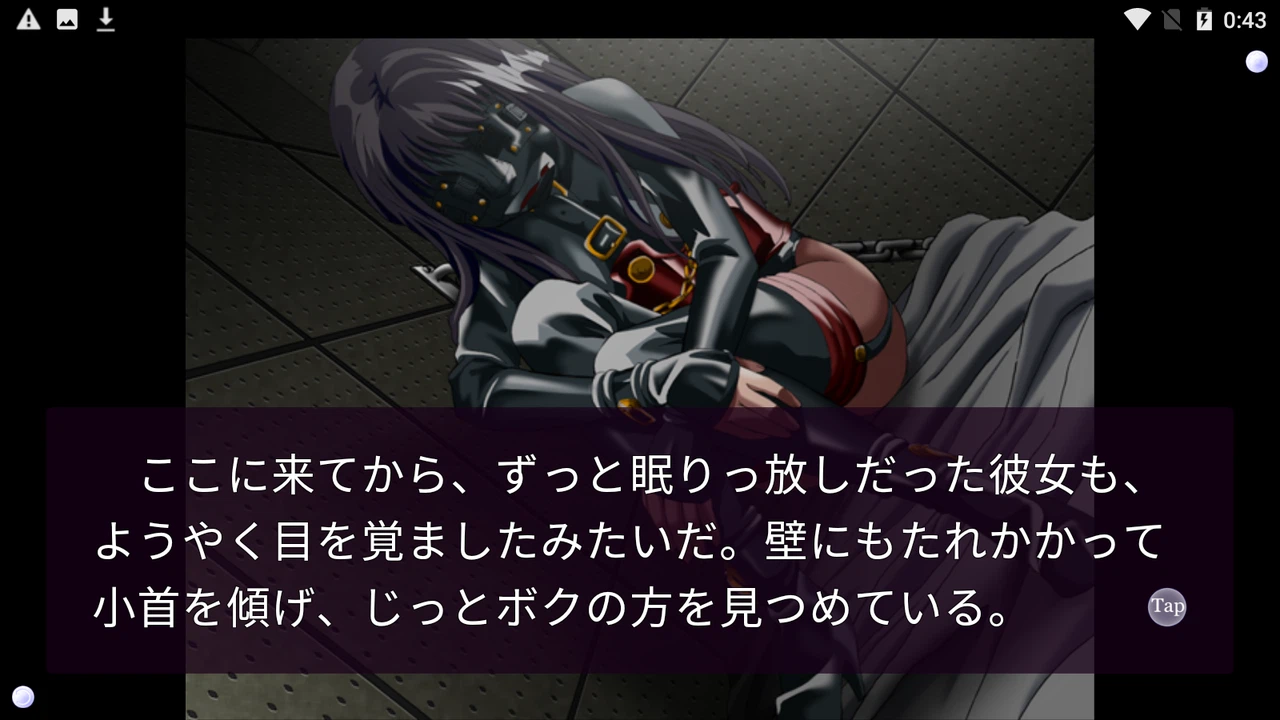
It looks like she’s finally woken up.
Ever since I brought her here,
she’d been asleep the whole time.
Now she’s leaning back against the wall,
tilting her head slightly, staring straight at me.
Just like that synopsis suggests, the game is basically an endless loop of going to check on the heroine—who’s been put into a rubber suit—and then returning to the protagonist’s room. Most of the time, the screen is dominated by the same CG like the screenshot above. The BGM is crushingly heavy, and even among bishōjo games, it’s easily in the top tier of “this is visually and emotionally dark.”
The catchphrase is: “I LIKE RUBBER.” That’s why he keeps drowning the heroine in rubber suits. The real draw is the protagonist’s warped mindset—how he assumes that if he loves something, others will naturally accept it too—and how that thinking shifts and mutates over time.
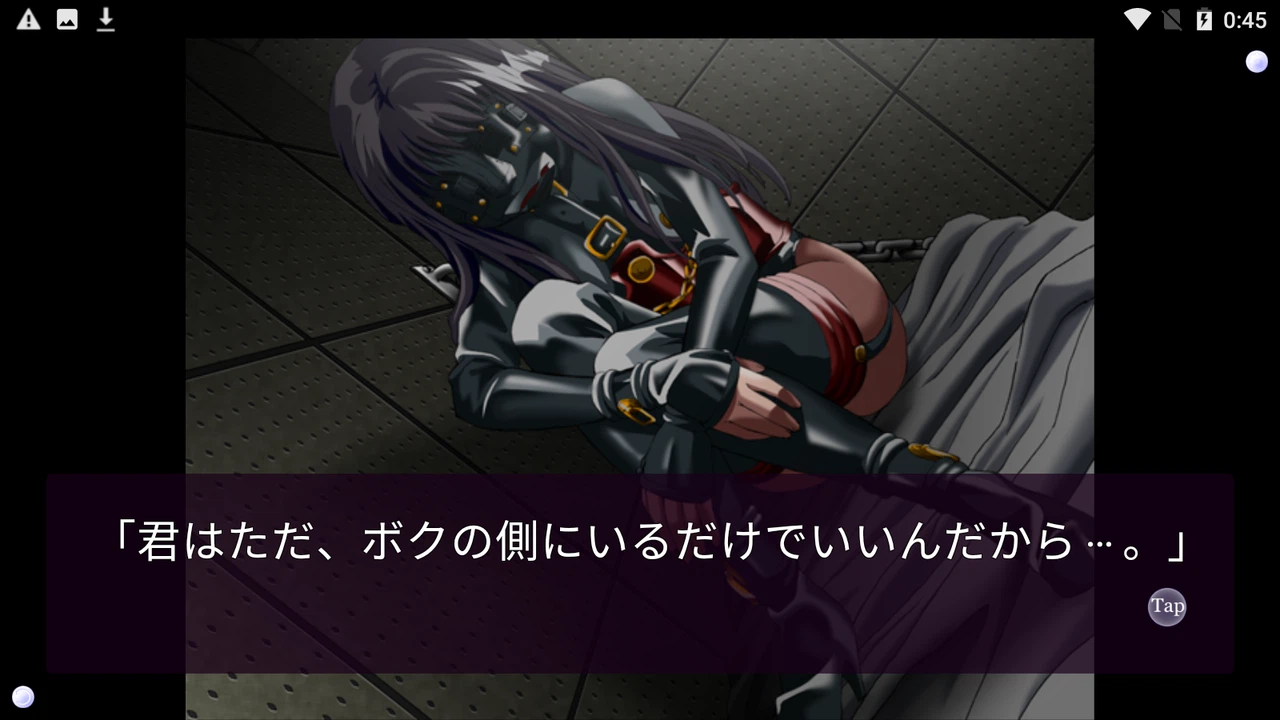
“You don’t have to do anything.
You just need to stay by my side…”
And it just keeps going like that. Other heroines do show up along the way, but one of them is… a true oddball.
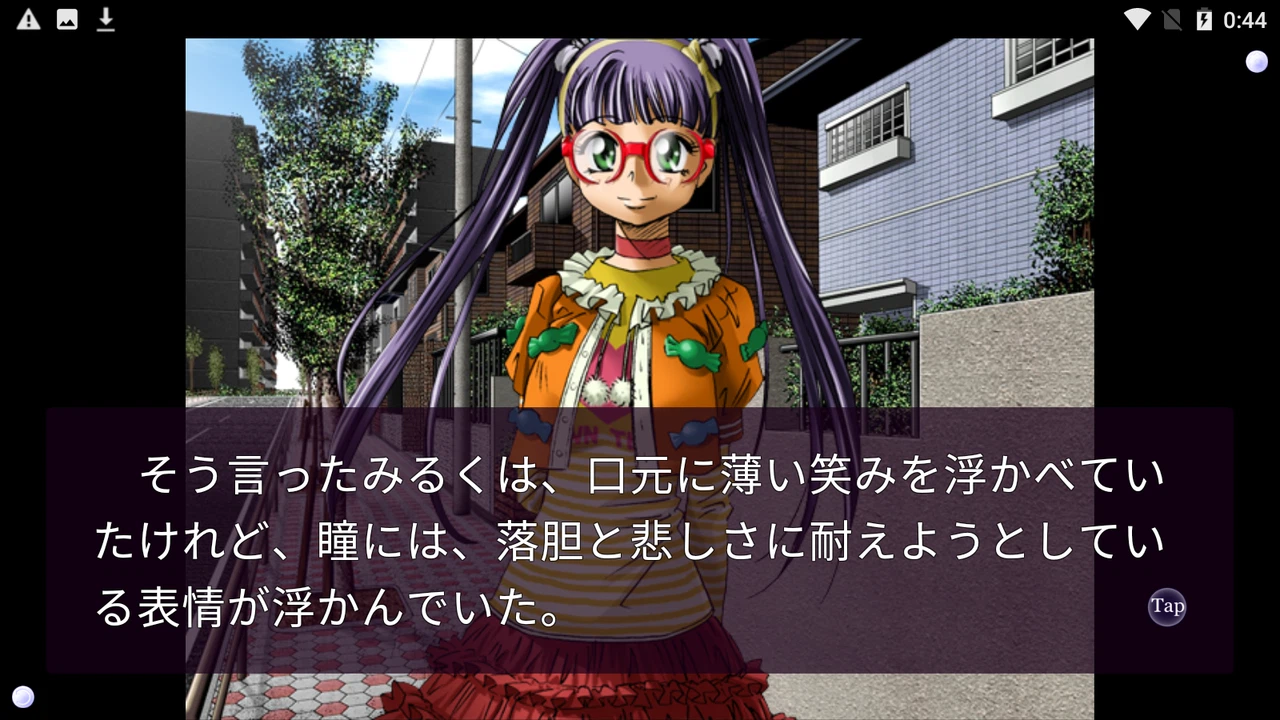
Her look is aggressively distinctive. These days, you could almost argue it might be “fashionable” in some circles—but back then, that design terrified a whole generation of bishōjo-game fans. And yes: she’s exactly as dangerous as she looks.
・Jun Togawa and R.D. Laing
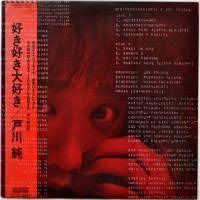
From the title and the color palette of the jacket alone, you can probably guess one clear influence: Jun Togawa’s legendary song “Suki Suki Daisuki.” It’s the kind of track people call “the original yandere” just from the sheer force of it.
Kiss me—so hard my lips bleed like you hit me
Hold me—so hard my ribs creak and snap
I love you, I love you, I love you
If you don’t say you love me, I’ll kill you
That contrast is gorgeous: the cute way it’s sung up front, then the dramatic, almost ceremonial brutality of the chorus. A shockwave etched into the Shōwa era. And that gradient—twisted love sliding into violence—is used lavishly in Suki Suki Daisuki! too. If anything, the game is nothing but love and violence.
And on that same album, there’s also a track titled “Sayonara o Oshiete.” It’s an album that didn’t just leave a mark on hit charts—it went on to influence the later “denpa game” lineage too.
Also: there’s a newly expanded edition of “Shippū Dotō, Tokidoki Hare” (a book that explains and compiles Togawa’s lyrics) coming out at the end of this month. It’s genuinely excellent—if you’re even a little interested, it’s a perfect time to pick it up.

And then there’s another “Suki Suki Daisuki”:

“Do You Love Me?”—a poetry collection by psychiatrist R.D. Laing. The title says it all.
Laing, a British psychiatrist, published a poetry collection in 1970 that created something like a completely new genre—something you can read as poetry, as drama, or as dialogue: a kind of “scenario dialogue.” It’s also closely connected to serial experiments lain. If I had to introduce it lightly: it’s a “radio-wave poetry book” written by a psychiatrist.
In Suki Suki Daisuki!, the protagonist’s inner world is depicted again and again—and if you read the novelization, you can tell that those inner-monologue sections are consciously drawing on “Do You Love Me?”
・Why the Suki Suki Daisuki! Novelization Is So Good
So—after explaining what kind of work Suki Suki Daisuki! is, here’s the twist: what I love most isn’t actually the original game. It’s the novelization. It’s pricey and hard to get now, but it’s one of my all-time favorites across every 18+ visual novel.
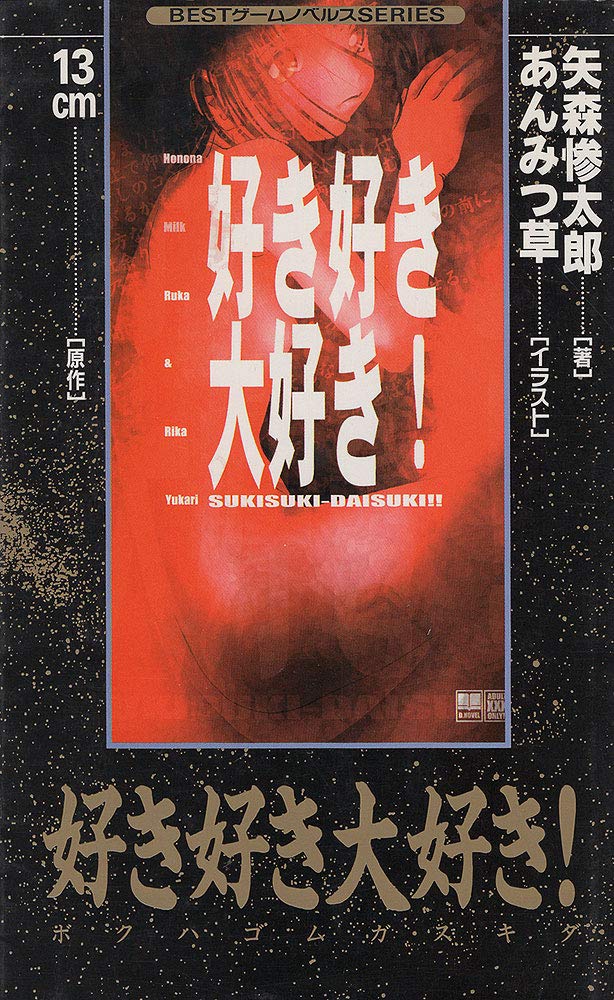
And it makes perfect sense why: the novelization is written by Santaro Yamori—the writer who later went on to handle the scenario for Sayonara o Oshiete. That’s where it all connects: depression-game to depression-game.

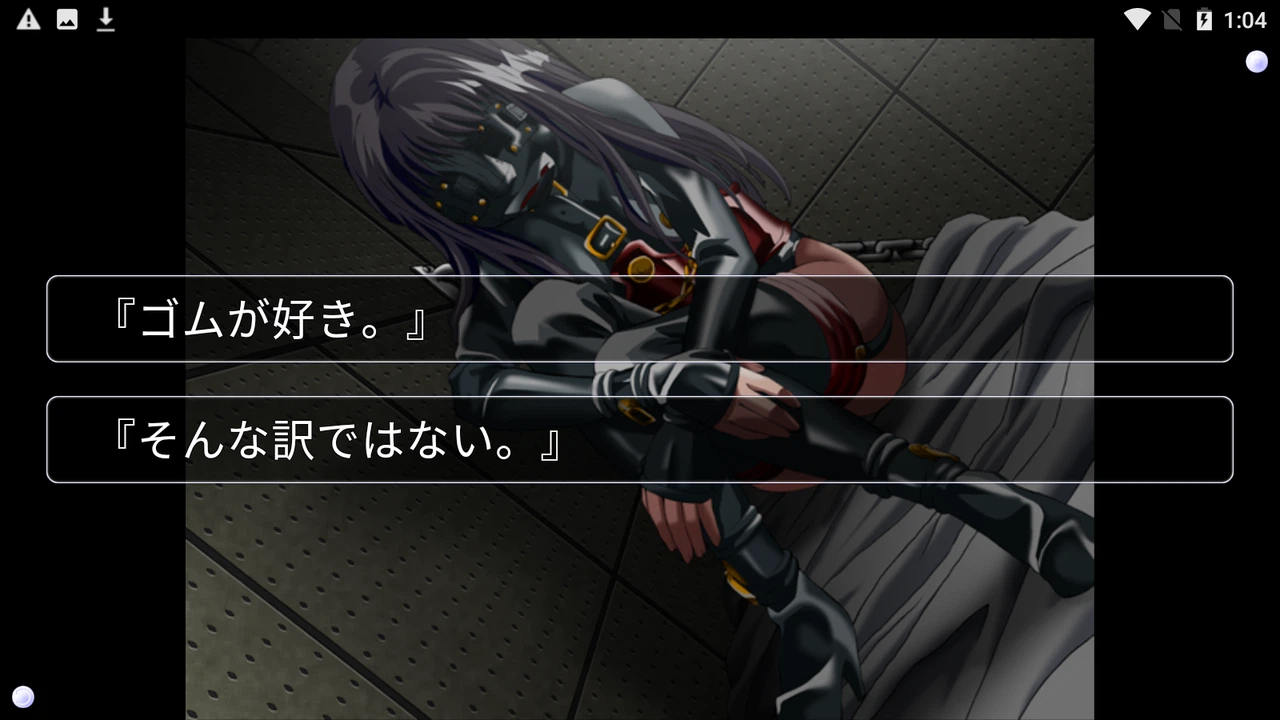
“I like rubber.”
“It’s not like that.”
In the game, there are choices along the way. But the novelization stays entirely in the protagonist’s point of view, so if what you want is to sink into his madness and the whirlpool of his thoughts, the book is simply better suited.
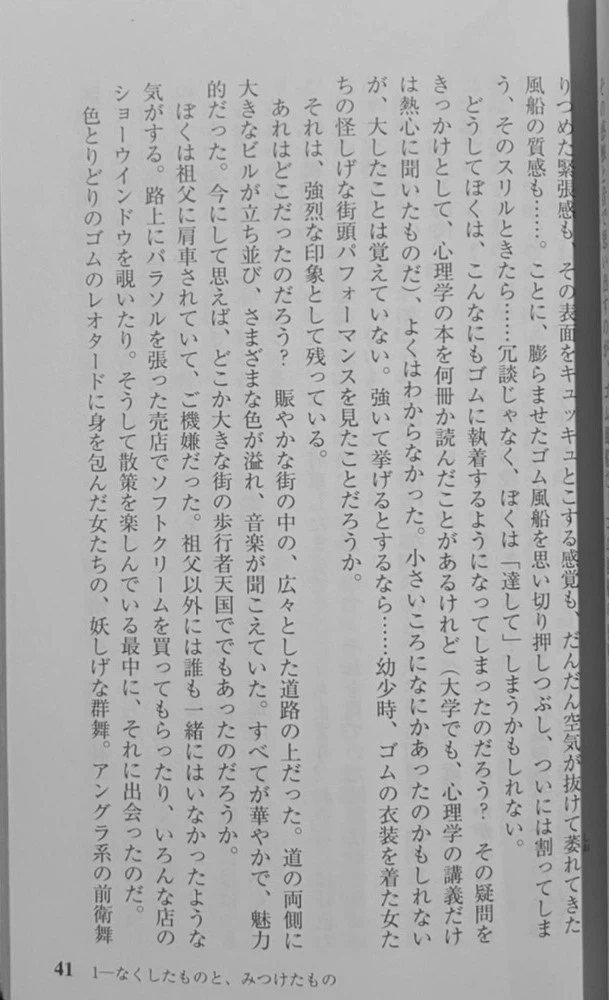
That damp, heavy mentality Yamori writes—the kind that drags you deeper line by line, whether you want to or not.
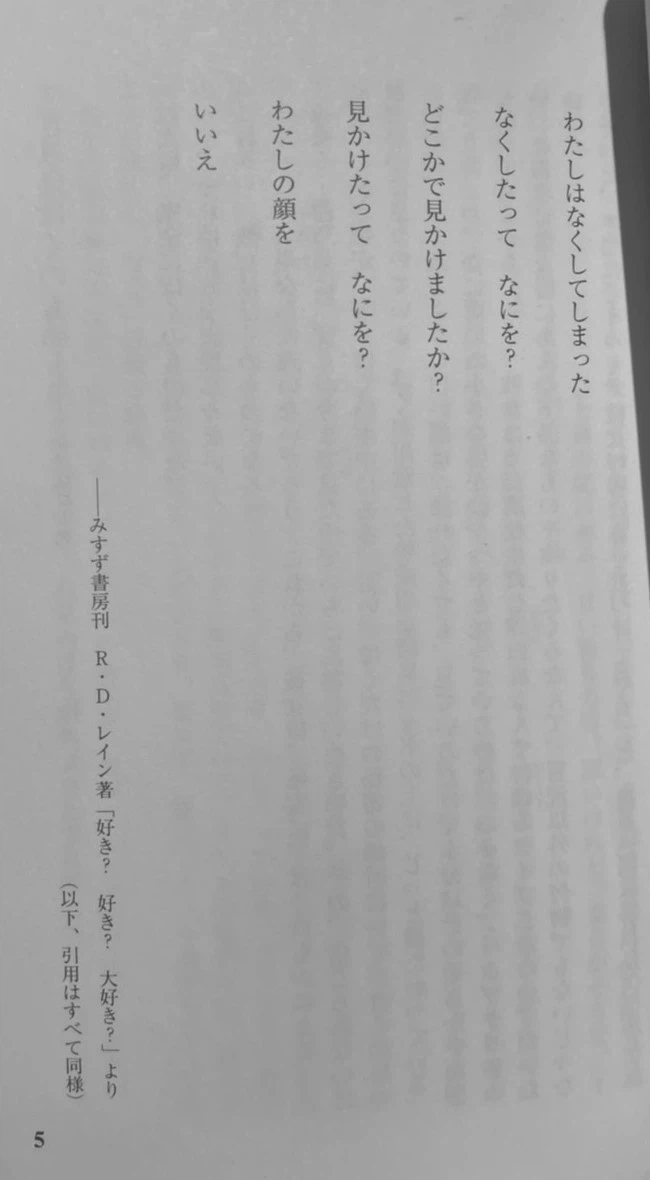
And above all: the repeated quotations from “Do You Love Me?” Those tighten the whole work into something sharper, more sealed, more “complete.” The novelization makes it unmistakable that Suki Suki Daisuki! is a culmination that only exists because of Jun Togawa + R.D. Laing.
The ending and some developments differ from the original, and the relationship dynamics—and the stronger psychological/psychiatric angle—are also very much novelization-specific.
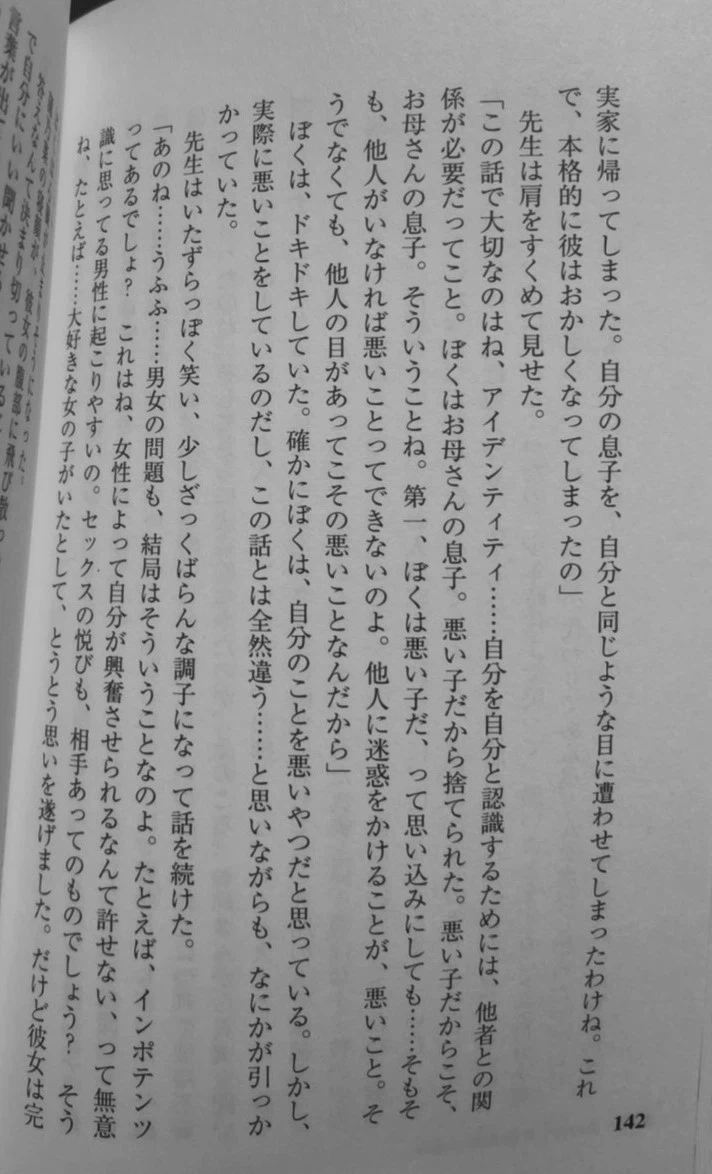
There’s a mid-story dialogue scene between the protagonist and a psychiatrist that’s genuinely tense, sweat-in-your-palms material. The protagonist’s inner life keeps accelerating under the pressure of this abnormal situation, while the heroine’s resignation—and the way her values shift—go places you simply can’t taste anywhere else.
That said, if you’re going to start somewhere: the game is still the foundation, and it’s generally easier to get your hands on (there’s an Android version). So: start with the original.
![好き好き大好き! 【Android版】 [13cm] | DLsite](https://img.dlsite.jp/modpub/images2/work/professional/VJ010000/VJ009608_img_main.jpg)
Apparently the genre tags on the store page are… quite something.
I hope I can keep talking like this—just going all-out about the bishōjo games I love.
Comments (0)
Leave a comment
No comments yet. Be the first to comment!