


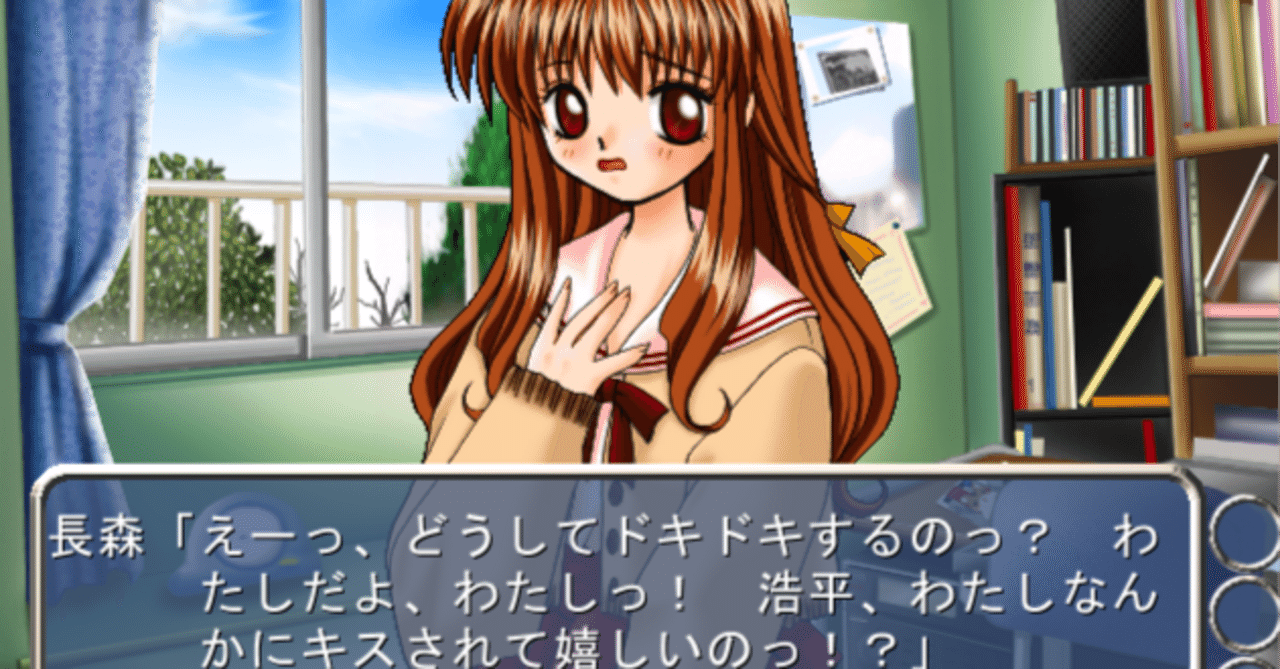
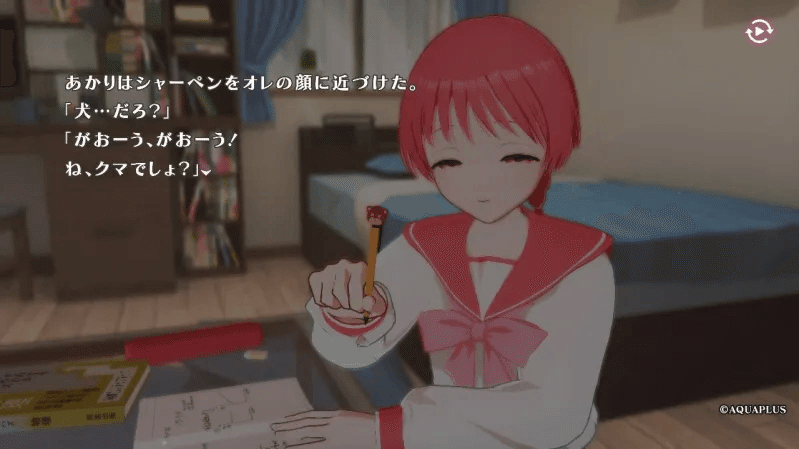
The childhood friend Akari, who comes to wake you up every morning without fail, is a huge part of what makes the original ToHeart so appealing.

A childhood friend.
Someone you have been with since you were little.
That alone is enough for her to come meet you every morning. She waits for you after school.
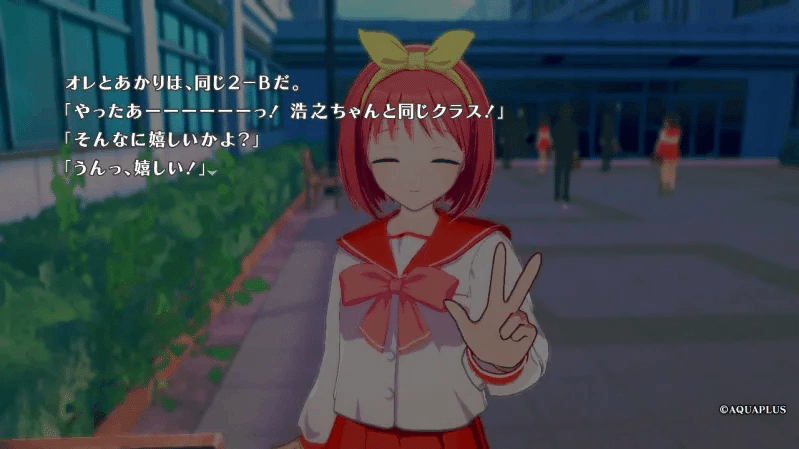
On the day your classes are reshuffled, she sincerely hopes she will end up in the same classroom as you. When the seats are rearranged, she savors the happiness of being able to sit near you in class. The childhood friend is always there beside you, no matter what.
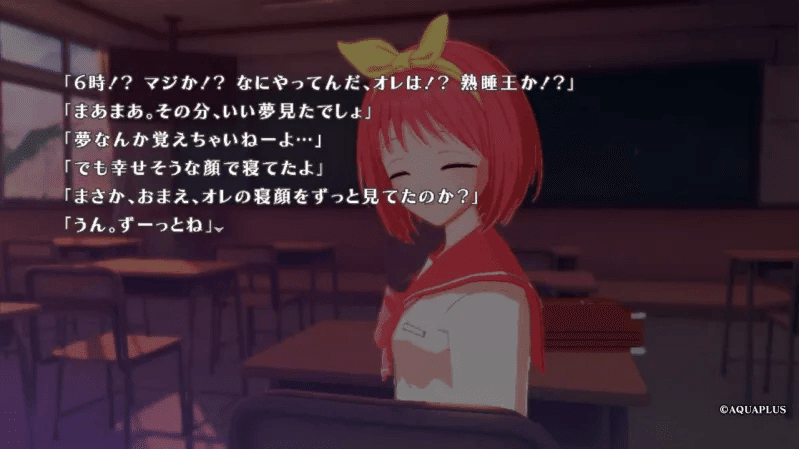
At six in the evening, when you wake up alone in the classroom after everyone else has gone home, there is Akari quietly peeking at your sleeping face.
Her happiness goes beyond being a couple. She simply wants to keep taking care of you. Even if you are pursuing another heroine, Akari still comes to meet you every morning. No matter how many rumors spread around the class. No matter how bluntly she is treated by a teenage boy who does not quite know how to express himself.
In routes other than Akari's, the other heroines even ask, "What is Akari to you?"
She just stays by your side.
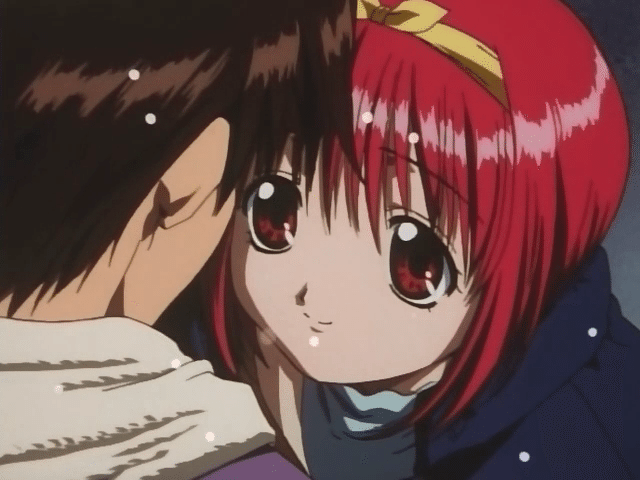
This irreplaceable form of the "childhood friend" character gradually stopped being treated as a main heroine in bishoujo games and light-novel anime. Instead, she became the foil to more exciting heroines who appeared later, such as transfer students and girls from other worlds. It was easier to write things that way. And when it came to depicting "the girl who has always lived next door," Akari was simply too complete a model to overcome.
After that, whenever a childhood friend was the main heroine, it became unusual enough that the work would go out of its way to emphasize that fact.
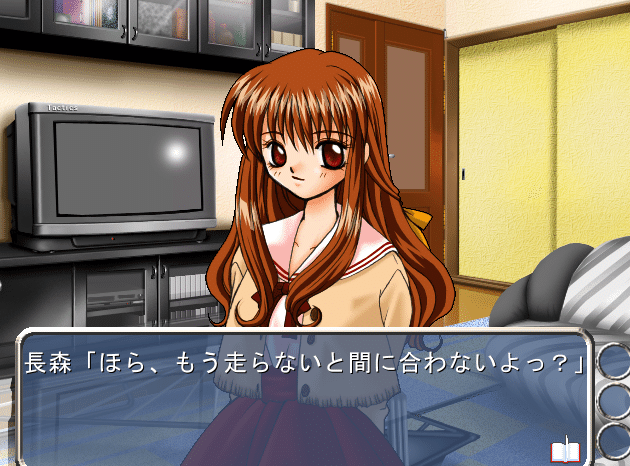
Among the early examples of this type of childhood friend character, I have to mention Mizuka Nagamori's route in ONE, released by Tactics, the predecessor to Key.
As you would expect, she comes to meet you every morning too.
The cuteness of Itaru Hinoue's shōjo mang-like art from this period is something else. Her brown, round eyes bring out her delicate girlishness. She almost gives you the illusion of a maternal affection that goes beyond being a childhood friend.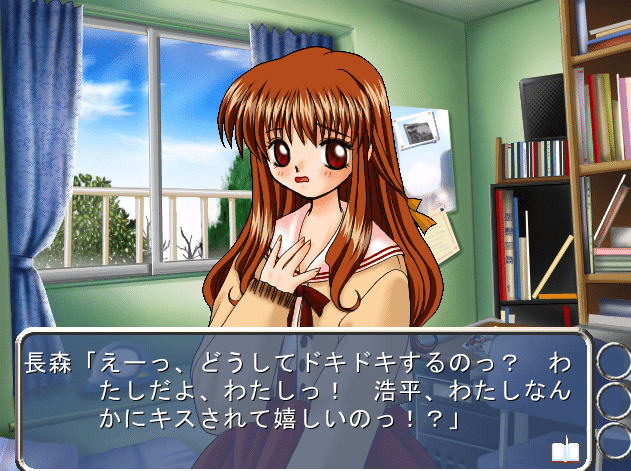
Her route was written by Jun Maeda.
And it has an extremely unusual structure. I consider it the origin and greatest work of Maeda's writing. Though my favorite is still Naoki Hisaya's Akane Satomura route.

The protagonist of Nagamori's route communicates with her through the kind of mischievous, sarcastic behavior characteristic of Key protagonists. But this was still an era when bishojo game had not yet fully matured, in a good way. The protagonist of ONE takes his mischievousness to an absurd extreme. And that is precisely why the devotion of his childhood friend, Mizuka Nagamori, shines so brightly. It is almost madness.
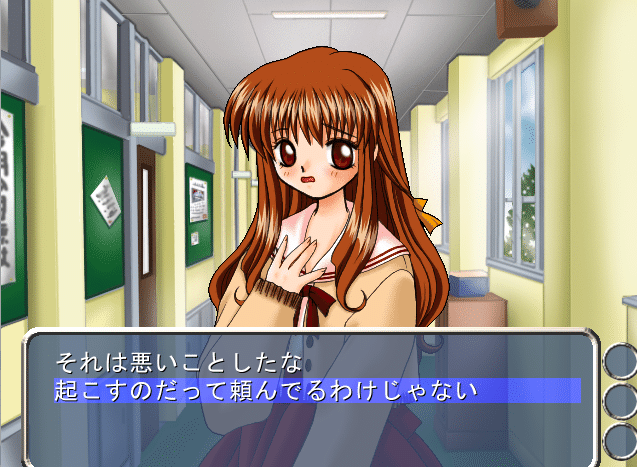
Nagamori's route carefully depicts a teenage boy who cannot be honest about his feelings. In fact, it is incredible that the game goes this far.
Even after entering her route, the protagonist still cannot openly express his affection toward his kind, childhood friend. Instead, his embarrassment and malice grow, and the correct choices often involve treating her even worse than before they started dating. For example, in the choice shown above, the player is made to choose the lower option. It hurts. Nagamori is confused. The player suffers. And yet, at the same time, we know. Sometimes people test the affection of the person they love.
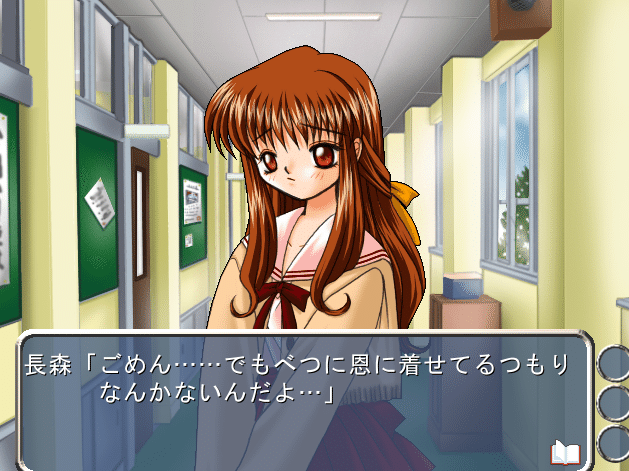
In Mizuka Nagamori's route, it is the protagonist who constantly engages in this kind of "testing behavior," not the heroine. It feels like a taboo rarely seen in bishoujo games, but it is probably something that can happen in real relationships too. People are weak. They want to know how seriously the other person loves them. That suspicion can arise even toward someone who has been your childhood friend. It has nothing to do with being a man or a woman.
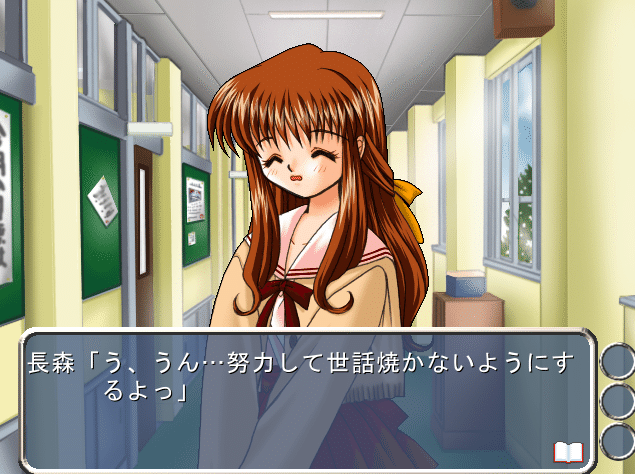
There is also the anxiety of becoming independent.
There is a huge difference, to a proud teenage boy, between your childhood friend cooking for you because she wants to and her constantly taking care of you while holding the upper hand in the relationship. He does not want to keep meekly doing whatever a girl tells him forever, so he cruelly pushes away his innocent childhood friend.
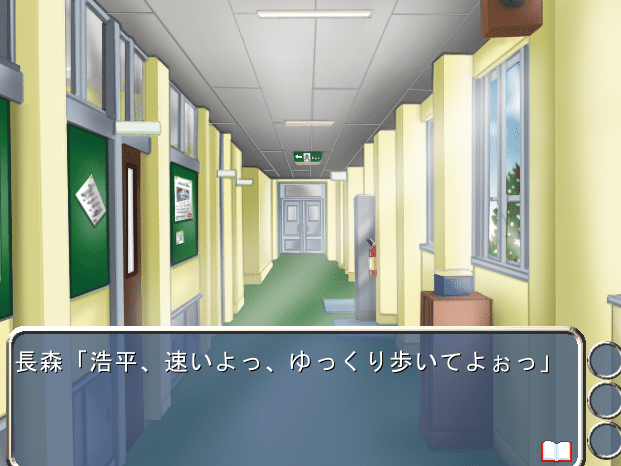
It even turns into a sense of superiority and sadism. "She's going to love me no matter what happens."
And then, in this route, the protagonist commits a mistake that is simply unforgivable.
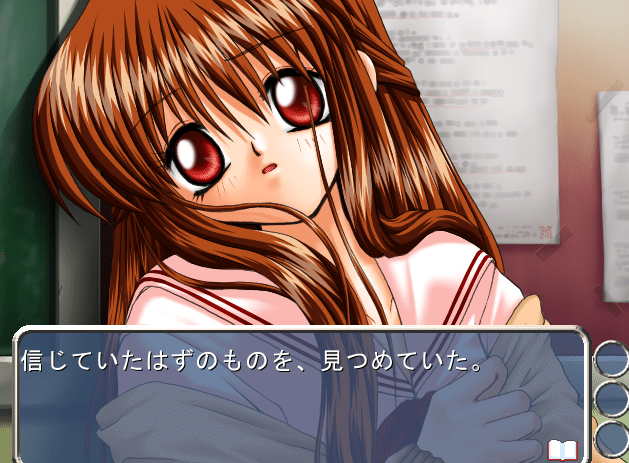
On Christmas Day.
He makes Nagamori wait for him in a dark classroom, then has her attacked by the male students in her class while she stands bewildered in the school at night. He says, "I don't care about some girl like that anyway." He had backed himself into a corner, and his heart was finally sold to the devil.
The player's heart is torn apart in this scene as well. There is none of the warmth or miracle that would come in later Key works. There is only the sin and punishment of an adolescence from which there is no turning back.
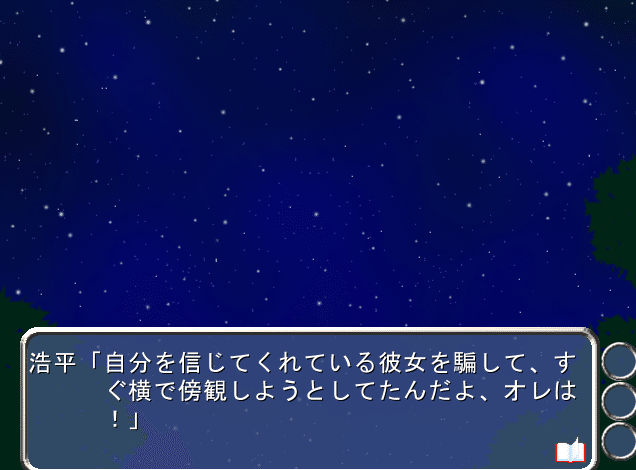
But that is not what this route ultimately wants to depict.
It is the devotion of a childhood friend who has gone beyond that mistake. A deep affection that calls to mind the Virgin Mary. I cry every time I reach this scene. There is a kind of love here that I have never experienced in any other game.
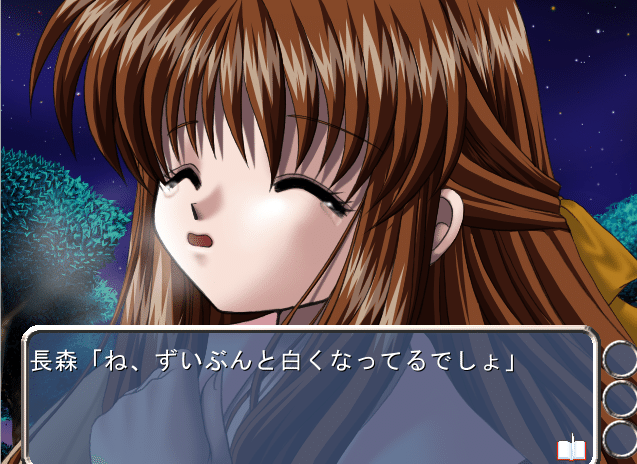
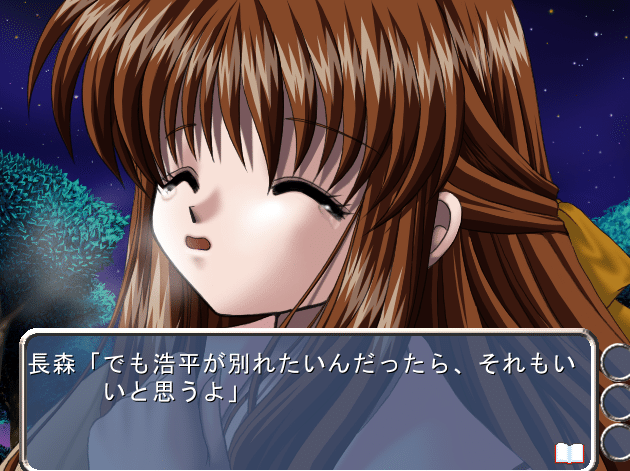
The protagonist is frantic with regret and confusion. Nagamori tells him to take a deep breath, then calmly smiles. More than anything, she wants you, her childhood friend, not to be sad. The smile of the person she loves beside her matters more than her own wounds. What does it mean to be truly strong? Is love not forgiveness?
These unbalanced teenagers endure a terrible misunderstanding and, without any miracle or magic, arrive at something small and pure.
I love ONE.
The image of the childhood friend portrayed in this route. A way of loving that forgives, no matter what. Something deeper than even the bond of blood. Mizuka Nagamori's story is truly one of a kind.
Because there are two people who can cry and smile beneath such a sad night sky, I can almost fool myself into believing that eternity really does exist.
Comments (1)
Leave a comment